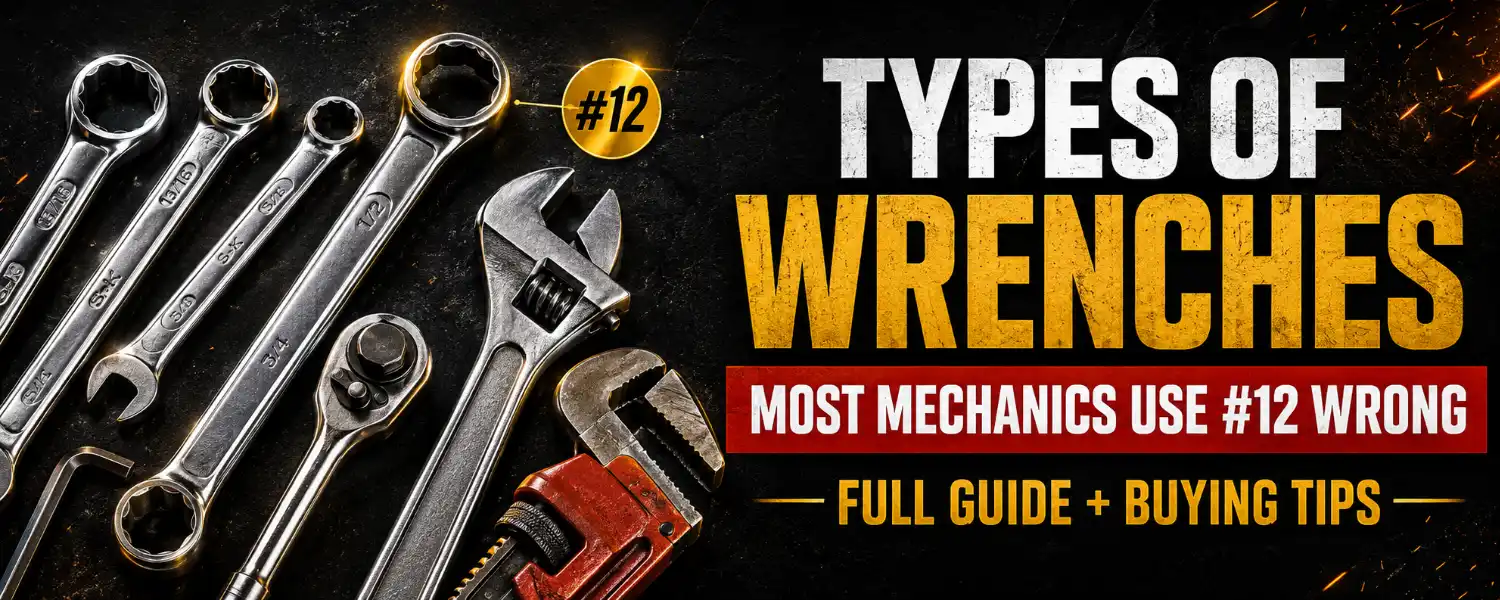
Every mechanic’s toolbox has more wrenches in it than they actually reach for — and one of the most common wrenches on the bench is also the one most people quietly misuse. In this guide we’re covering all 15 wrench types you’ll run into on a real job, in the same order shown on our chart, and calling out exactly where #12 goes wrong (and how to fix it). By the end, you’ll also know which wrench is actually worth buying for your toolbox instead of the one that just looks impressive on a pegboard.
The 15 Wrench Types, Explained
1. Box-End Wrench
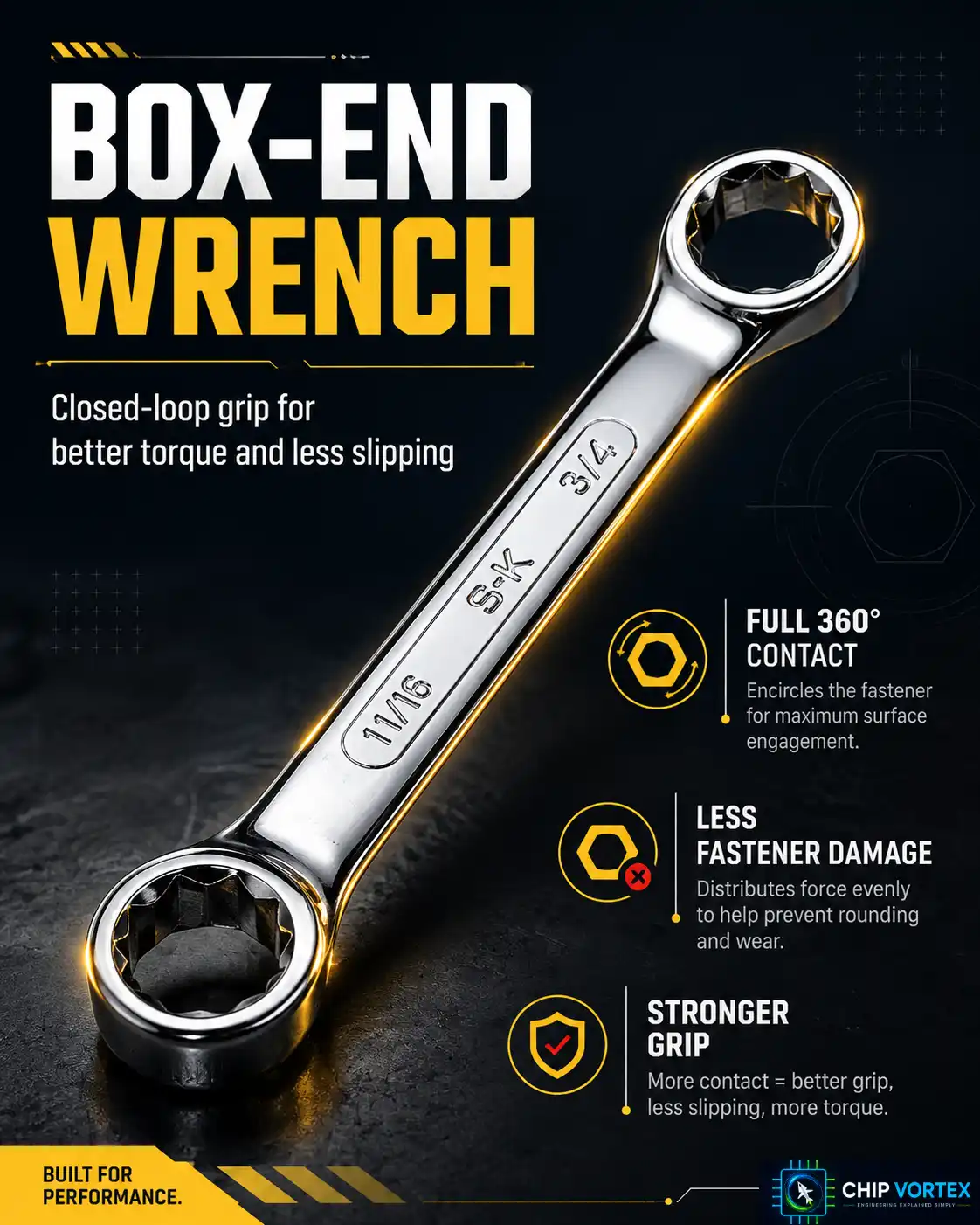
A box-end wrench fully encircles the fastener with a closed loop, usually 6-point or 12-point, gripping the nut or bolt head on all sides at once. Because the load is spread around the entire head instead of just two flats, box-end wrenches are far less likely to round off a fastener than an open-end wrench — they’re the go-to choice whenever you have clearance to slide the wrench over the fastener.
2. Offset Ring Wrench
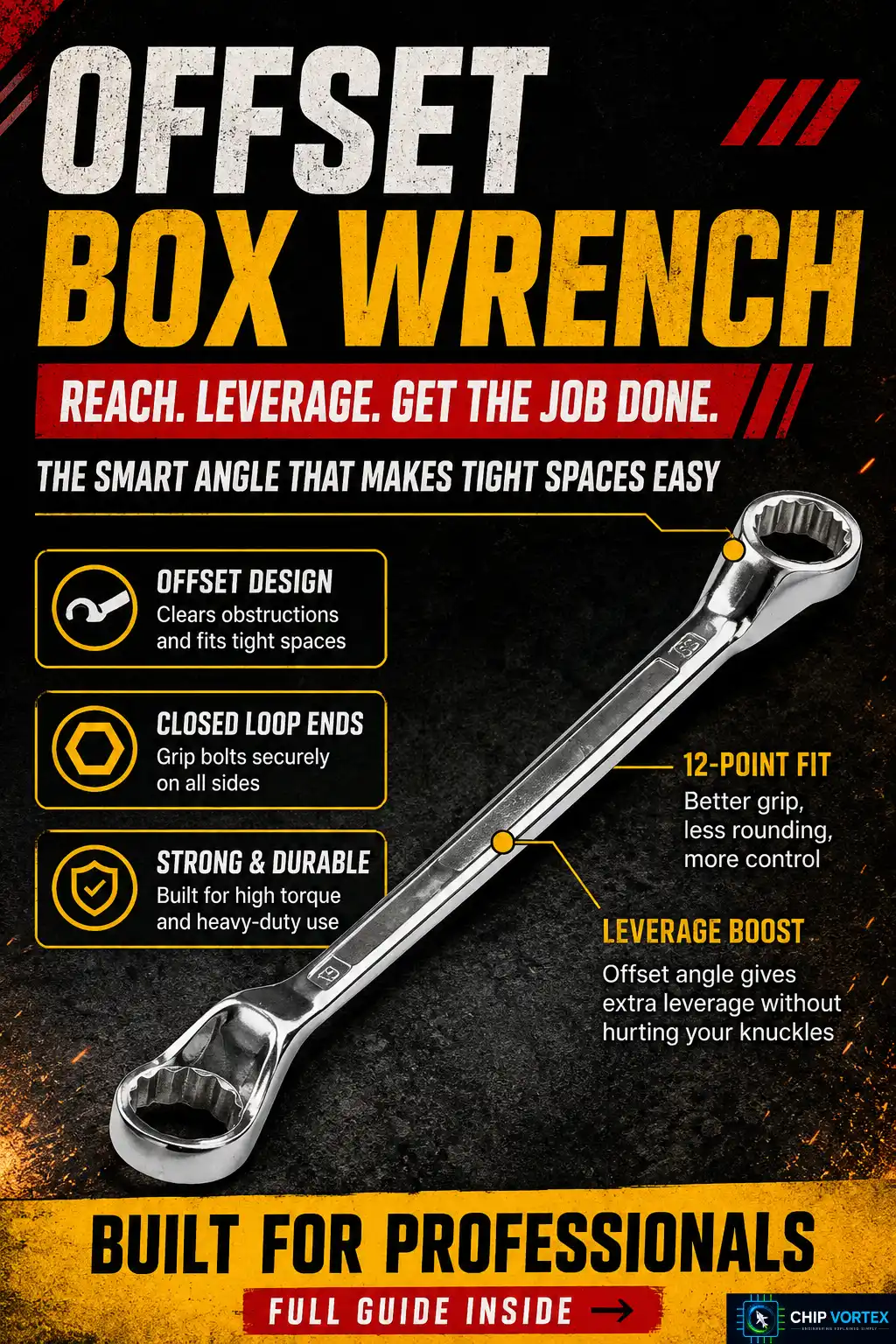
An offset ring wrench angles the box-end head away from the handle’s centerline, usually 15-45 degrees. That offset gives your knuckles clearance from a flat surface (an engine block, a frame rail) that a straight box-end would jam into, which is exactly why these show up so often in automotive and machinery work.
3. Pipe Wrench
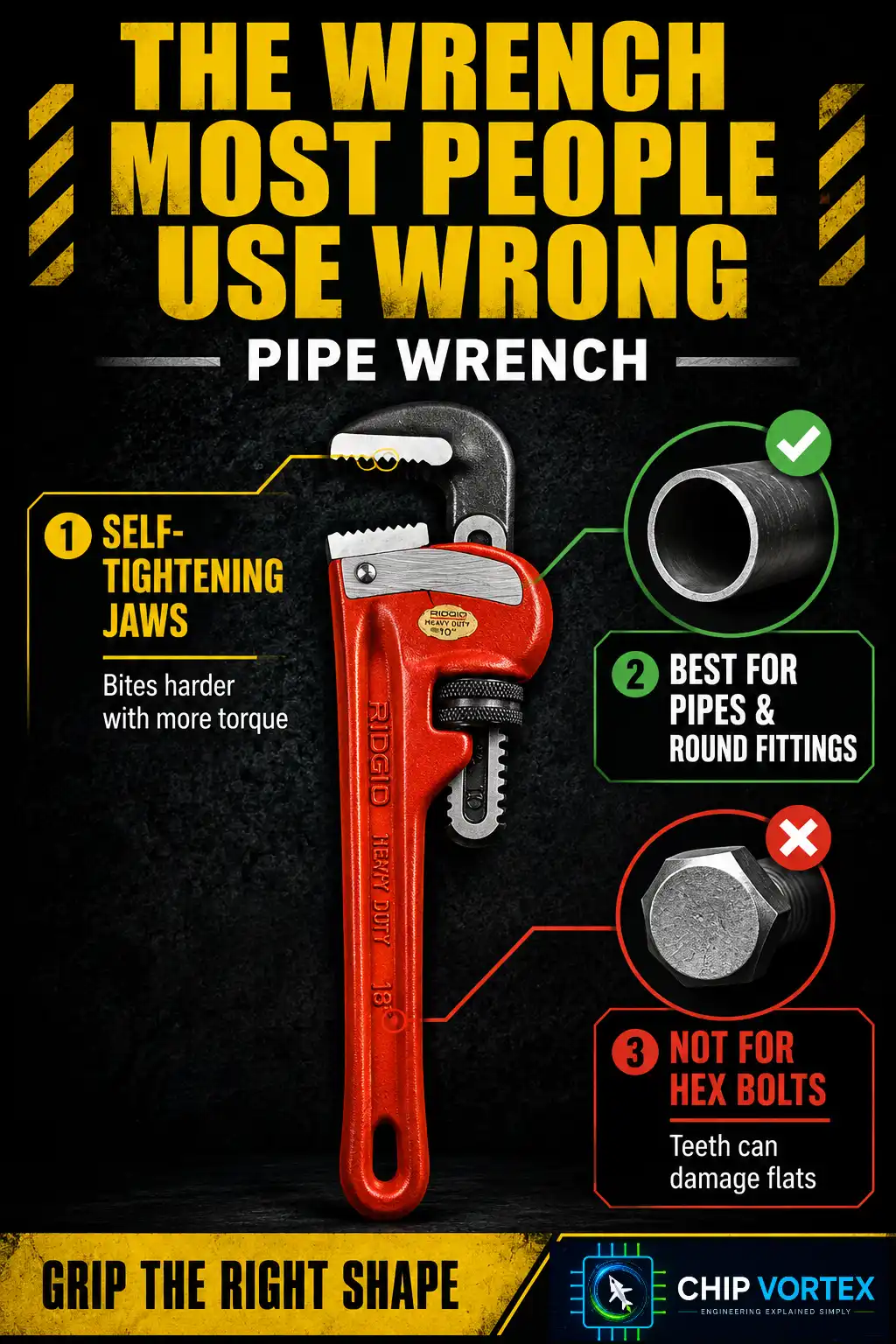
A pipe wrench uses serrated, self-tightening jaws that bite harder into round stock the more torque you apply. It’s built for pipes and round fittings — never for hex-head bolts, since the teeth will chew up any finished fastener surface. If you’re gripping anything with flat sides, reach for something else.
4. Offset Combination Wrench
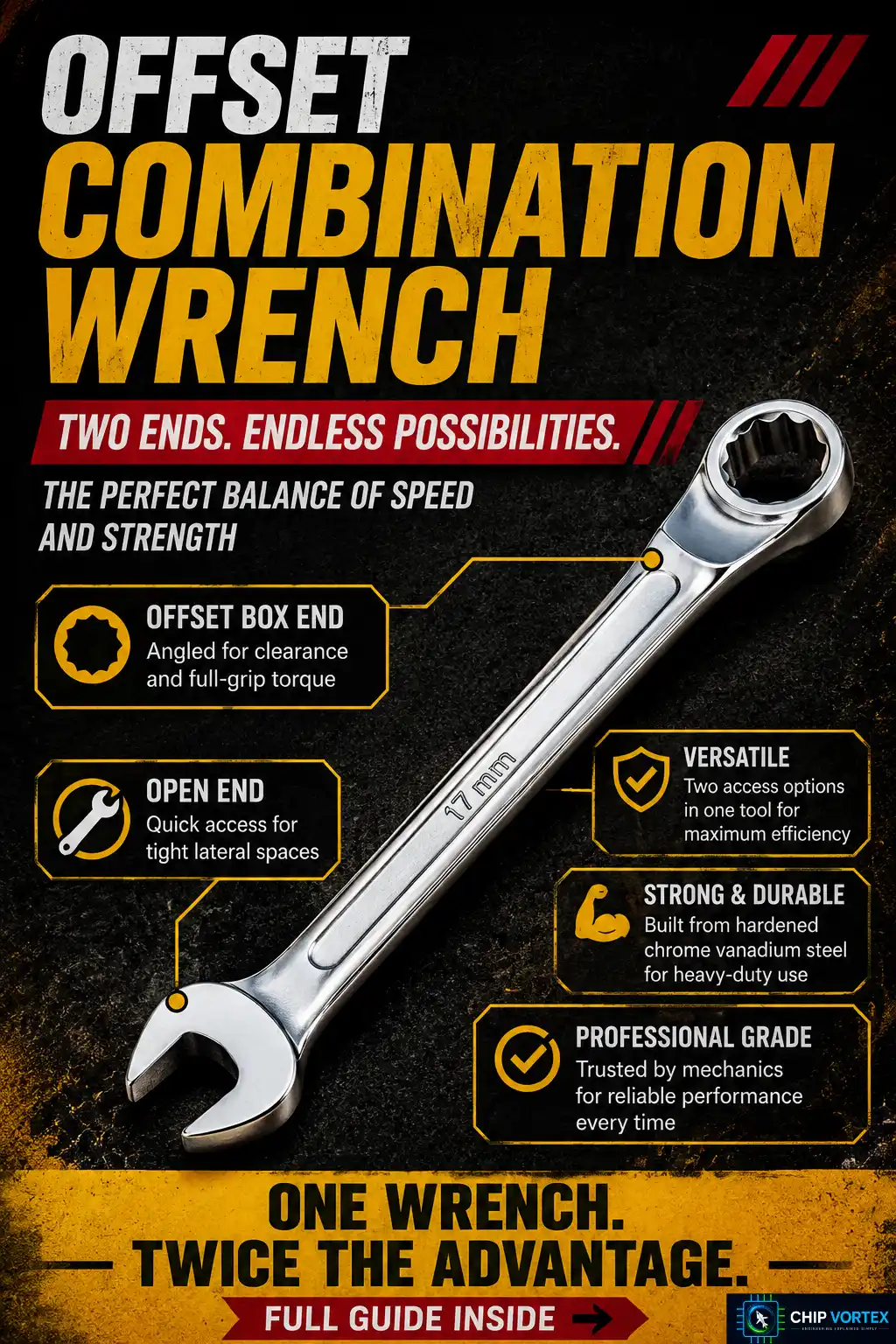
This style pairs an open end on one side with an angled (offset) box end on the other, giving you two access options on a single tool: the open end for a quick spin in tight lateral space, the offset ring end for full-grip final torque.
5. Flat Combination Wrench
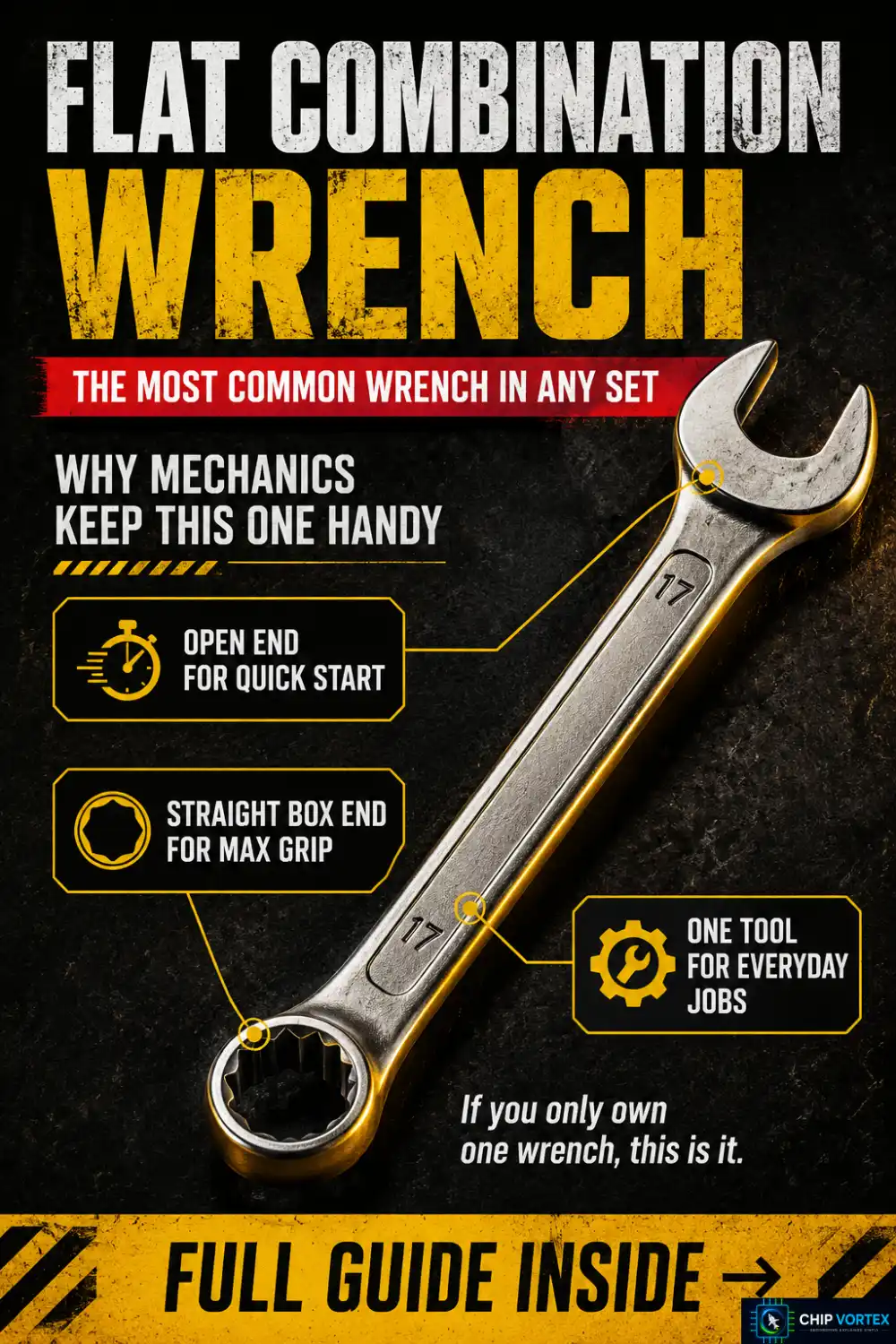
The most common wrench in any set — an open end on one side, a straight (non-offset) box end on the other, both sized to the same fastener. Start a bolt with the open end, finish tightening with the box end for maximum grip. If you only own one style of wrench, this is it.
6. Adjustable Wrench
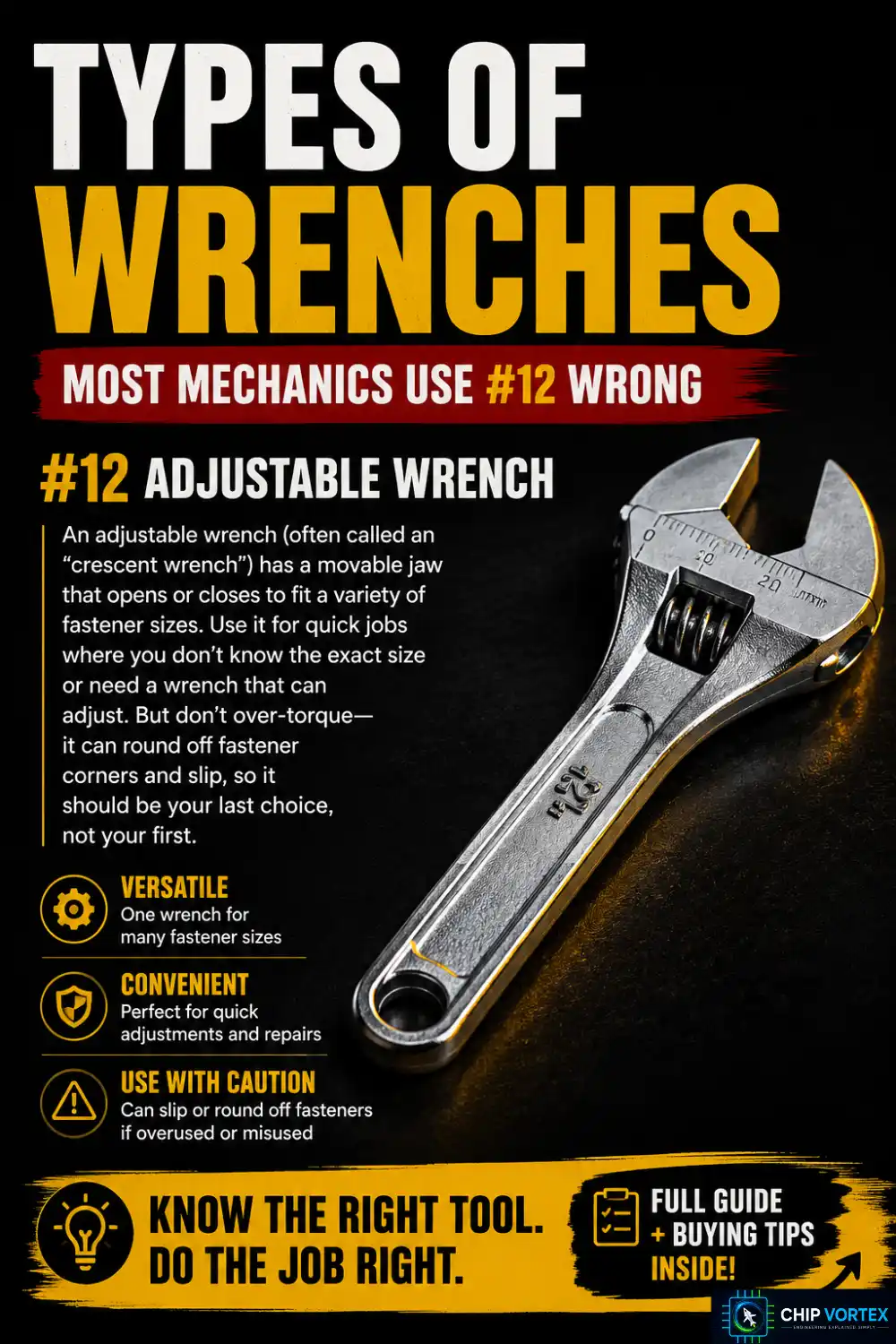
An adjustable wrench (often called a “Crescent wrench” after the original brand) has a movable jaw that dials in to fit a range of fastener sizes. It’s the most versatile wrench you can own, but also the easiest to damage a fastener with — the moving jaw always has a small amount of play, so it should be your backup, not your first choice, whenever the correct fixed-size wrench is available.
7. Offset Wrench
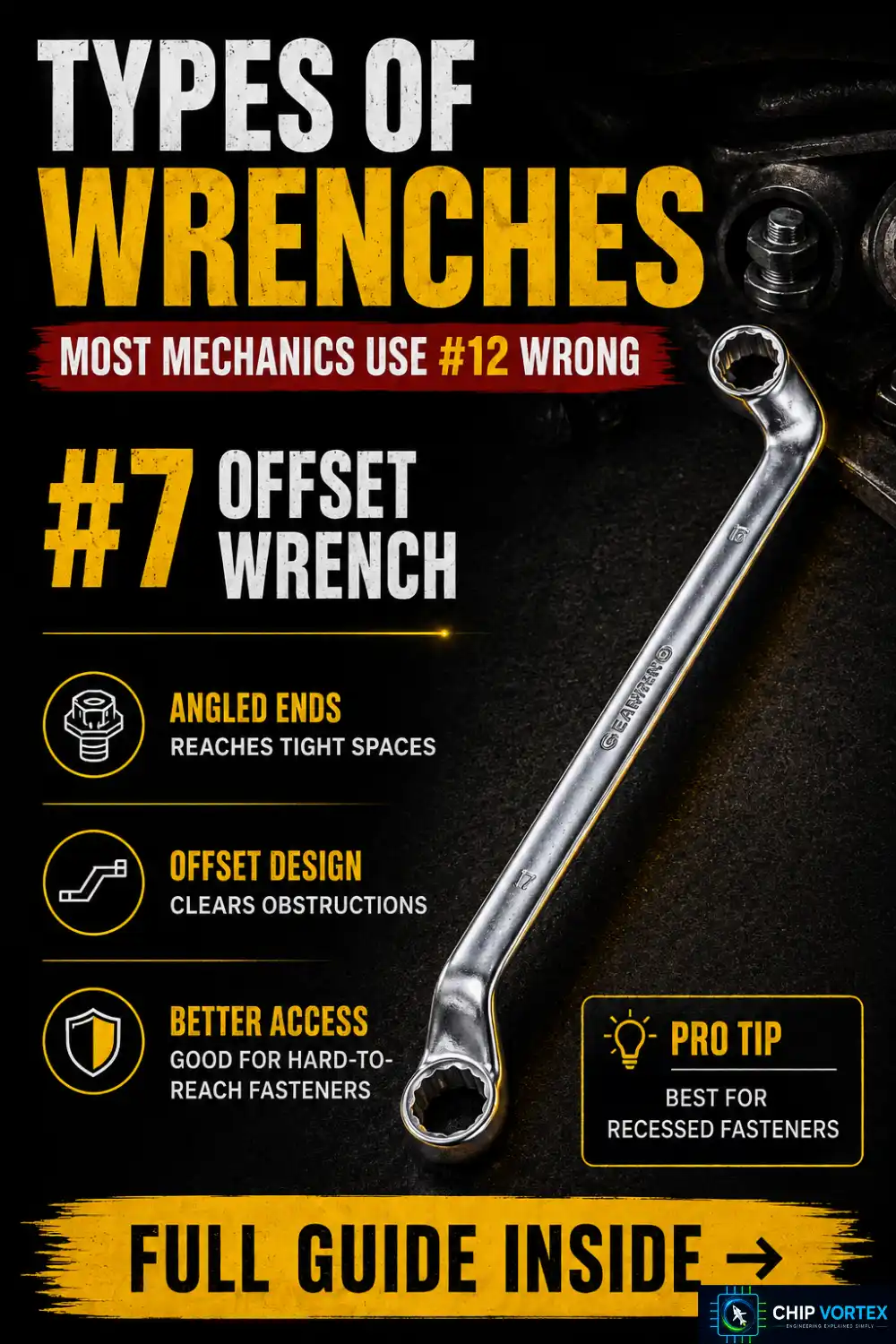
Similar in concept to the offset ring wrench but built as an open-end style, this wrench angles the jaw away from the handle to reach fasteners recessed below a surrounding surface or tucked behind an obstruction.
8. Ratchet
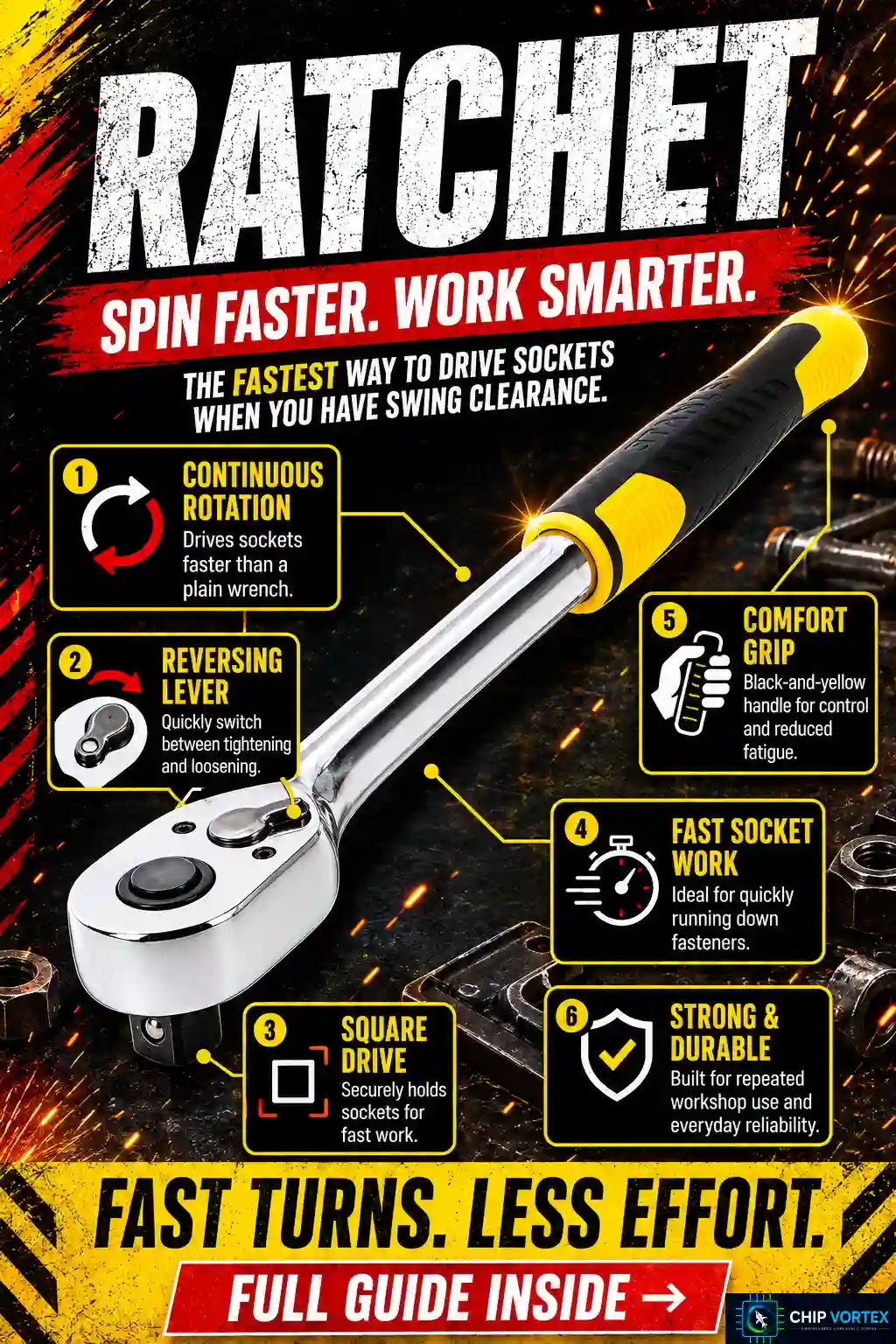
A ratchet handle drives sockets in one continuous rotating motion instead of the back-and-forth swing a plain wrench requires, which is why it’s the single fastest way to run down a fastener when you have the swing clearance to use it.
9. Allen Wrench
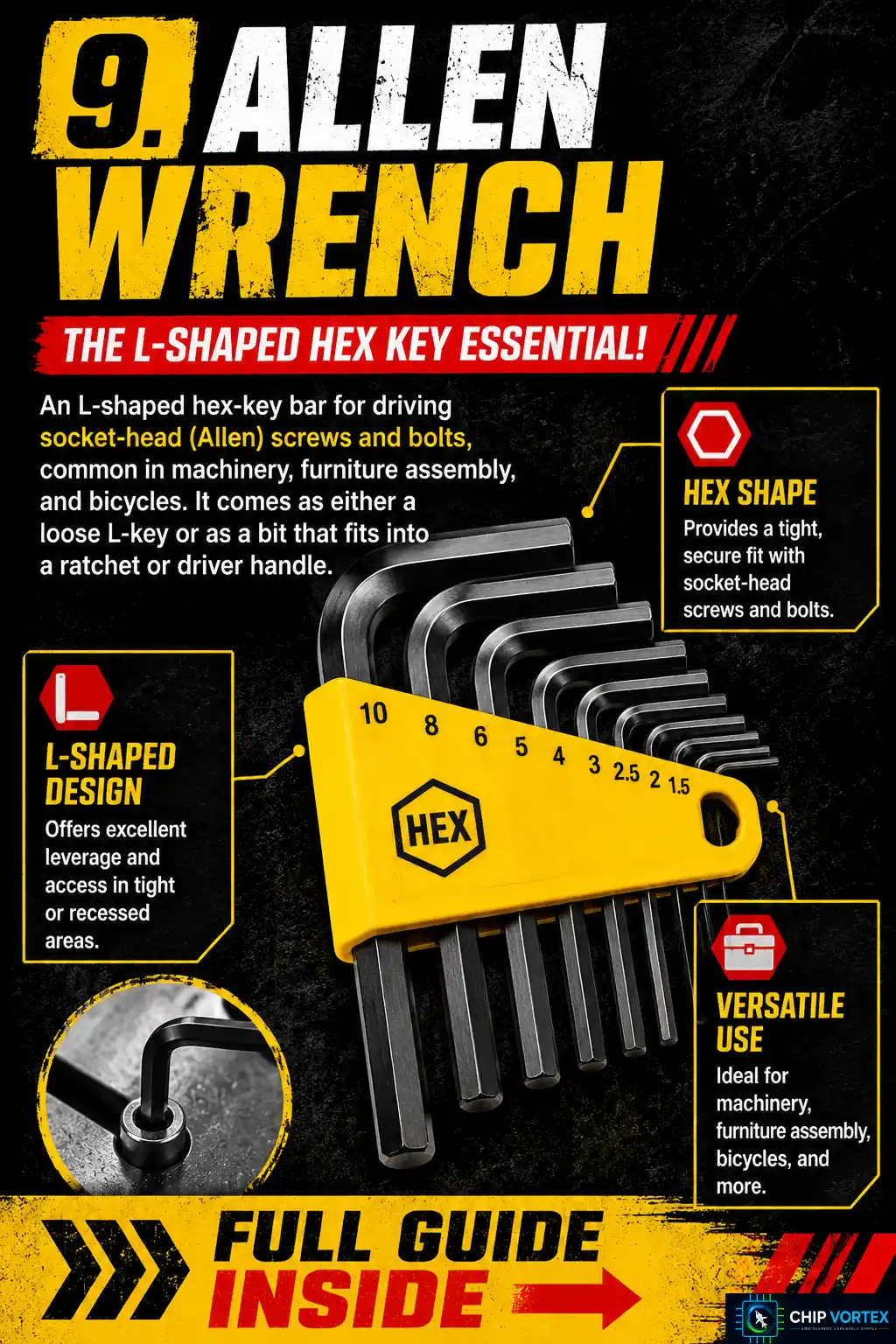
An L-shaped hex-key bar for driving socket-head (Allen) screws and bolts, common in machinery, furniture assembly, and bicycles. It comes as either a loose L-key or as a bit that fits into a ratchet or driver handle.
10. Hex Key
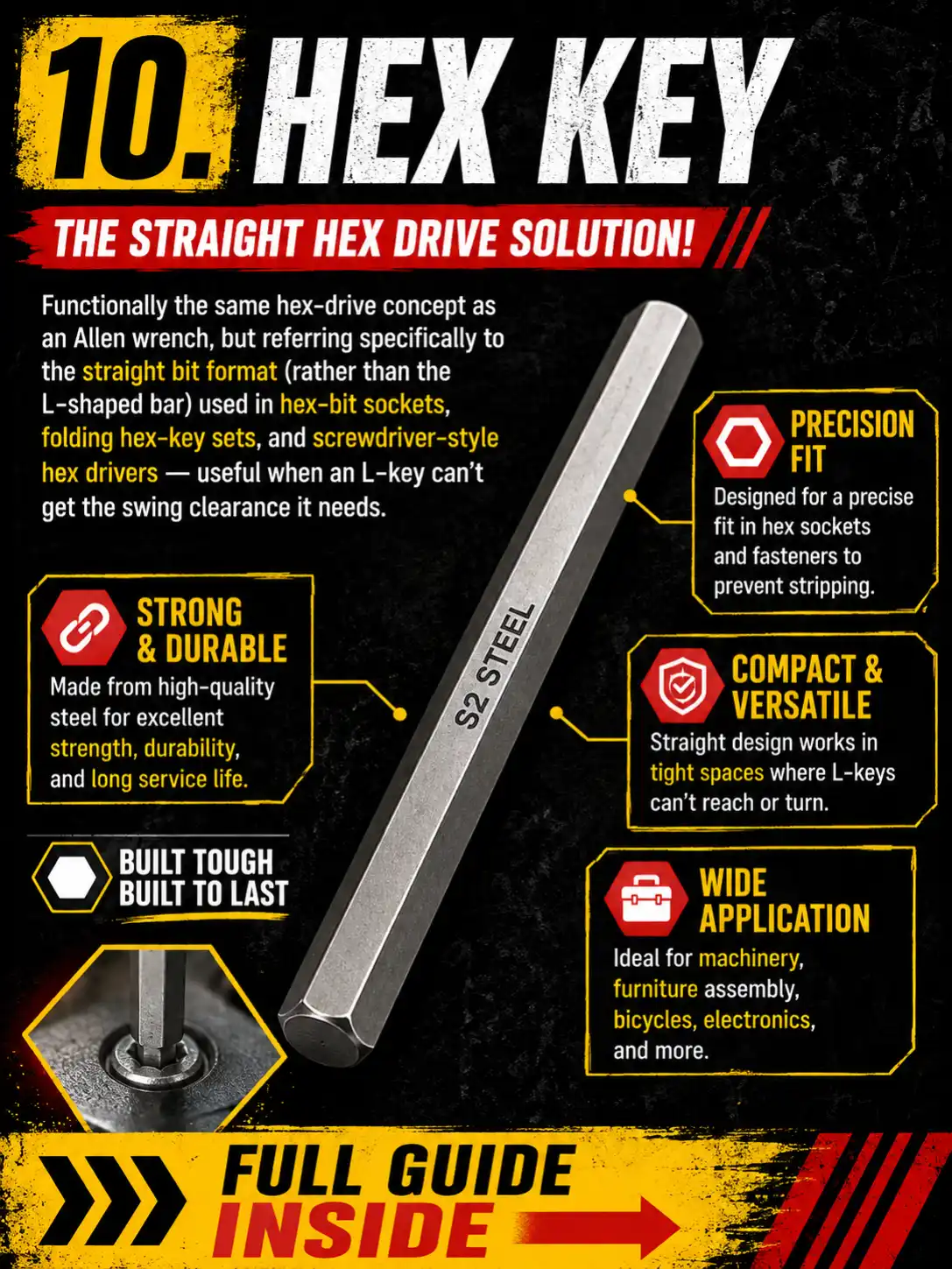
Functionally the same hex-drive concept as an Allen wrench, but referring specifically to the straight bit format (rather than the L-shaped bar) used in hex-bit sockets, folding hex-key sets, and screwdriver-style hex drivers — useful when an L-key can’t get the swing clearance it needs.
11. Ratcheting Combination Wrench
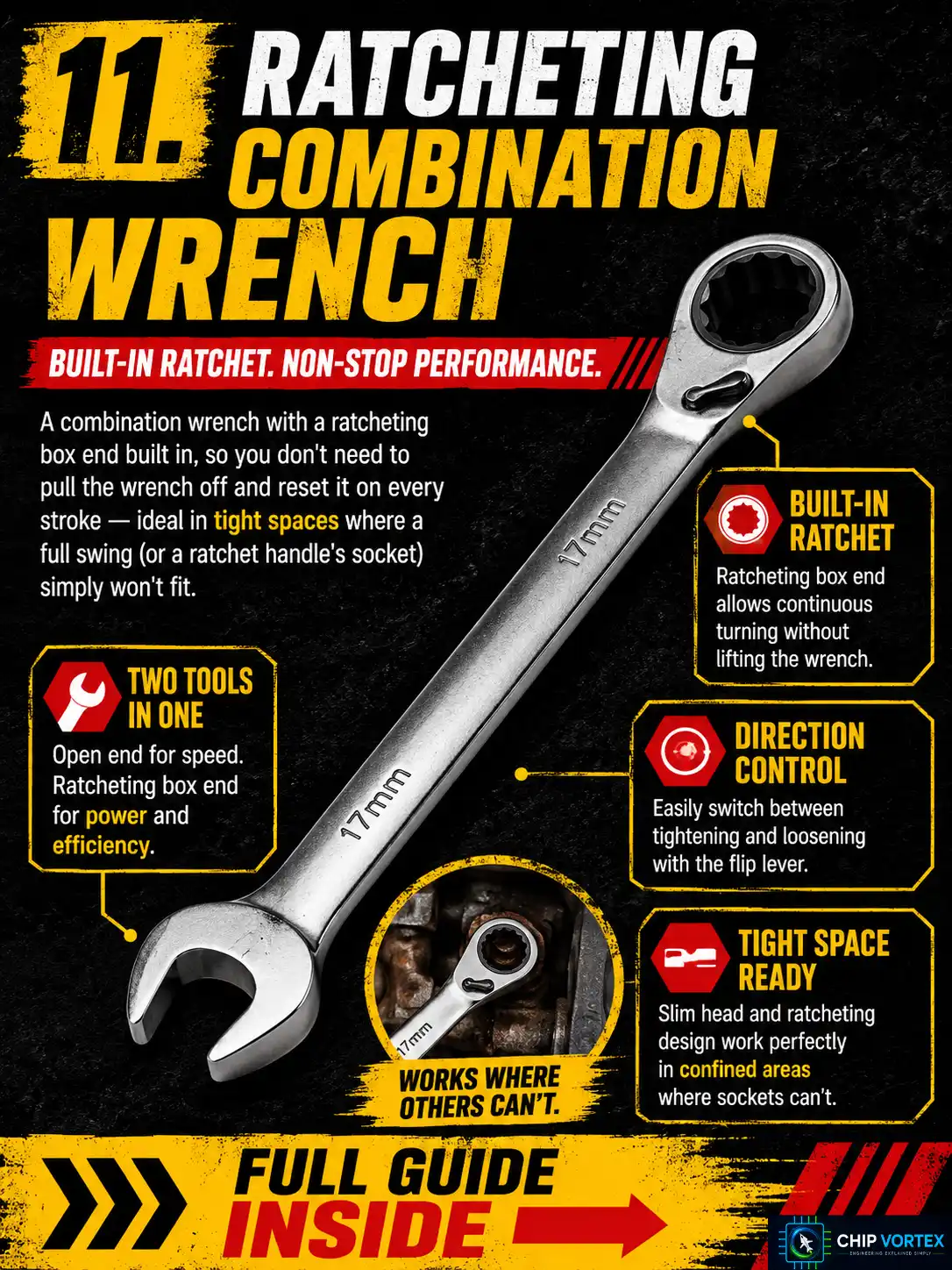
A combination wrench with a ratcheting box end built in, so you don’t need to pull the wrench off and reset it on every stroke — ideal in tight spaces where a full swing (or a ratchet handle’s socket) simply won’t fit.
12. Double Open-End Wrench
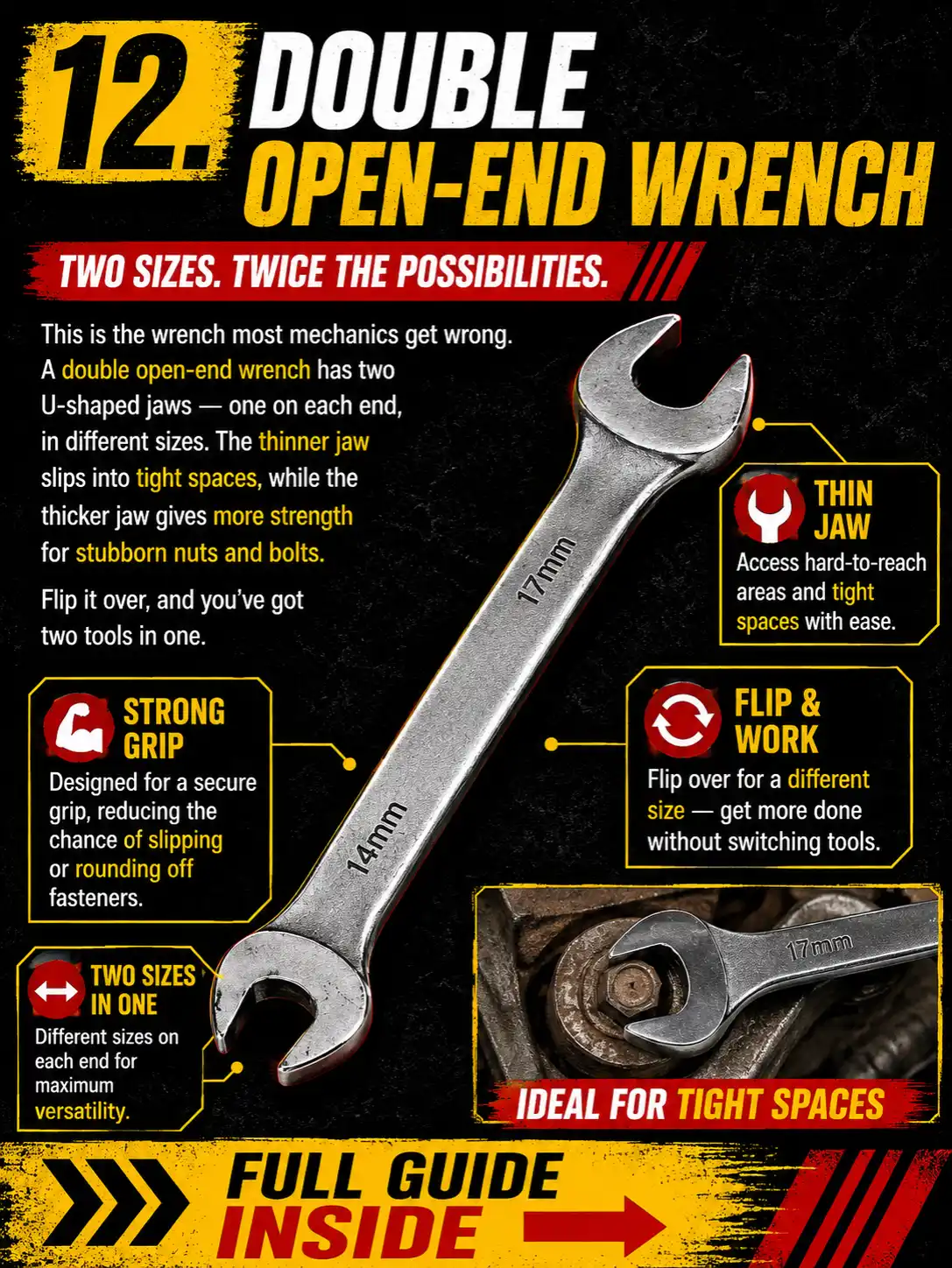
This is the wrench most mechanics get wrong. A double open-end wrench has two open jaws — one on each end, typically two different sizes. The mistake: using the wrong jaw angle relative to the fastener, or worse, mixing metric and SAE double open-end wrenches in the same set without labeling them, which leads to a “close enough” fit that slowly rounds off bolt heads. The fix is simple — always confirm the exact fastener size with calipers or a bolt gauge before reaching for a double open-end wrench, and keep metric and SAE sets in clearly separated trays so you’re never guessing under a hood at 6 different sizes that “look about right.”
13. Socket
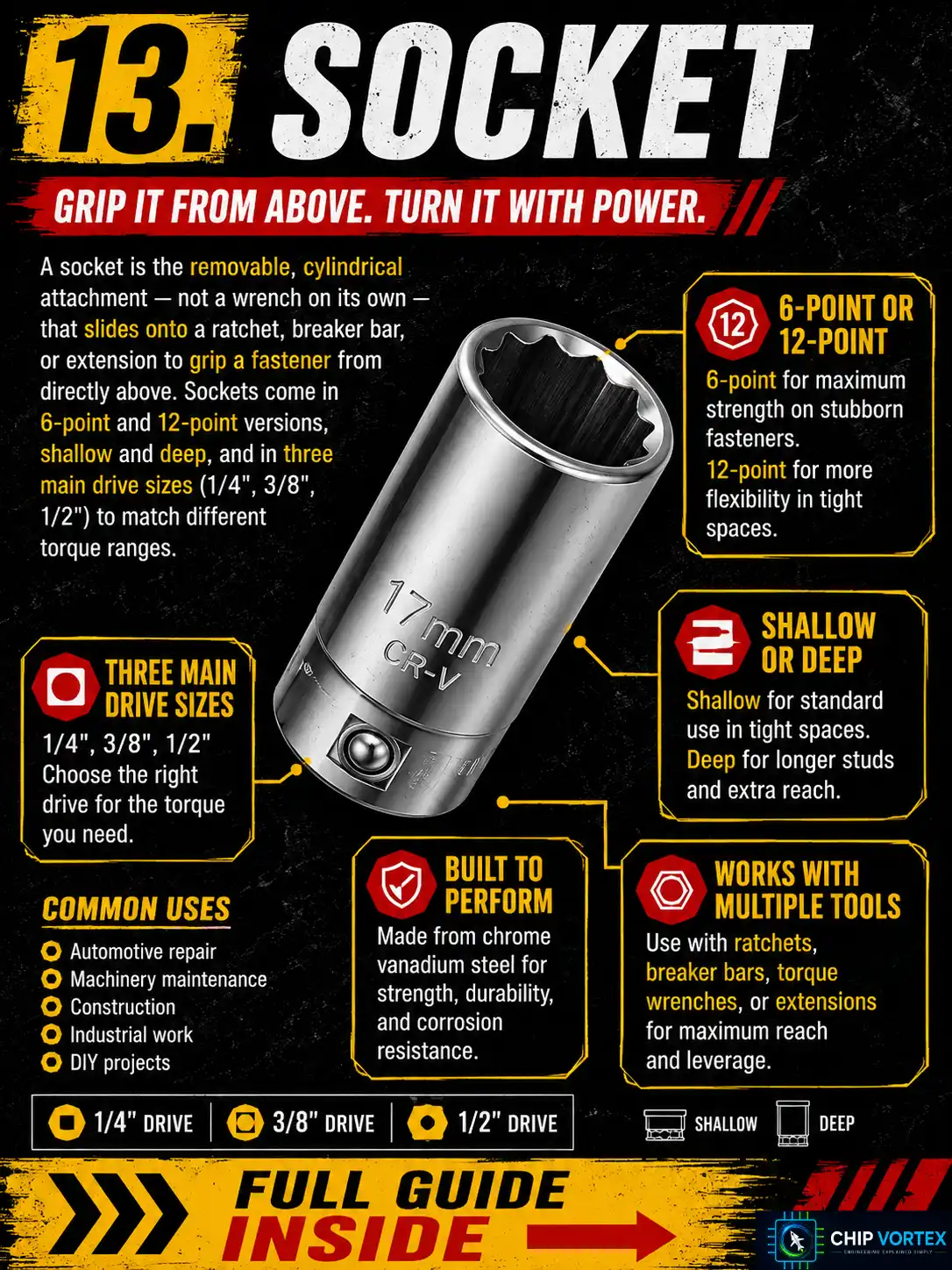
A socket is the removable, cylindrical attachment — not a wrench on its own — that slides onto a ratchet, breaker bar, or extension to grip a fastener from directly above. Sockets come in 6-point and 12-point versions, shallow and deep, and in three main drive sizes (1/4″, 3/8″, 1/2″) to match different torque ranges.
14. Socket Wrench
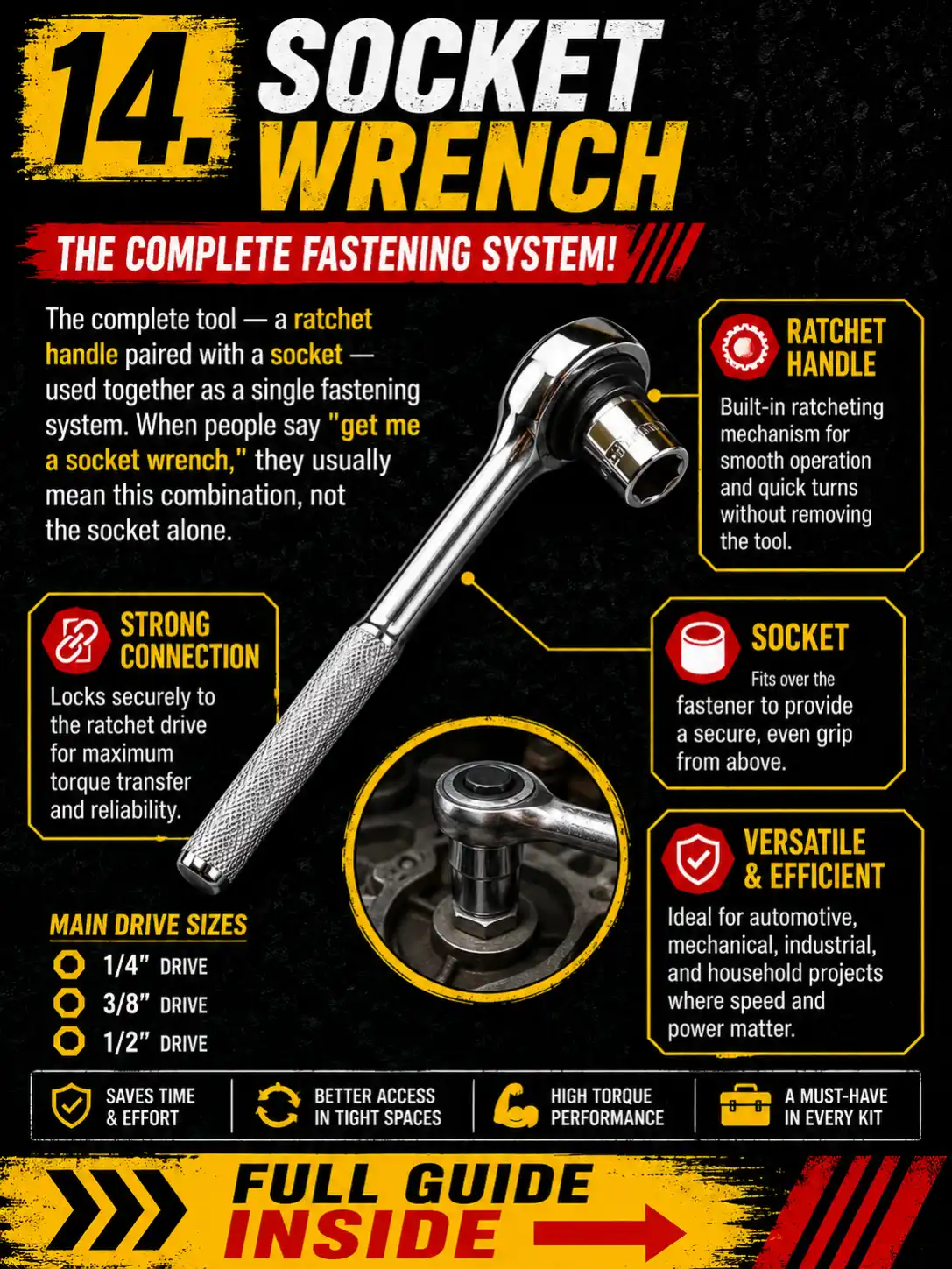
The complete tool — a ratchet handle paired with a socket — used together as a single fastening system. When people say “get me a socket wrench,” they usually mean this combination, not the socket alone.
15. Metric vs. SAE Double Open-End Sets
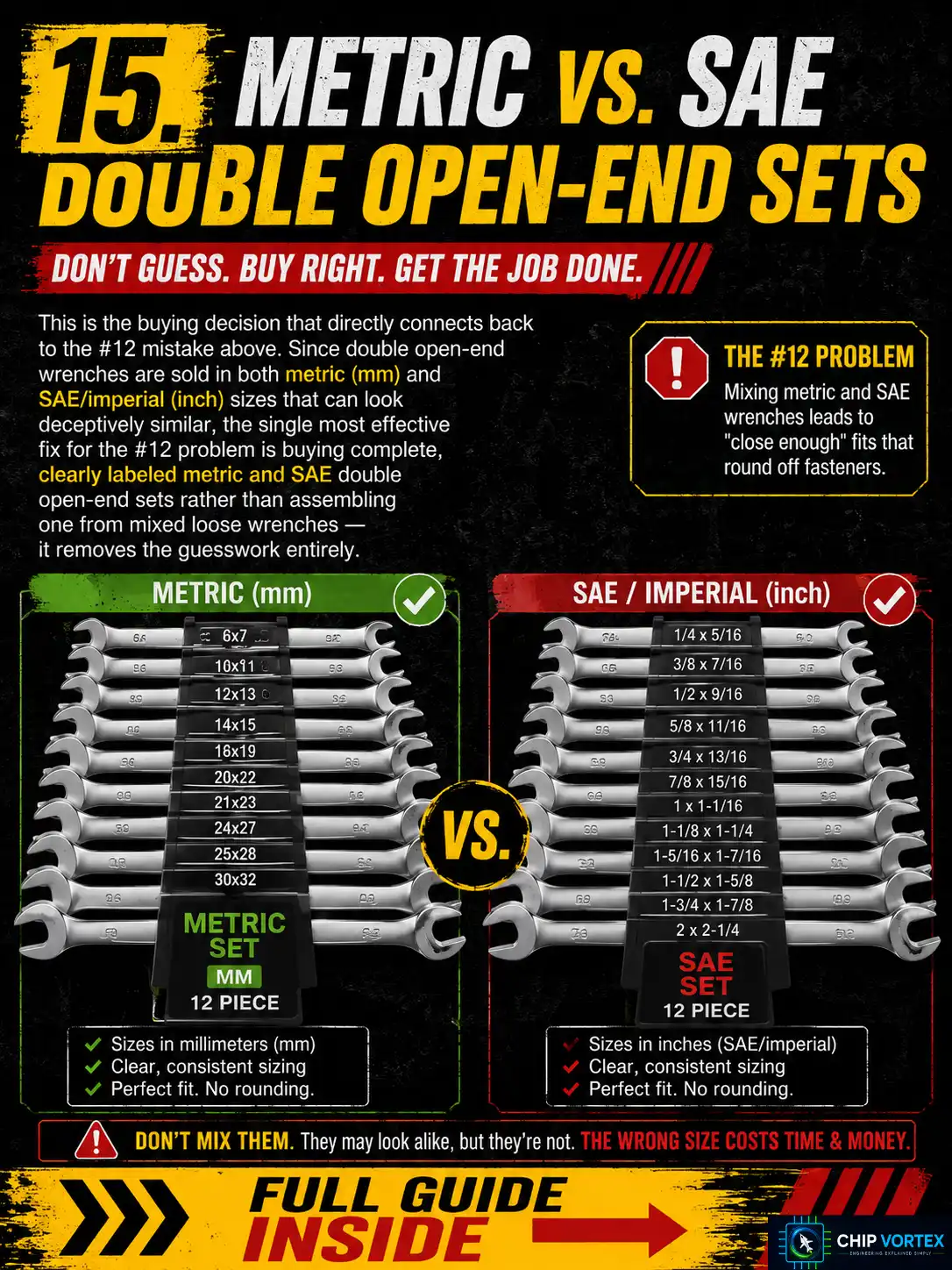
This is the buying decision that directly connects back to the #12 mistake above. Since double open-end wrenches are sold in both metric (mm) and SAE/imperial (inch) sizes that can look deceptively similar, the single most effective fix for the #12 problem is buying complete, clearly labeled metric and SAE double open-end sets rather than assembling one from mixed loose wrenches — it removes the guesswork entirely.
Which Wrench Should You Actually Buy?
If you’re building a toolbox from scratch, prioritize in this order: a flat combination wrench set (metric and SAE) covers the majority of everyday fasteners; a ratchet with a matching socket set covers anything with swing clearance and speeds up repetitive work dramatically; an adjustable wrench covers odd or unknown sizes as a backup, not a primary tool; and a set of offset ring or ratcheting combination wrenches fills in the tight-clearance gaps a straight wrench can’t reach. Skip the pipe wrench unless you’re actually working on pipe or round stock — using it on hex fasteners is the fastest way to ruin a bolt head.
Wrench Comparison Table
| Wrench Type | Best For | Watch Out For |
|---|---|---|
| Box-End | Maximum grip, high torque | Needs clearance to slide over the head |
| Offset Ring | Grip + knuckle clearance | Slightly weaker leverage than a straight box end |
| Pipe Wrench | Round pipe and fittings only | Never use on hex fasteners |
| Offset Combination | Two access options in one tool | — |
| Flat Combination | General-purpose, everyday use | — |
| Adjustable Wrench | Odd/unknown sizes, backup use | Jaw play can round off fasteners |
| Offset Wrench | Recessed or obstructed fasteners | — |
| Ratchet + Socket | Speed on open, swingable fasteners | Needs socket access, not always tight-space friendly |
| Allen Wrench | Socket-head (hex) screws | Strips easily if worn or wrong size |
| Hex Key | Same as Allen, straight-bit format | — |
| Ratcheting Combination | Tight spaces, no swing room | — |
| Double Open-End | Quick spin, two sizes in one tool | #1 cause of rounded bolts — verify size first |
| Socket | Direct top-down grip | Match drive size to torque needs |
| Socket Wrench | Full driving system | — |
| Metric/SAE Sets | Eliminates size-guessing mistakes | Buy labeled, separated sets |
Frequently Asked Questions
Why do mechanics round off bolts with double open-end wrenches specifically?▾
Because the two ends are often close-but-not-exact matches to a fastener (especially when metric and SAE wrenches get mixed in the same drawer), it’s easy to grab a “close enough” size under time pressure, which slips and rounds the head under load.
Is an adjustable wrench ever the right choice over a fixed-size wrench?▾
Yes — for odd, worn, or non-standard fasteners where no fixed wrench fits cleanly. For anything with a standard size, a fixed wrench (box-end, combination, or socket) will always grip more securely.
What’s the actual difference between a socket and a socket wrench?▾
A socket is just the cylindrical bit; a socket wrench is the full assembly of a ratchet handle plus a socket working together. You need both to actually turn a fastener.
Do I need both metric and SAE wrench sets?▾
If you work on anything built outside the US (most modern vehicles, imported machinery, bicycles), yes — mixing the two systems is exactly the kind of near-miss sizing that leads to rounded fasteners.
Final Thoughts
Fifteen wrench types sounds like a lot until you realize most jobs only call for four or five of them in rotation — the real skill is knowing which one to reach for, and catching the #12 mistake before it costs you a rounded bolt head. Keep this chart near your bench, double-check your fastener size before grabbing a double open-end wrench, and your tool collection will start working a lot harder for you.