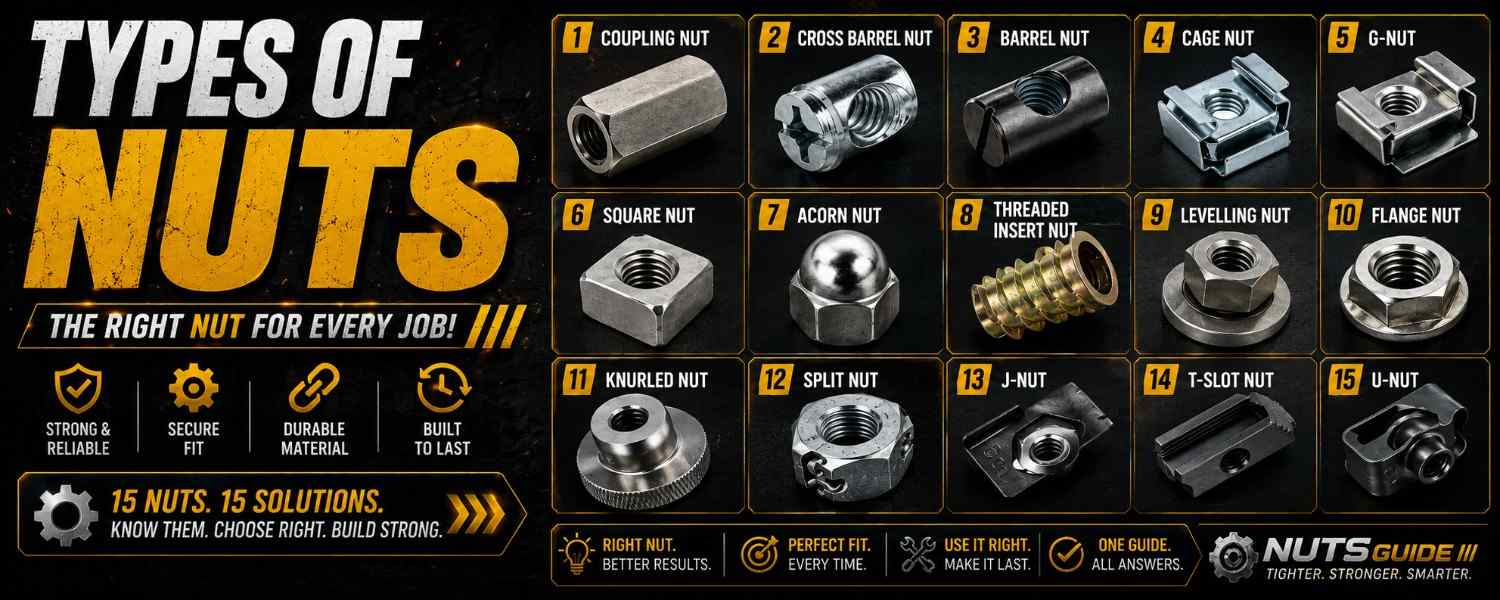
Nuts are the most underrated hardware in any workshop. Pick the right one and your joint stays tight for years — pick the wrong one and vibration, corrosion, or stripped threads will slowly undo your work. This guide covers 15 types of nuts you’ll actually encounter: what each one looks like, how it works, and exactly which job it’s built for.
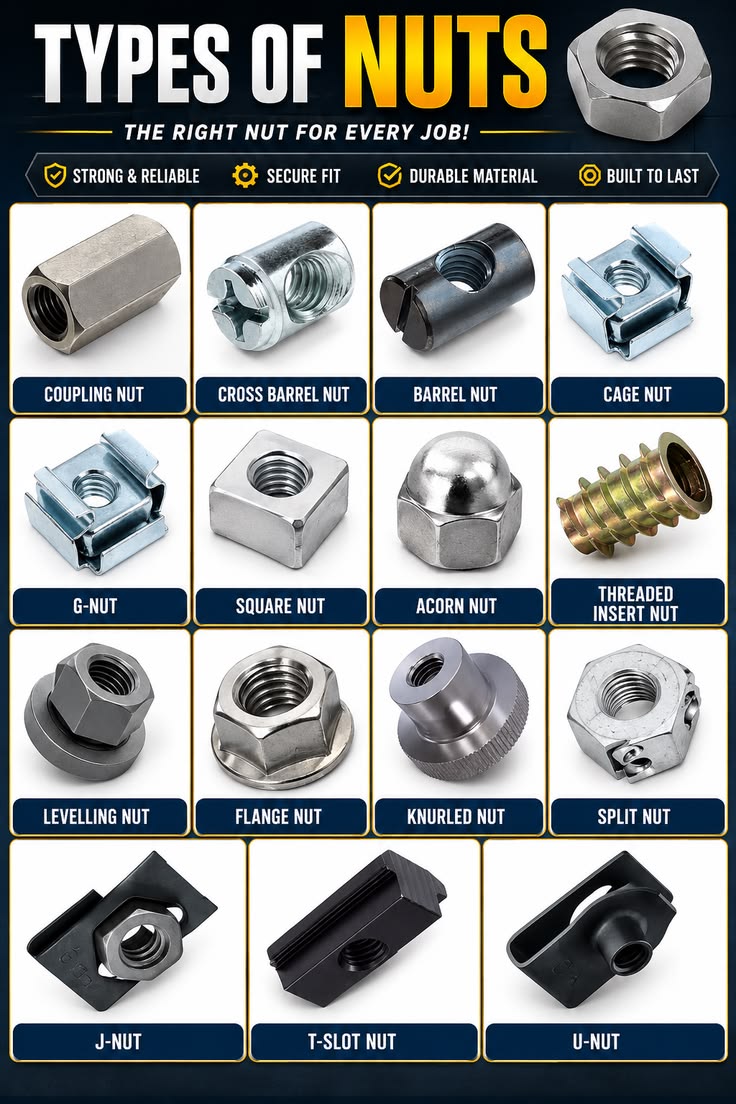
Save the chart above for quick reference, then read on for the details.
Quick Reference: All 15 Types of Nuts
| # | Nut Type | Key Feature | Best For |
|---|---|---|---|
| 1 | Coupling Nut | Extra-long hex body | Joining two threaded rods |
| 2 | Cross Barrel Nut | Cylinder with driver slot | Flat-pack furniture joints |
| 3 | Barrel Nut | Cylinder with side thread hole | Strong blind joints in panels |
| 4 | Cage Nut | Square nut in a spring cage | Server racks, square panel holes |
| 5 | G-Nut | Clip-on captive nut | Thin panels with no rear access |
| 6 | Square Nut | Four flat sides, big contact area | Wood joints, channel systems |
| 7 | Acorn Nut | Domed, closed top | Covering exposed bolt ends |
| 8 | Threaded Insert Nut | Wood threads outside, machine threads inside | Bolt-ready joints in wood |
| 9 | Levelling Nut | Used in pairs on anchor bolts | Leveling machines and base plates |
| 10 | Flange Nut | Built-in washer flange | Vibration-prone assemblies |
| 11 | Knurled Nut | Textured grip surface | Tool-free hand adjustments |
| 12 | Split Nut | Slotted, self-locking segments | All-metal vibration locking |
| 13 | J-Nut | J-shaped edge clip | Sheet metal with one-side access |
| 14 | T-Slot Nut | Slides into T-track channels | Aluminum extrusion, jigs, CNC beds |
| 15 | U-Nut | U-clip that wraps a panel edge | Automotive trim and body panels |
Now let’s look at each one properly.
1. Coupling Nut
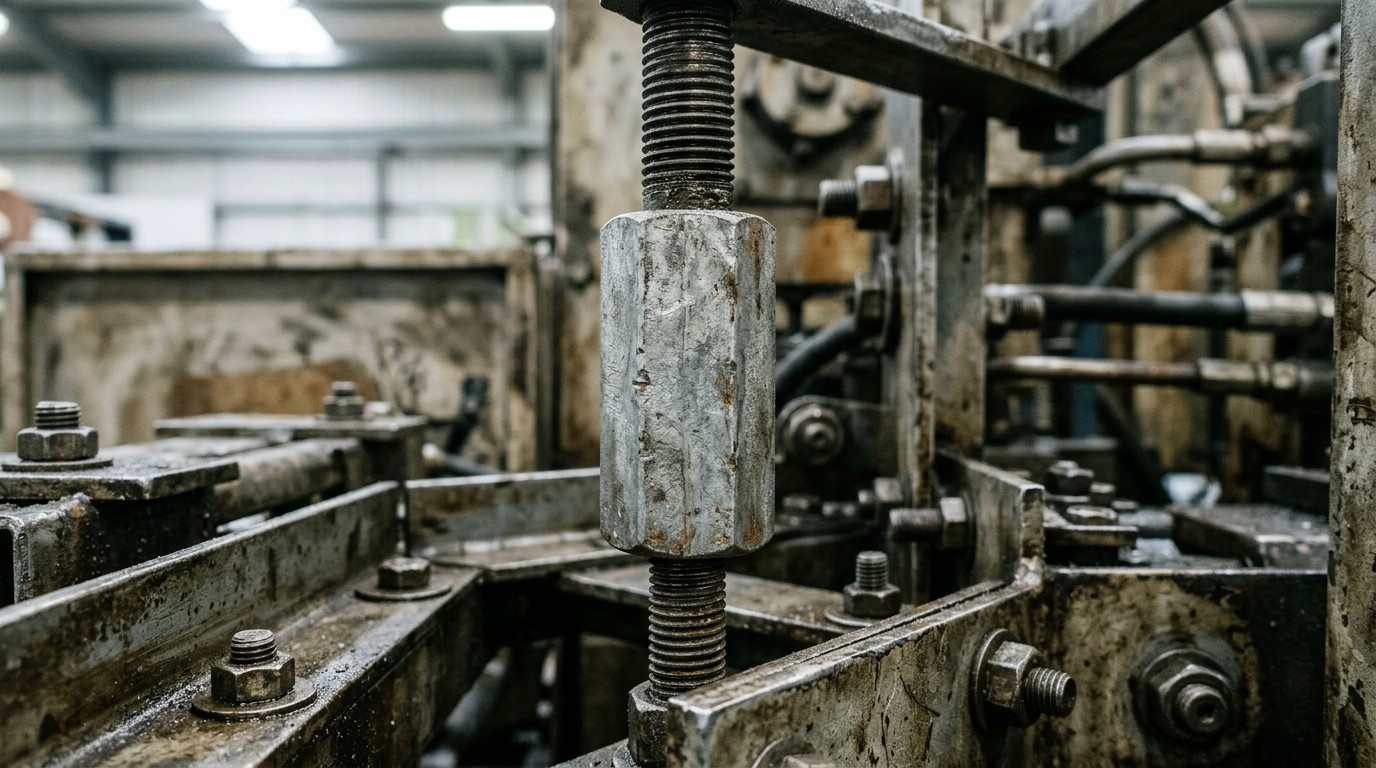
A coupling nut is a hex nut stretched to about three times the normal height. Its job is simple: join two lengths of threaded rod (or two male threads) end to end so they act as one continuous piece.
You’ll see coupling nuts in HVAC duct hangers, sprinkler pipe suspension, leveling feet, and anywhere threaded rod needs extending. Pro tip: thread both rods in to equal depth — an off-center joint concentrates stress on one side and weakens the connection.
Best for: Extending threaded rod and connecting hanging systems.
2. Cross Barrel Nut
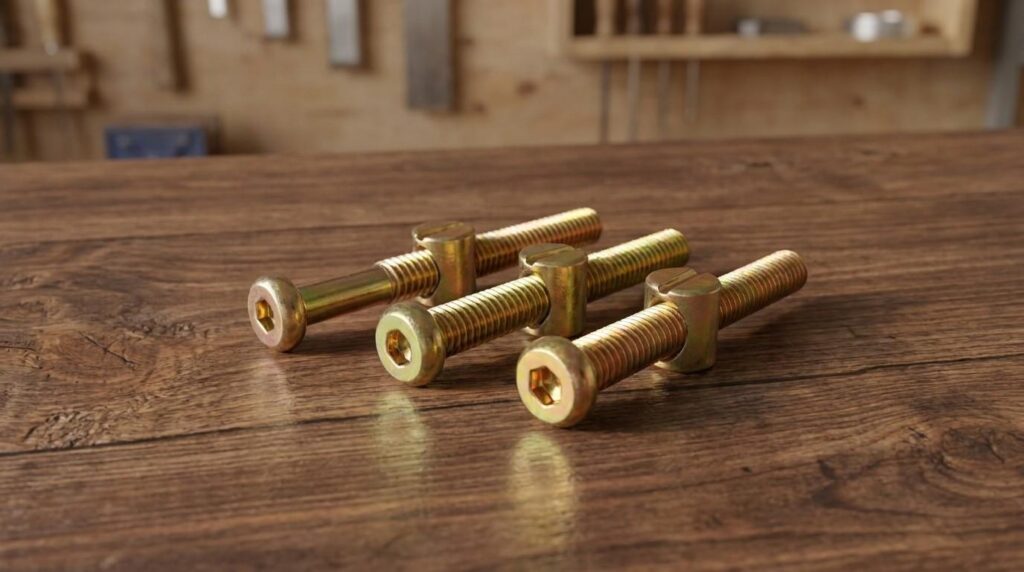
A cross barrel nut (also called a cross dowel) is a steel cylinder with a threaded hole through its side and a screwdriver slot on its face. The cylinder drops into a pre-drilled hole in one panel, a bolt enters through the mating panel, and the slot lets you rotate the barrel until the threads align.
If you’ve ever assembled a flat-pack bed frame or crib, you’ve used one. The design creates a surprisingly strong right-angle joint in materials like MDF and chipboard that would never hold a screw on their own.
Best for: Flat-pack and knock-down furniture joints.
3. Barrel Nut
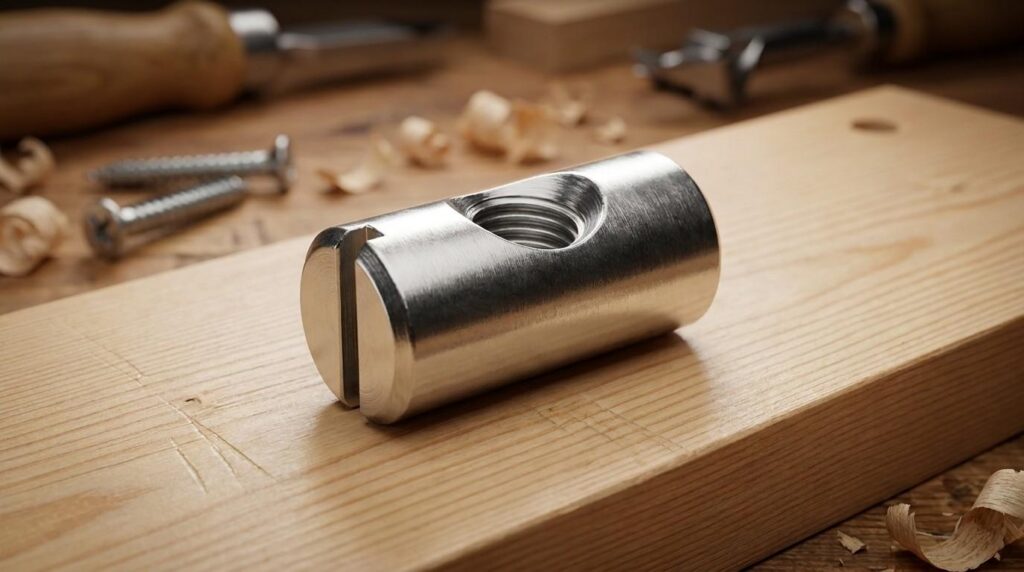
The plain barrel nut works on the same principle as the cross barrel — a cylinder with a threaded bore that sits inside a drilled hole — but without the driver slot, giving a flush, clean cylindrical body. The bolt clamps the joint from the perpendicular direction.
Barrel nuts show up in furniture, bicycle frames, and firearm handguards. They’re also used in aircraft structural joints, where a strong blind connection matters and there’s no room for a wrench on the far side.
Best for: Strong, hidden joints where only one side is accessible.
4. Cage Nut
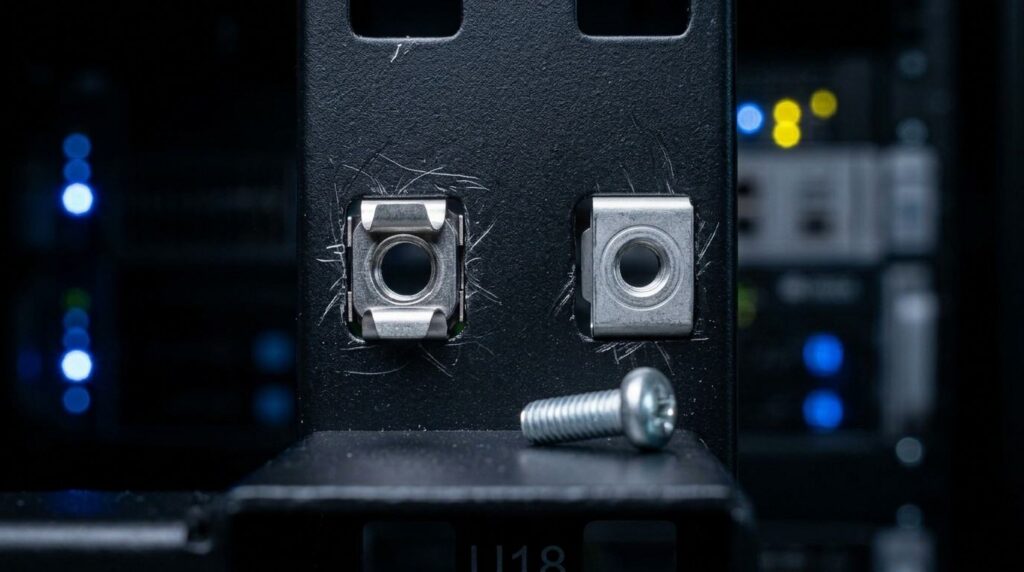
A cage nut is a square nut held inside a spring-steel cage with two flexible wings. Squeeze the wings, snap it into a square punched hole, and you’ve got a captive nut floating slightly in place — which is exactly the point. That float compensates for small misalignments between the panel and the equipment being mounted.
This is the standard fastener of 19-inch server racks, and you’ll also find cage nuts in electrical enclosures and vehicle body panels. If threads ever strip, you replace a cheap cage nut instead of a whole rack rail.
Best for: Server racks and panels with square mounting holes.
5. G-Nut
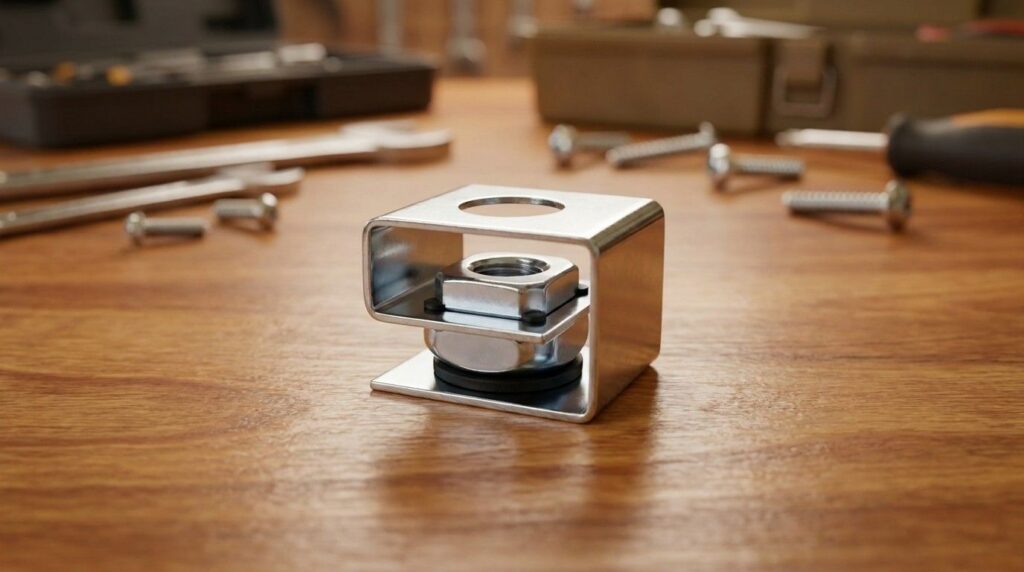
The G-nut belongs to the clip-on captive nut family. It’s a spring-steel retainer that grips into a panel cutout and holds a threaded section in position, so you can drive a screw from the front without holding anything behind the panel.
Use it on thin sheet-metal panels and enclosures where rear access is awkward or impossible, and where a loose nut would be fiddly to hold in place during assembly.
Best for: Thin panels and enclosures with limited rear access.
6. Square Nut
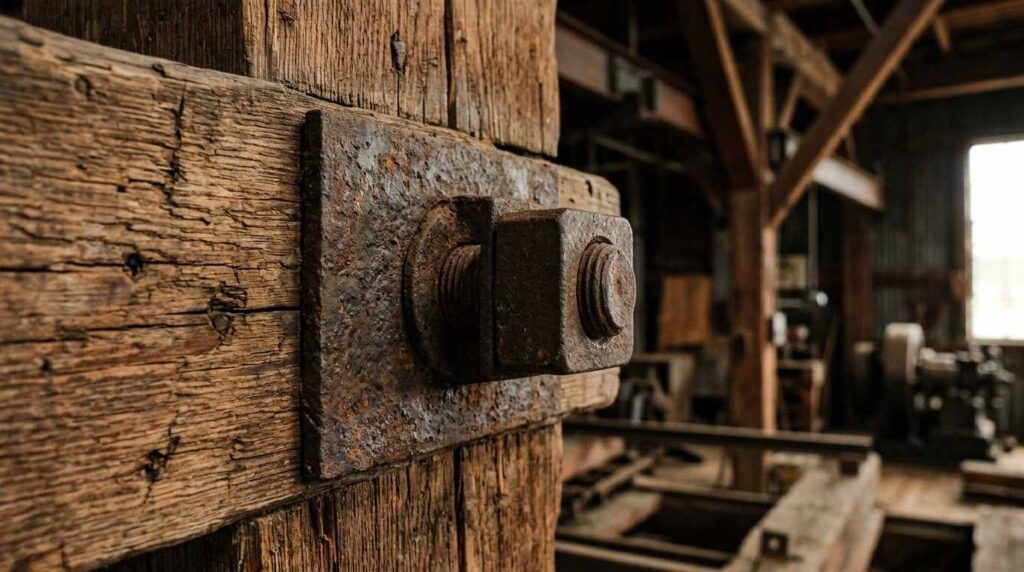
The square nut is the old-timer of the group — four flat sides instead of six. Those flat sides give it more surface contact and more resistance to digging in or rotating, especially against wood. It’s also less likely to round off under a wrench.
You’ll find square nuts paired with carriage bolts in wooden structures, sliding inside some channel and track systems, and all over vintage machinery and farm equipment.
Best for: Wood construction and channel/track systems.
7. Acorn Nut
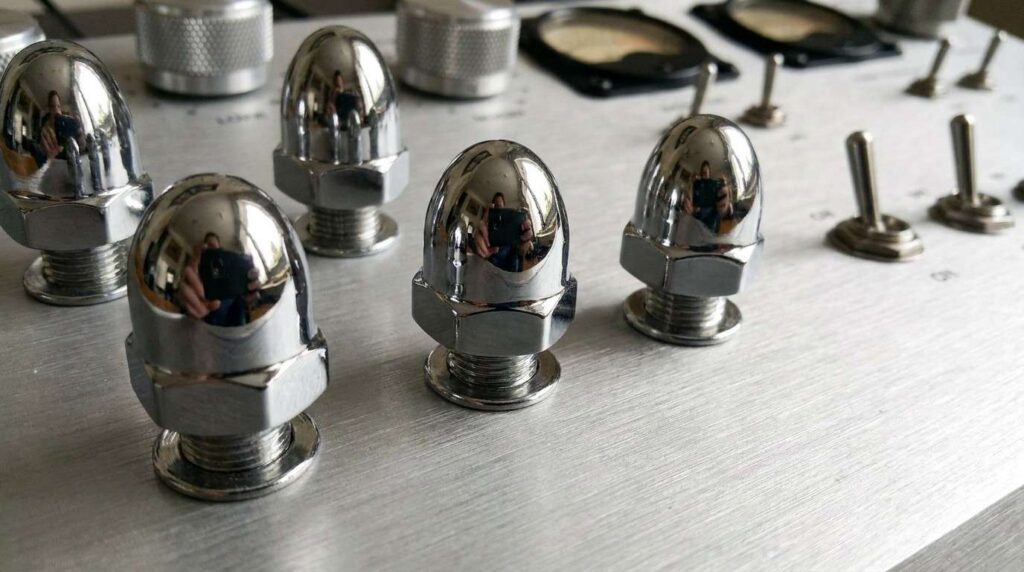
An acorn nut (or cap nut) has a domed, closed top that completely covers the exposed end of a bolt. That does three things at once: protects people from sharp thread ends, protects the threads from moisture and corrosion, and gives the assembly a clean, finished look.
Common on railings, playground equipment, vehicle fenders, and furniture. One caution: the bolt must not be so long that it bottoms out inside the dome before the nut clamps the joint — measure before you buy.
Best for: Safety and a finished appearance on exposed bolt ends.
8. Threaded Insert Nut
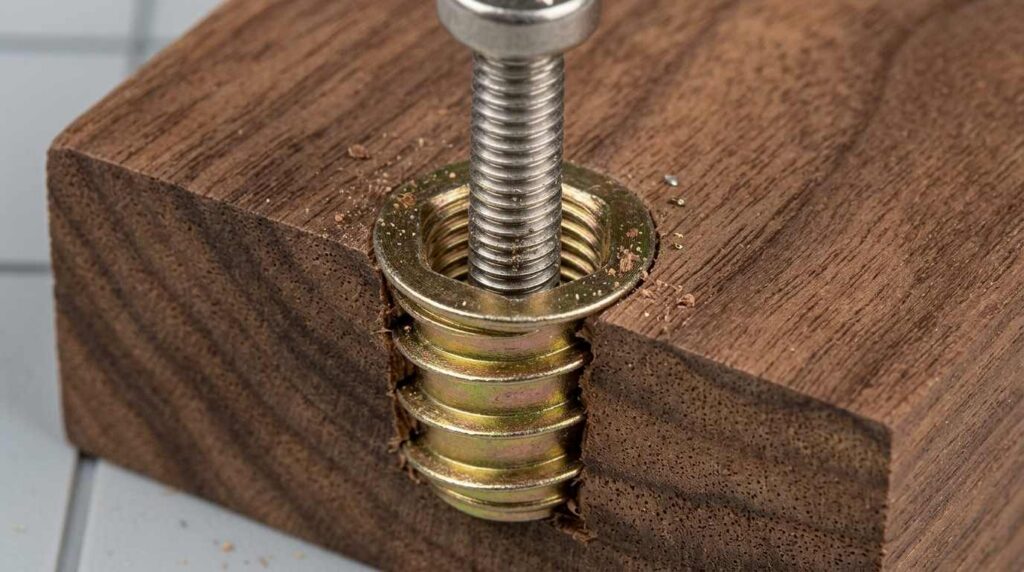
A threaded insert nut has two personalities: aggressive wood-cutting threads (or a knurled body) on the outside, and clean machine threads on the inside. Drive it into wood, plywood, or even a 3D print, and that soft material now accepts a machine bolt — repeatedly.
This is the fastener that makes knock-down furniture, speaker cabinets, and jigs possible. Unlike a wood screw, you can assemble and disassemble the joint dozens of times without wearing anything out.
Best for: Creating reusable machine-thread joints in wood and soft materials.
9. Levelling Nut
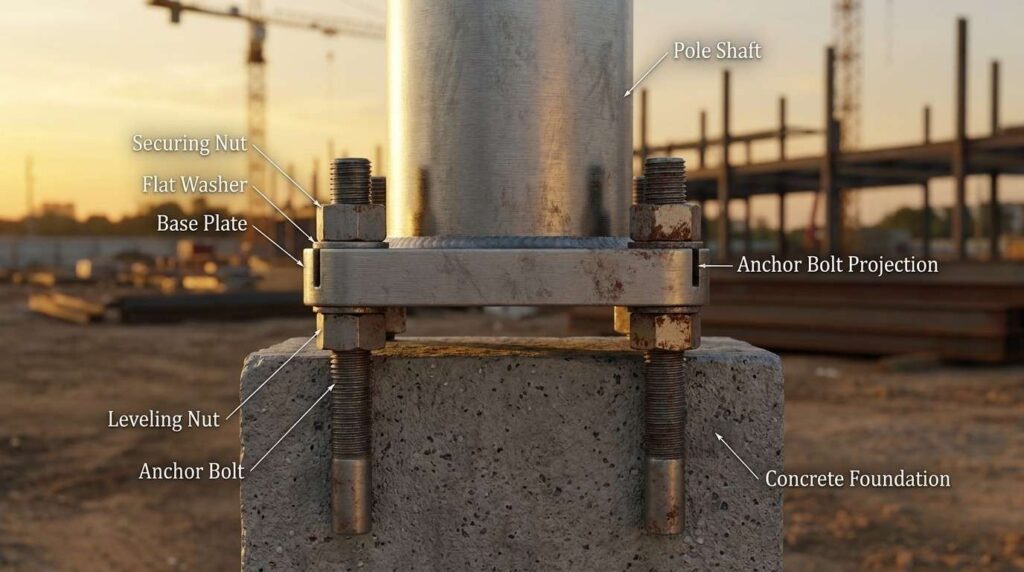
A levelling nut isn’t a special shape — it’s a special role. Threaded onto an anchor bolt or rod beneath a base plate, it lets you dial the plate to the exact height and angle you need. Once the equipment is level, a top nut clamps everything down and the leveling nut carries the load from below.
This is standard practice when installing machinery, structural columns, signage posts, and solar racking on anchor bolts.
Best for: Precisely leveling base plates, machines, and columns.
10. Flange Nut
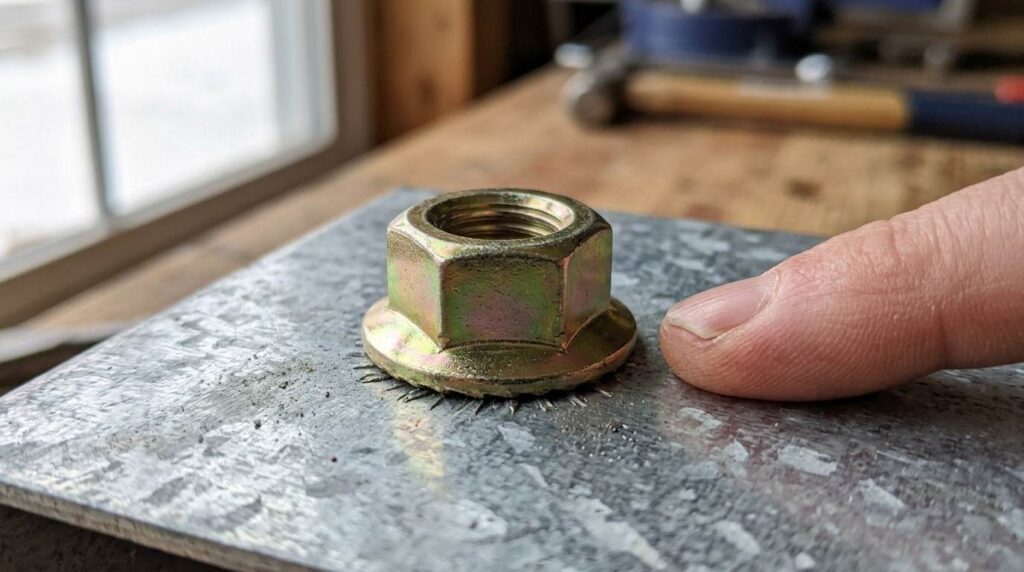
A flange nut has a wide built-in flange at its base that works like an integrated washer, spreading the clamping load over a larger area. Serrated versions take it further — the teeth bite into the mating surface and resist loosening under vibration.
Because it’s one part instead of two (no separate washer to drop), the flange nut is a favorite in automotive frames, exhaust systems, appliances, and any fast-paced assembly work.
Best for: Vibration-prone joints and fast assembly without separate washers.
11. Knurled Nut
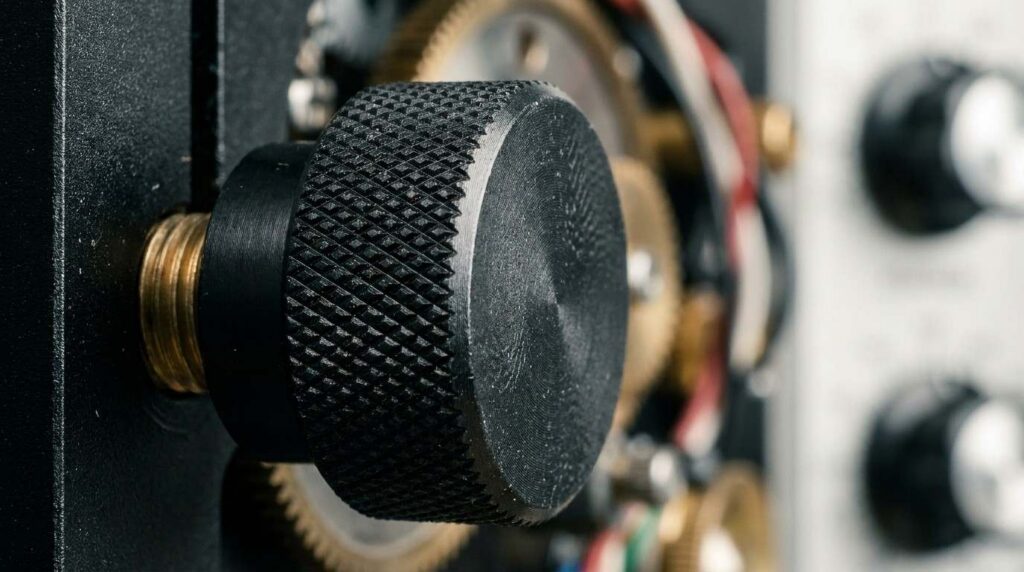
A knurled nut (thumb nut) has a textured, grippy cylindrical body designed for fingers, not wrenches. Anywhere a joint needs frequent adjustment — jigs, fixtures, electronics enclosures, lamp fittings, camera rigs — a knurled nut means no tools required.
They’re not made for high clamping force, so keep them on light-duty, adjust-often connections.
Best for: Tool-free adjustments on light-duty assemblies.
12. Split Nut
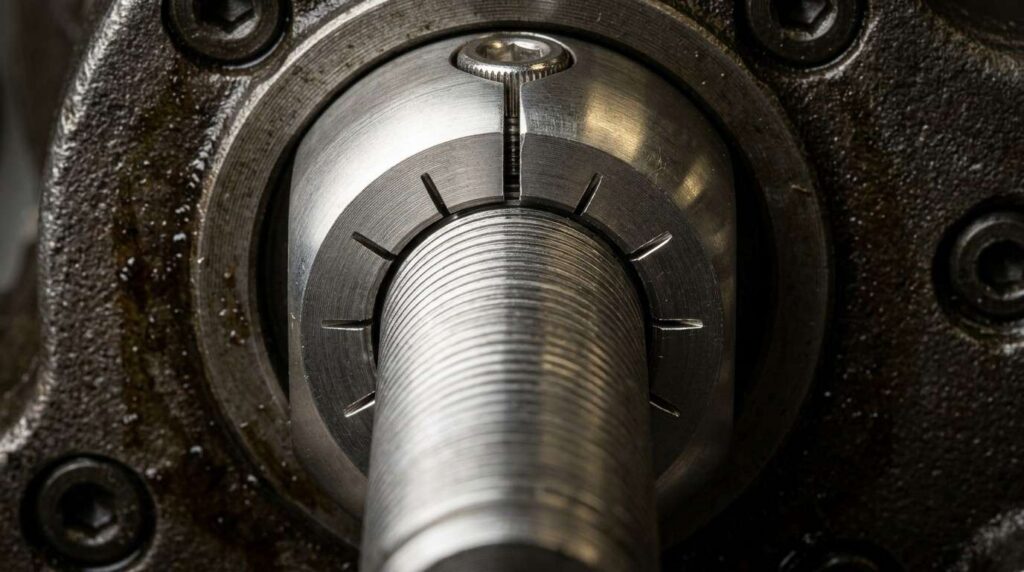
The split nut in this chart is the slotted, self-locking style: slots cut into the nut body create spring-like segments that grip the bolt threads with constant pressure. The result is an all-metal locking nut — reusable, vibration-resistant, and far more heat-tolerant than nylon-insert types, which makes it useful near engines and hot assemblies.
(The name “split nut” is also used for lathe half-nuts that open and close over a lead screw — a different tool-room application of the same idea.)
Best for: All-metal vibration locking, especially in high-heat areas.
13. J-Nut
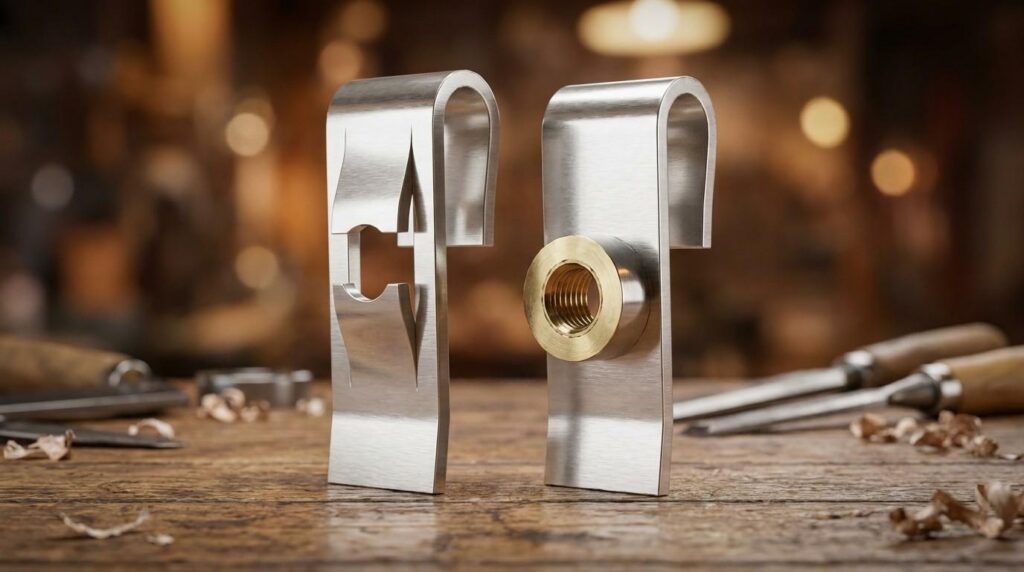
A J-nut is a spring-steel clip shaped like the letter J: a short leg and a longer threaded leg that slide over the edge of a panel. Line its hole up with the panel hole, drive the screw, and the clip clamps itself tight — no hands needed on the back side.
The automotive world runs on these. Body trim, interior panels, and appliance housings all use J-nuts for blind, one-side assembly on sheet metal.
Best for: Blind fastening on sheet-metal edges.
14. T-Slot Nut
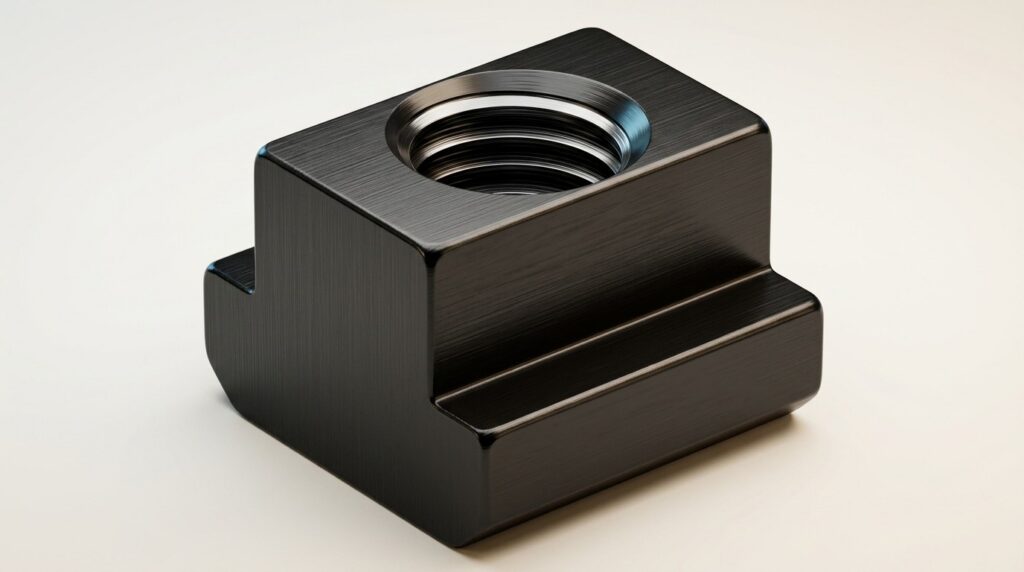
A T-slot nut is a rectangular nut profiled to slide inside the channel of a T-track or aluminum extrusion (the 20/40-series framing used in workbenches, router tables, CNC beds, and machine guarding). Slide it to any position along the track, drop a bolt in, and clamp your accessory exactly where you want it.
Drop-in variants can be inserted mid-track without disassembling anything — worth paying slightly more for on long extrusions.
Best for: Aluminum extrusion framing, jigs, and adjustable fixtures.
15. U-Nut
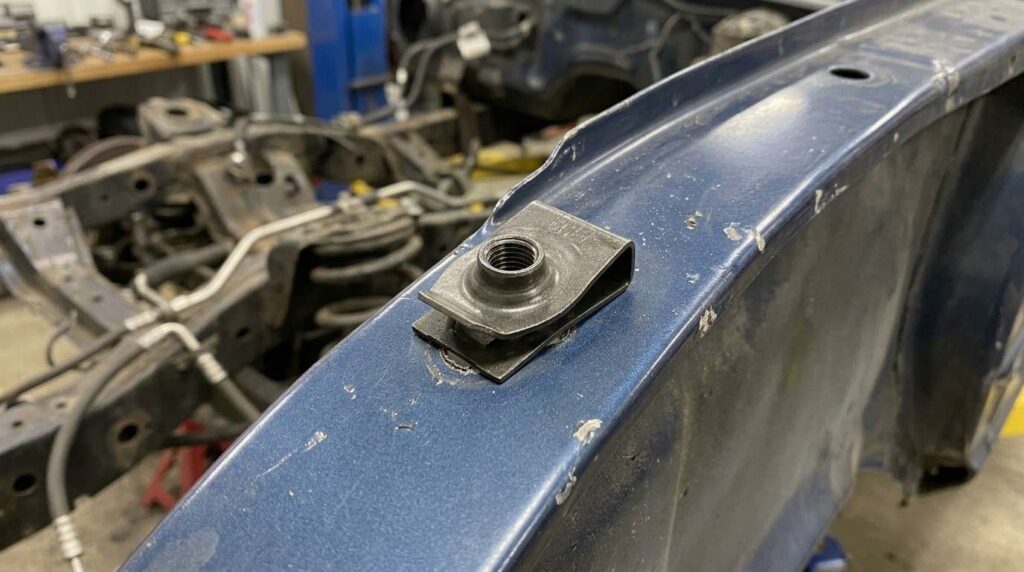
A U-nut is a spring-steel clip folded into a U that wraps around a panel edge, carrying its own threaded plate. Push it onto the edge, align with the hole, and drive the screw — the clip tightens onto the panel as the screw pulls it in. In the automotive trade these are often called speed nuts, and that tells you everything: fast, no rear access needed, and tolerant of vibration.
Bumpers, fenders, wheel-arch liners, and trim panels are full of them. Aircraft fairings and access panels use the same clip-nut principle for quick, repeatable removal.
Best for: Automotive trim, body panels, and quick-service covers.
How to Choose the Right Nut for the Job
The chart’s four promises are actually your four selection criteria:
1. Strong & Reliable — match the strength. A nut must match its bolt in size, thread pitch, and strength grade. Pairing a hardened bolt with a soft, mismatched nut means the nut threads strip first — usually at the worst possible moment.
2. Secure Fit — match the situation. Vibration? Reach for serrated flange, split-style locking, or clip nuts. No rear access? J-nuts, U-nuts, barrel nuts, or cage nuts. Frequent adjustment? Knurled or levelling nuts. The “right nut” is mostly about the constraint you’re working around.
3. Durable Material — match the environment. Zinc-plated steel is fine indoors. Outdoors or anywhere damp, step up to stainless. Brass suits electrical and decorative work. And keep nylon-insert components away from heat — that’s exactly where all-metal split nuts earn their place.
4. Built to Last — install it properly. Torque to spec rather than “as tight as possible,” use a washer where the surface is soft, and replace any nut with crushed, rusted, or stripped threads. Locking nuts lose grip with reuse — when in doubt, fit a fresh one.
FAQ: Types of Nuts
What is the most common type of nut?▾
The standard hex nut. The 15 types above exist for the jobs a plain hex nut can’t handle — blind access, vibration, wood, leveling, or tool-free adjustment.
Which type of nut is best against vibration?▾
Serrated flange nuts and split-style all-metal locking nuts are the strongest everyday choices. U-nuts and J-nuts also hold well on panels because the spring clip maintains constant tension.
What’s the difference between a cage nut and a U-nut?▾
A cage nut snaps into a square hole in the middle of a panel; a U-nut clips over the edge of a panel. Both give you a captive nut with no rear access needed — the mounting location decides which one you use.
Which nut works best in wood?▾
A threaded insert nut. It converts soft wood into a reusable machine-thread joint. For carriage-bolt construction, a square nut’s large flat faces also resist pulling into the timber.
Can you reuse locking nuts?▾
All-metal split-style locking nuts can usually be reused a few times if the threads are clean and grip is still firm. Nylon-insert types lose holding power quickly — replace them rather than gamble.
Found this useful? Save the chart to your Pinterest board so it’s there next time you’re standing in the hardware aisle. And if you want to go deeper, check out our guides on [types of bolts — internal link when live] and [how torque actually works — internal link when live].