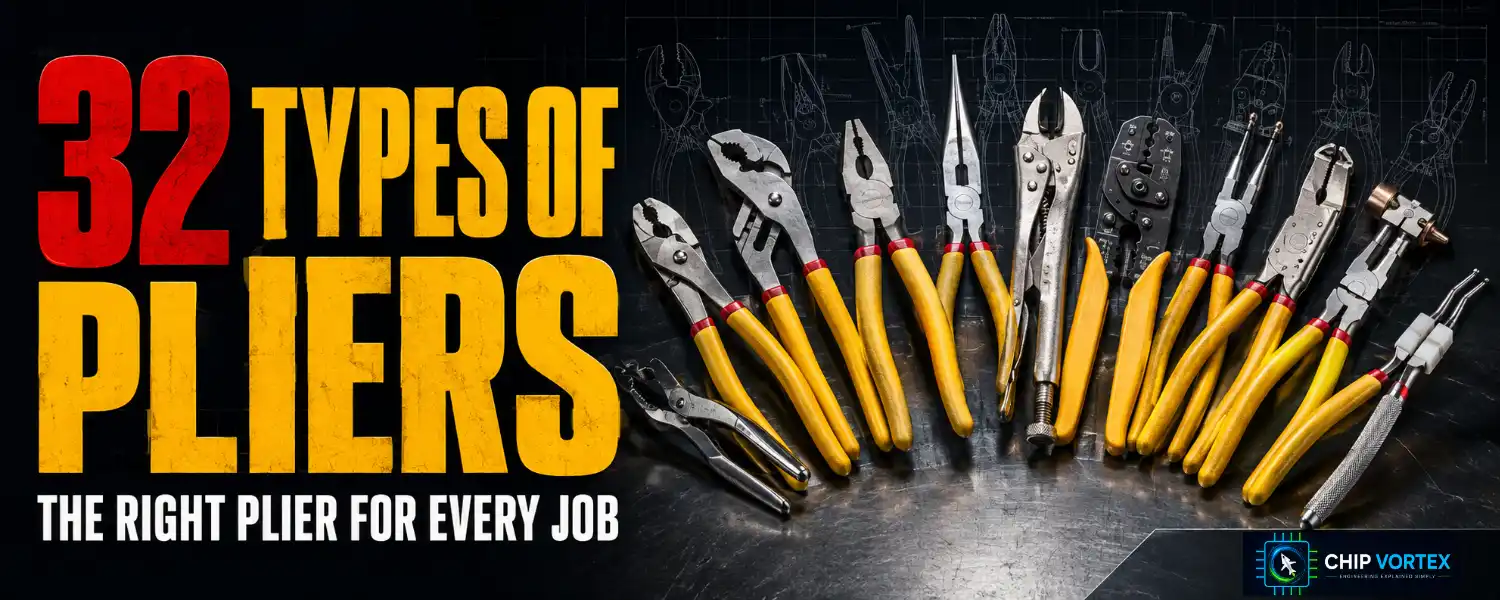
Every plier ever made is the same simple machine — two levers crossed at a pivot, multiplying the force of your hand — and yet walk through any trade and you’ll find a different plier evolved for its exact work, like finches on separate islands. Here are all 32, organized the way the working world actually organizes them: the six everyone needs, and the specialists each trade swears by.
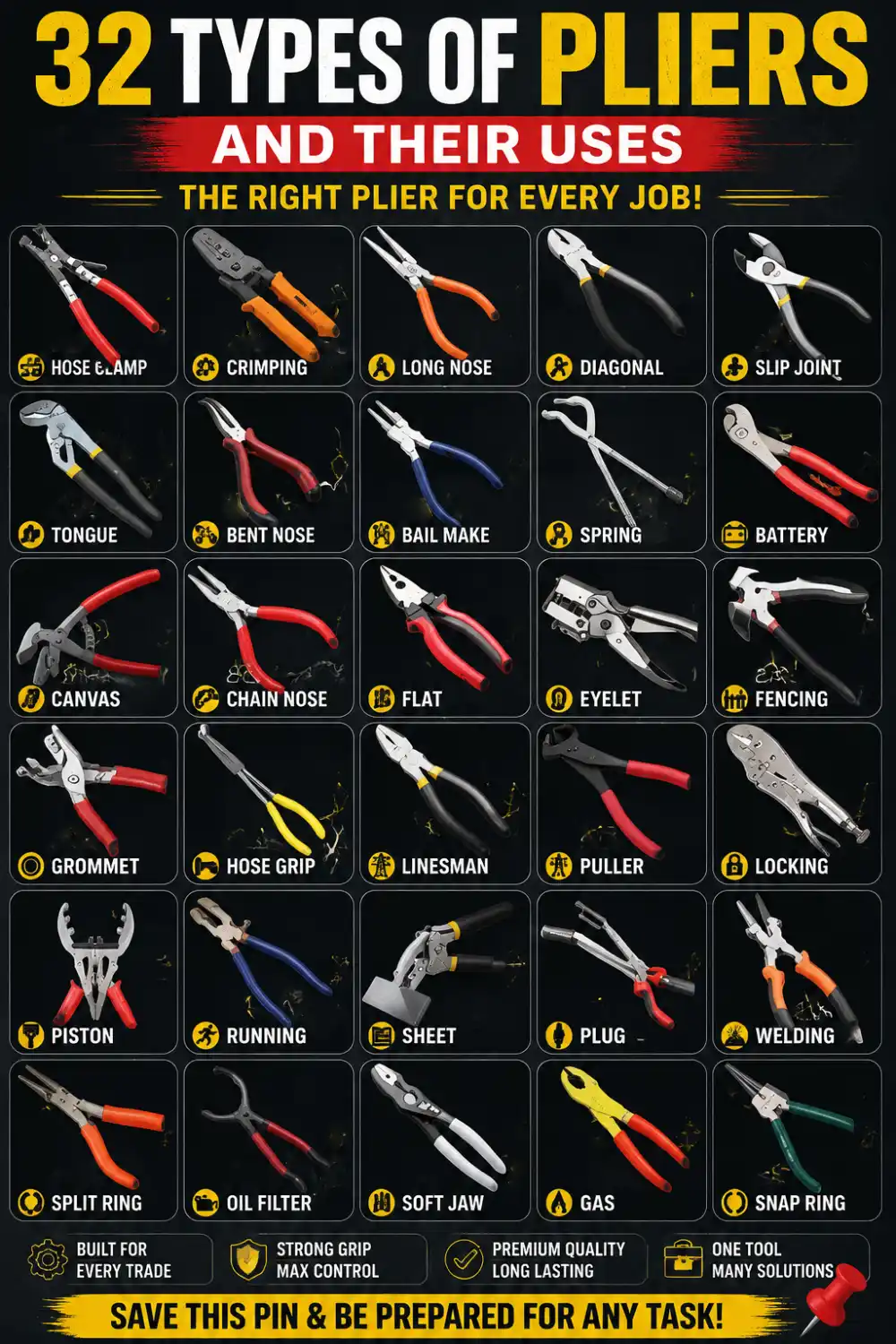
Save the chart, then find your trade below.
The Everyday Six (Start Here)
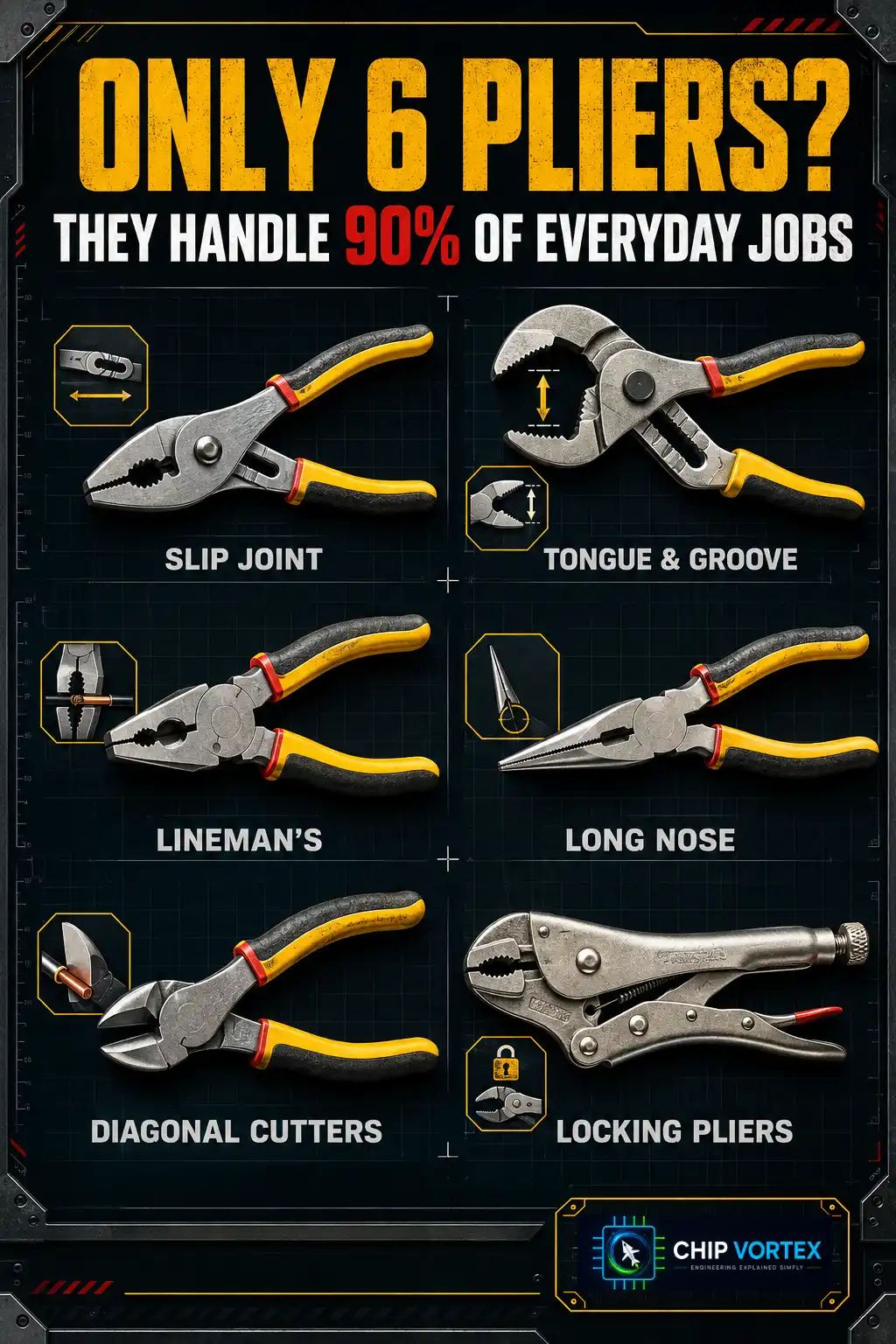
If your toolbox holds only these, you’re equipped for 90% of life:
Slip Joint — the “default plier”: its pivot slides between two positions, so the jaws grip small and medium work alike. Tongue & Groove (the pin’s “Tongue” — groove-joint, water-pump, or Channellock-style) — the plumber’s handshake: multiple jaw positions along a track, gripping anything from a pencil to a drainpipe. Lineman’s — the electrician’s workhorse: heavy square jaws that grip, twist, and cut wire in one motion, built to be hammered through a full career. Long Nose — reach and precision: holding a screw where fingers can’t go, bending a loop in wire. Diagonal Cutters — no gripping at all, just clean angled cutting of wire and pins flush to a surface. Locking Pliers — the clamp that bites and stays: invented in 1924 by Danish-American blacksmith William Petersen in Nebraska as the Vise-Grip, they lock onto work with adjustable jaw pressure and free both your hands — half plier, half vise, all stubbornness.
Precision & Jewelry (5)
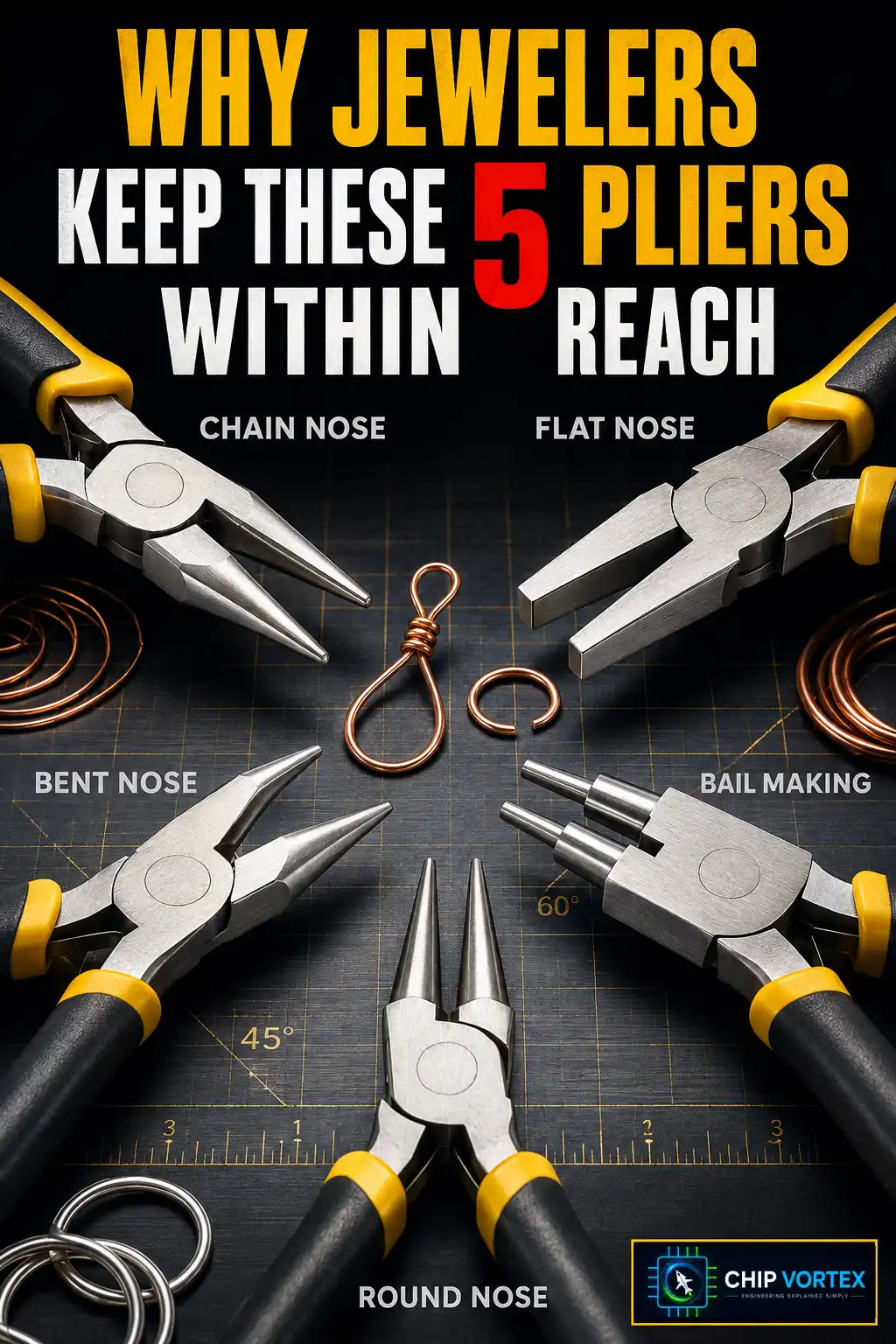
Small work demands smooth, exact jaws — most of these are toothless so they never mar soft metal. Chain Nose — the jeweler’s long nose: short tapered smooth jaws for opening jump rings and gripping findings. Flat Nose — wide smooth flats for crisp bends and holding work square. Bent Nose — the same precision with an angled tip, reaching over and around work your knuckles would block. Bail Making — two round barrels of different diameters; wrap wire around them for perfectly repeatable loops and bails. Round Nose — the wire-worker’s essential: conical jaws that form loops and curves of any radius, from tight to sweeping.
Automotive (8)
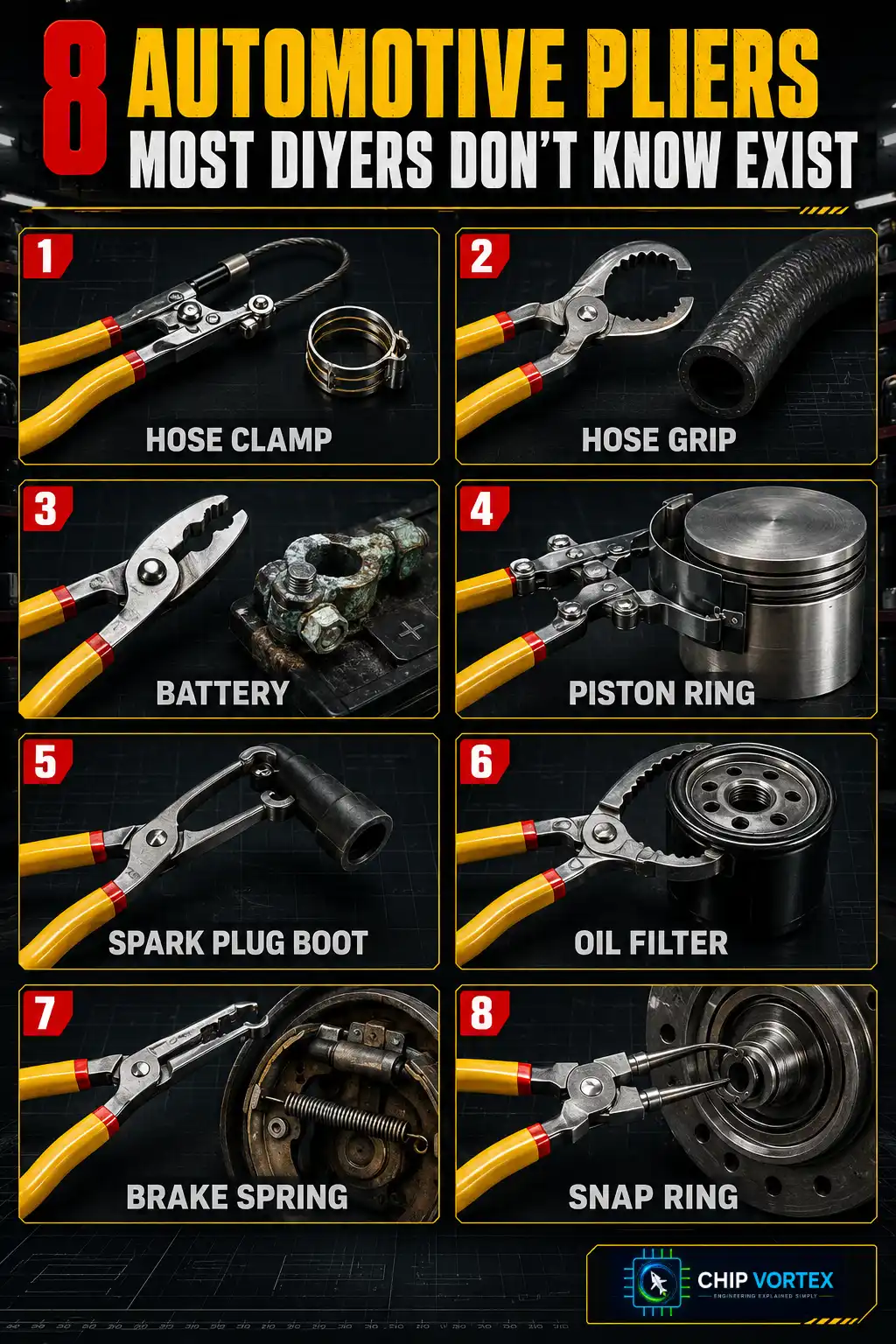
The garage breeds more specialty pliers than any other trade. Hose Clamp — grips and holds spring-band clamps compressed while you slide the hose. Hose Grip — angled soft grippers that break stuck hoses free from barbs without tearing them. Battery — short angled jaws sized for battery terminal bolts, expecting corrosion and winning. Piston Ring — spreads a piston ring just enough to slip it over the piston without snapping it (rings are brittle — ask anyone who’s installed them by thumb; the full story lives in our piston engine guide). Spark Plug Boot — insulated angled jaws that pull ignition boots straight off the plug instead of tearing the wire (a natural companion to reading your spark plugs). Oil Filter — huge curved serrated jaws that swallow a slippery round filter and refuse to let go. Brake Spring — purpose-built for stretching and seating the ferociously strong return springs inside drum brakes. Snap Ring — fine tips (straight or angled, internal or external) that expand or compress circlips, the little retaining rings hiding in every assembly from gearboxes to go-karts.
Electrical & Termination (1)
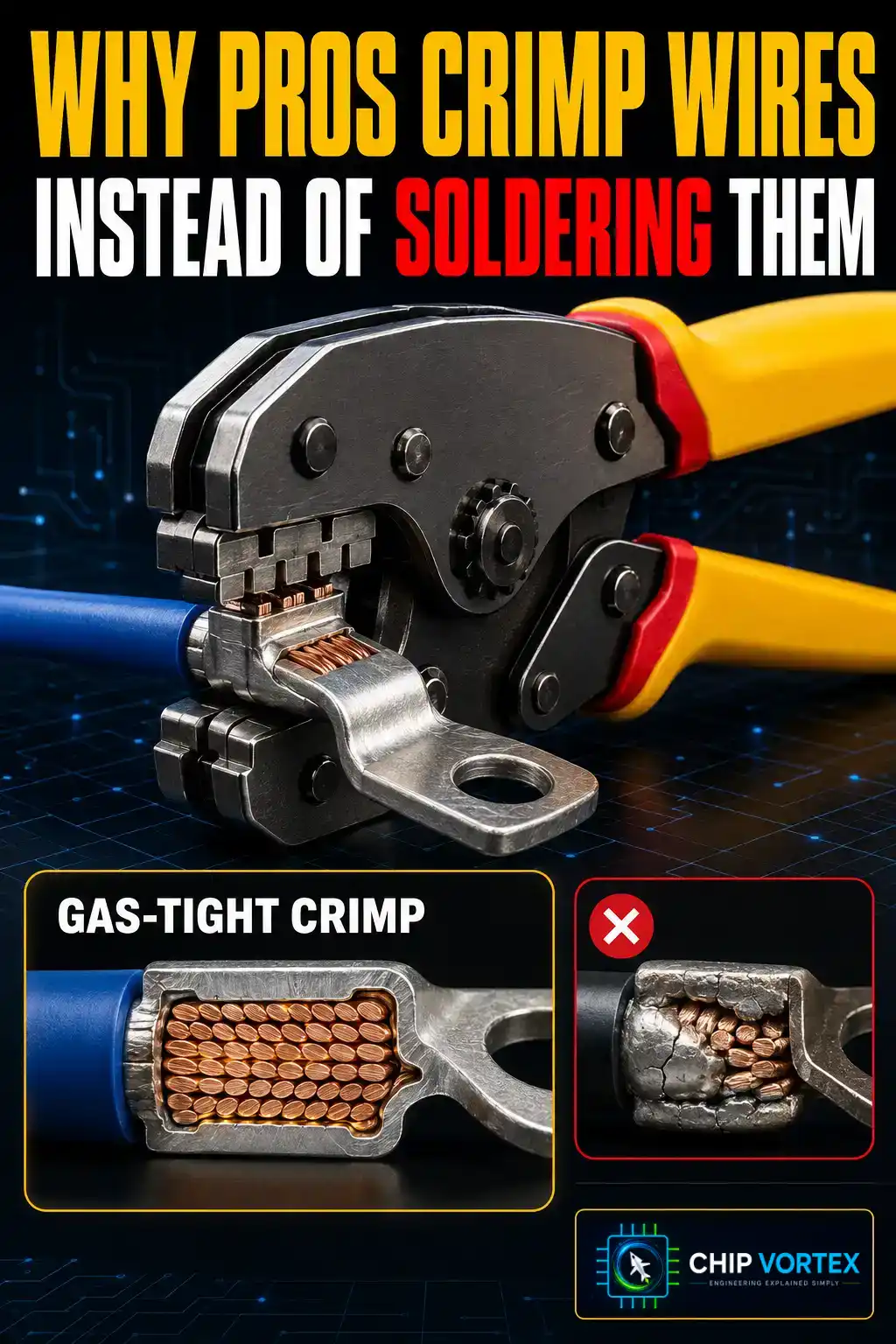
Crimping — the connection-maker: dies shaped to compress terminals, lugs, and connectors onto wire with calibrated force, creating a gas-tight joint that solder can’t always match. (Its big siblings live in the lineman’s pocket above.)
Fabric, Leather & Craft (3)
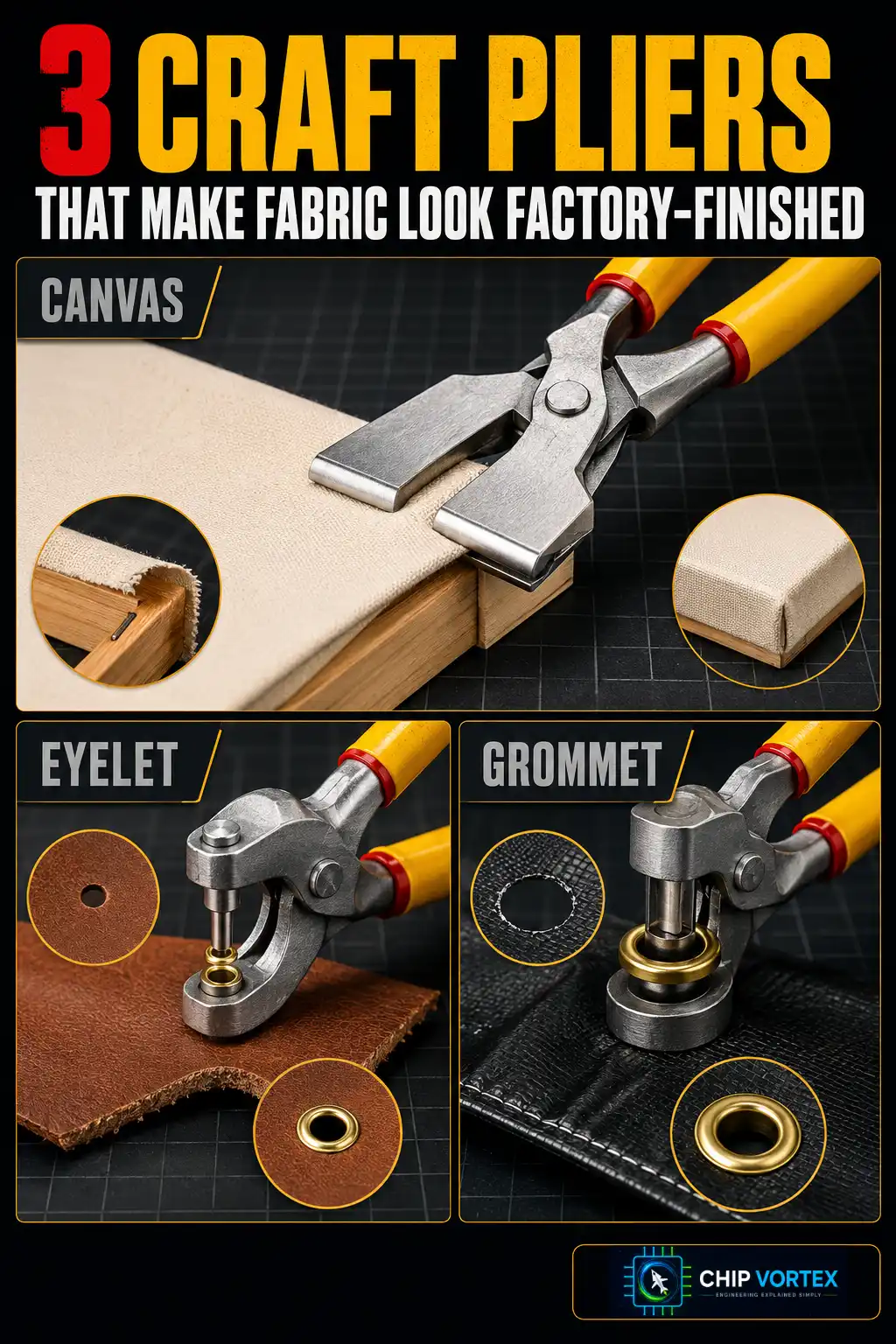
Canvas — wide flat jaws that grip fabric across its full width, letting artists stretch a canvas drum-tight over its frame. Eyelet — punches and sets small eyelets in fabric and leather in one squeeze. Grommet — the same idea scaled up: setting the bigger reinforced rings in tarps, banners, and curtains.
Metal & Fabrication (5)
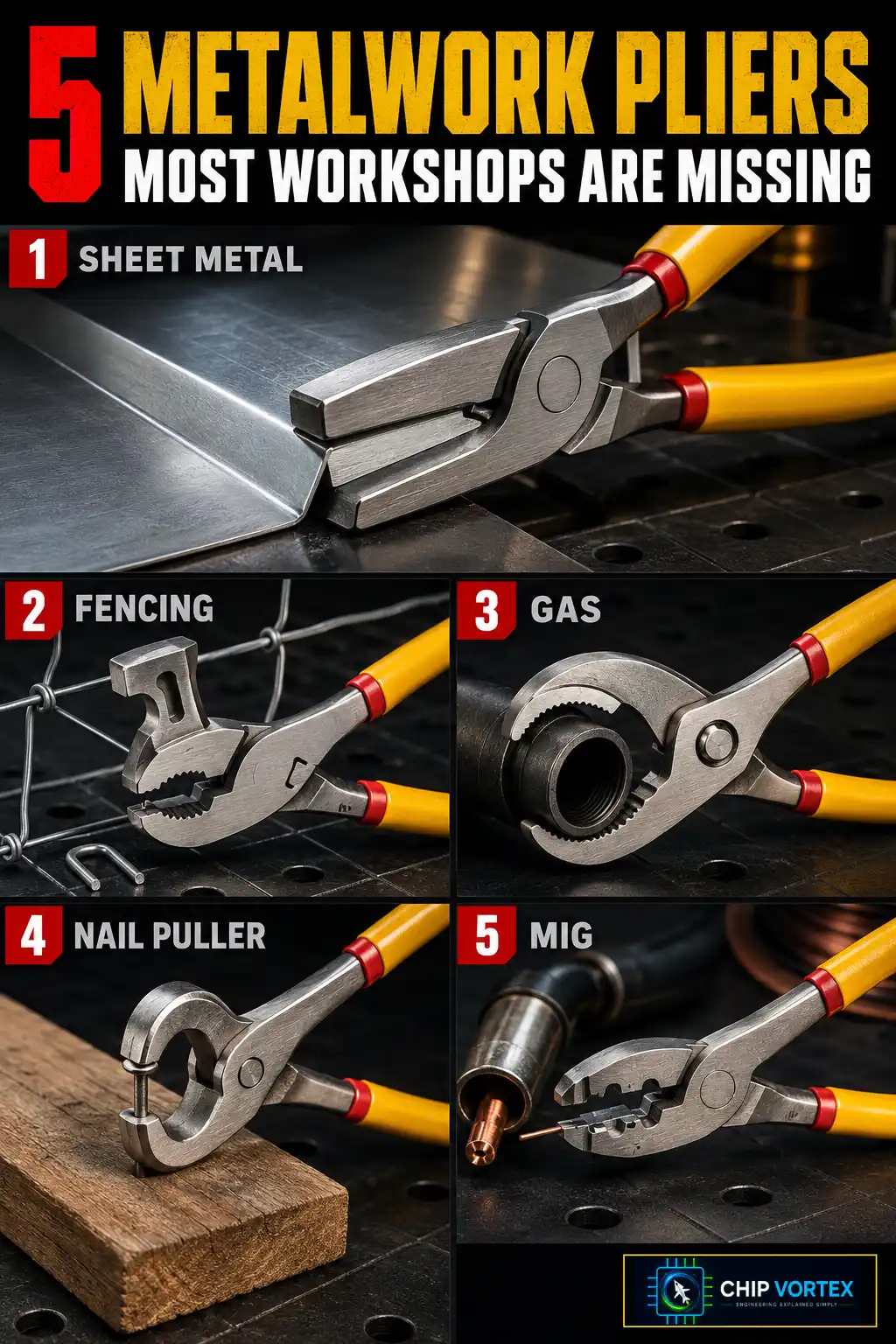
Sheet Metal (Seamer) — a wide flat blade of a jaw that bends clean folds and seams along sheet edges. Fencing — the multi-tool of the farm: hammer face, staple puller, wire cutters, and gripping jaws in one head, built to build a fence and fix it forever after. Gas — round serrated jaws that wrap pipe and round fittings, the gasfitter’s grip. Nail Puller (Pincers) — the pin’s “Puller”: rolling end-cutting jaws that bite a nail head and lever it out with the curve of their own face. Welding (MIG) — the welder’s Swiss Army plier: nozzle grip, tip removal, wire cutting, and spatter cleaning, all hot-work ready.
The Specialists (4)
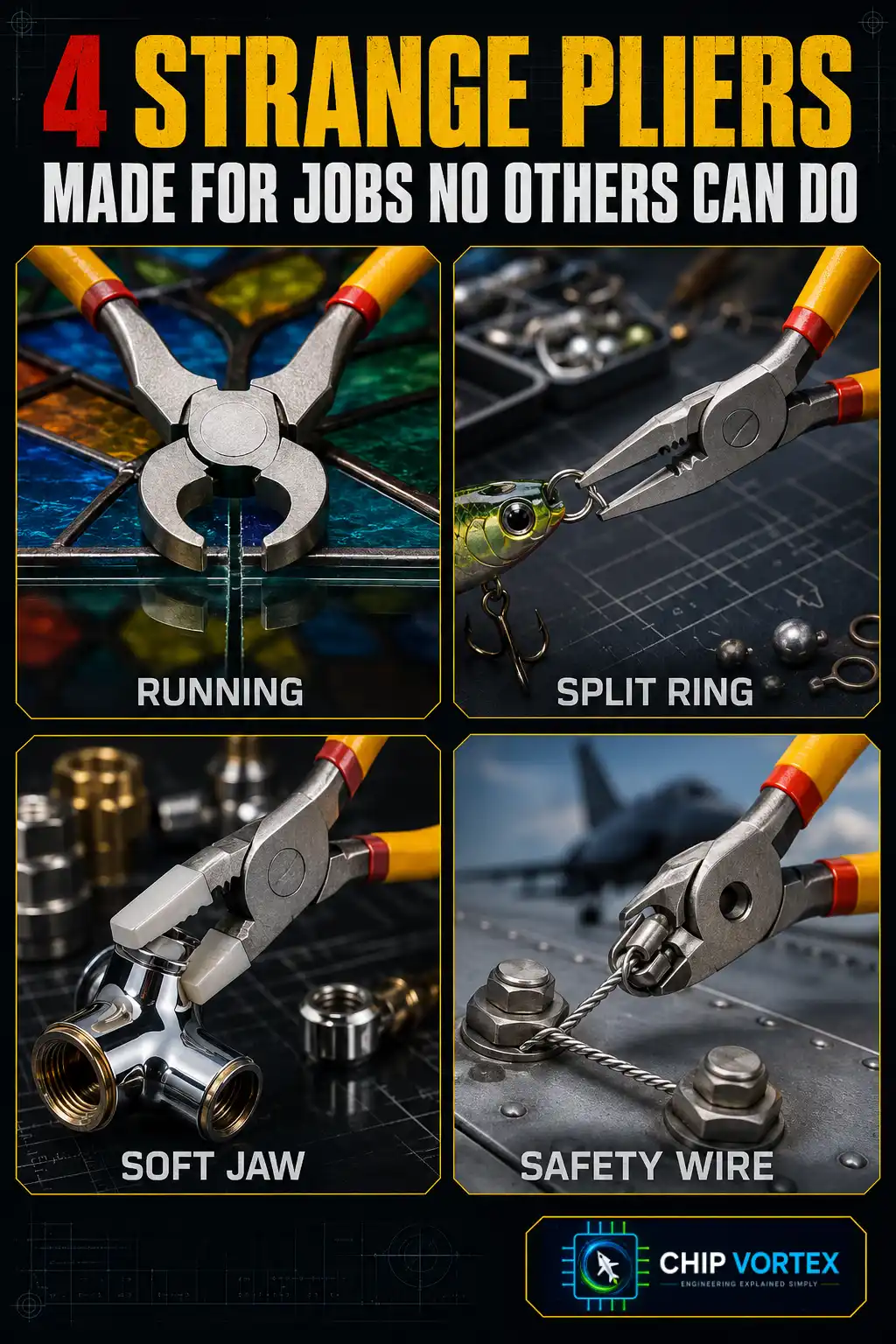
Running — the strangest plier here: it breaks glass on purpose. Stained-glass workers score a line, then the running pliers’ curved jaws apply perfect even pressure so the crack “runs” true along the score. Split Ring — a small tooth on one jaw pries open keyring-style split rings; anglers changing fishing tackle refuse to live without them. Soft Jaw — smooth non-marring jaws (often padded) that grip chrome, brass, and finished surfaces without leaving a signature — the tool that saves the fittings and fixtures other pliers scar. Safety Wire Twisters — aviation’s signature plier: grip the wire, pull the knob, and the tool spins a perfect uniform twist. Lockwiring bolts so they can never rotate loose is a rite of passage for every aircraft engineer, and this is the tool that does it.
The One Rule: Never Pliers on a Nut
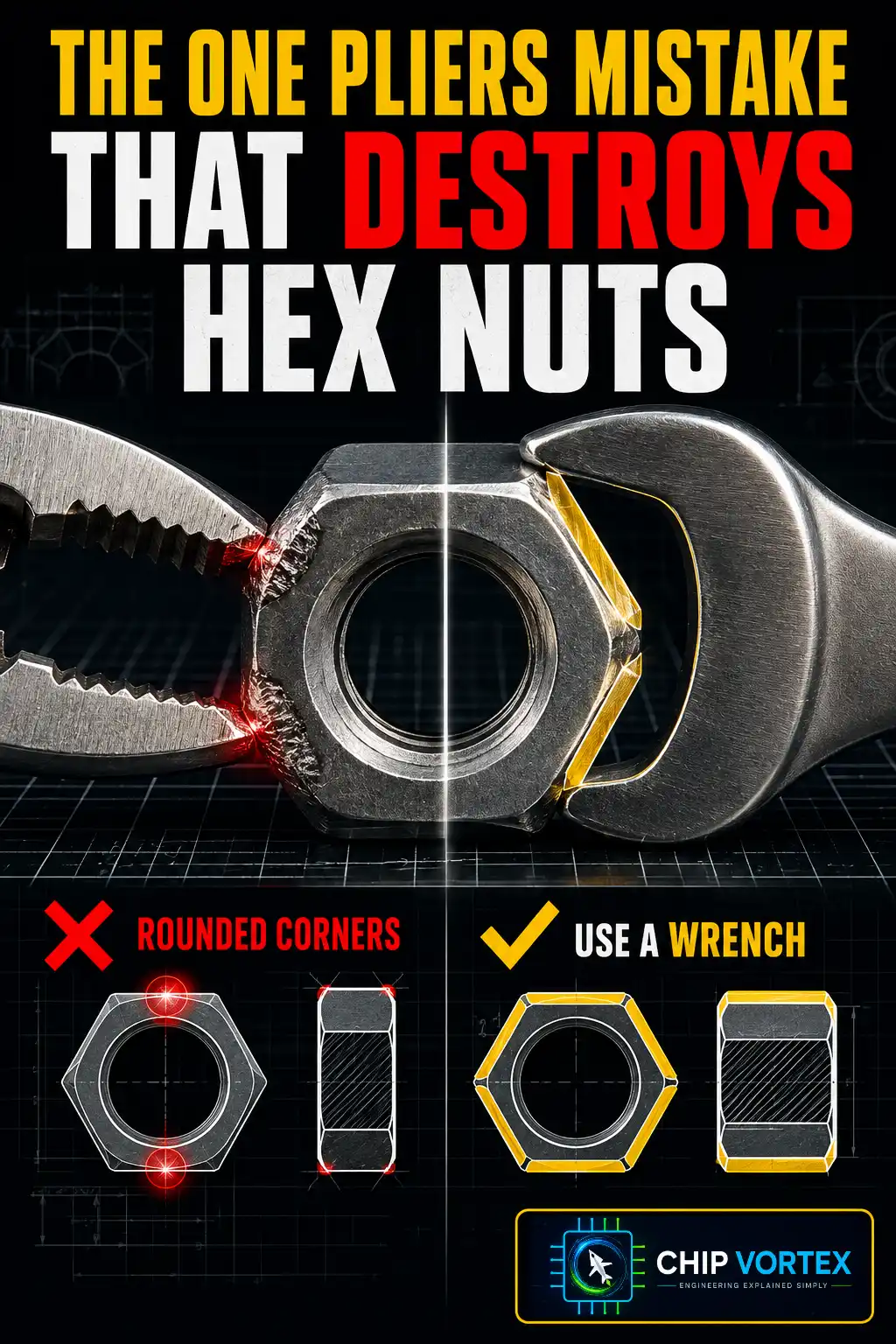
Every plier in this guide has a job — and none of those jobs is turning a hex nut. Plier jaws contact a nut on two corners, and under force they round those corners off, ruining the fastener a wrench would have turned effortlessly. It’s the classic tell of a rushed job. Hex flats belong to wrenches and sockets; pliers grip, bend, cut, lock, set, and twist — everything except that. (For why those hex flats exist at all, see our guide to the 15 types of nuts.)
FAQ: Types of Pliers
What’s the difference between slip joint and tongue & groove pliers?▾
Range. Slip joint pliers have two pivot positions for small-to-medium grip; tongue & groove have a long track of jaw positions and angled jaws that swallow pipes and large nuts-of-things (not nuts!). One lives in the kitchen drawer, the other under the sink.
Are needle nose and long nose pliers the same thing?▾
Effectively yes — two names for the same long, tapered, reaching design. Jewelers’ chain nose pliers are the shorter, smooth-jawed precision cousin.
Why shouldn’t I use pliers on bolts and nuts?▾
Because jaws grip two corners and round them off under torque. A wrench contacts the flats properly. Pliers on fasteners is how good hardware becomes junk.
What are snap ring pliers for?▾
Circlips — the small sprung retaining rings that hold pins, bearings, and shafts in place. The pliers’ tips fit the ring’s holes to expand (internal) or compress (external) it safely. Trying it with two screwdrivers launches the ring into orbit; every mechanic learns this once.
What are safety wire twisters used for?▾
Aviation lockwiring: twisting stainless wire between fasteners so vibration can’t rotate them loose. The tool grips the wires and spins a uniform twist with one pull — fast, consistent, and inspectable.
Count your own collection against the chart — most people own four and borrow the rest. Which specialist plier earned its place in your box, and which one is still on the wishlist? Tell us in the comments. Save the chart, and keep building the toolkit knowledge: the nuts your wrenches were made for, the spark plugs your boot pliers protect, and the fittings your soft jaws keep pristine.