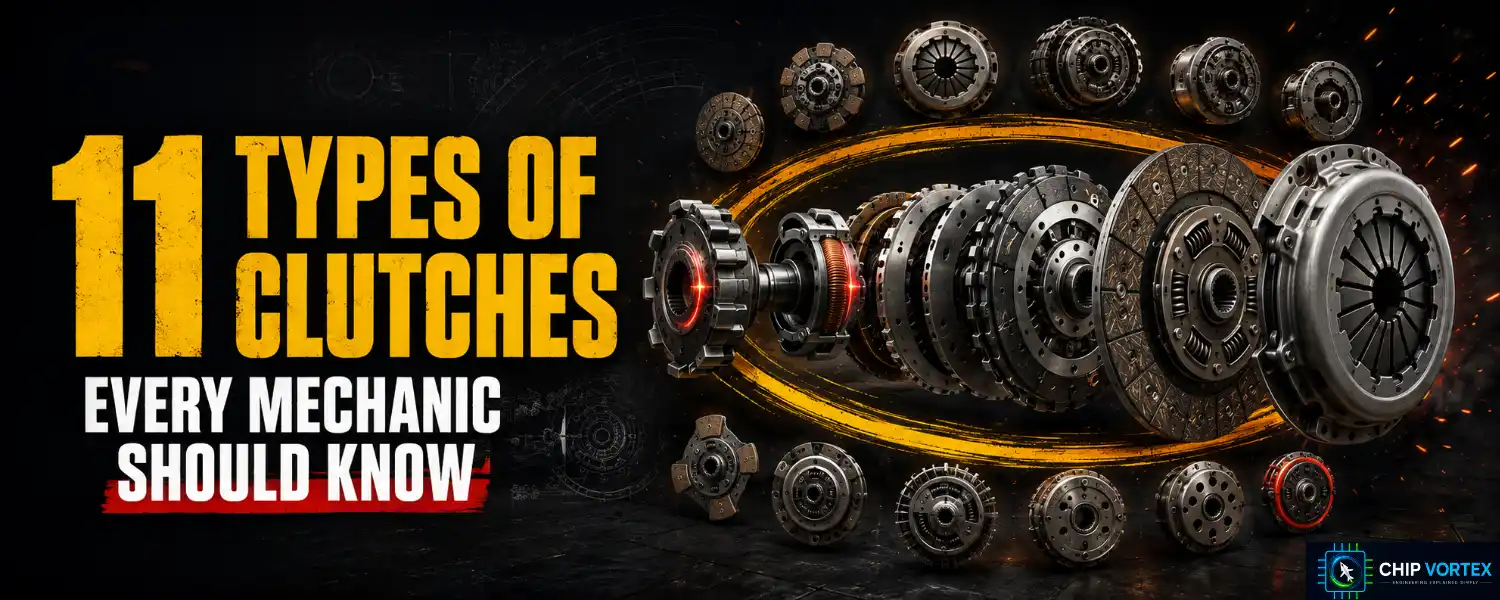
An engine wants to spin all the time; the wheels only sometimes. Between those two facts sits the clutch — the handshake that connects and disconnects torque on demand, smoothly enough to launch a car from rest and firmly enough to transmit every horsepower once it grips. Engineers have invented eleven different ways to perform that handshake: some slip elegantly, some bite instantly, one engages with electricity, and one only ever works in a single direction — and that one saves helicopters. Here are all eleven.
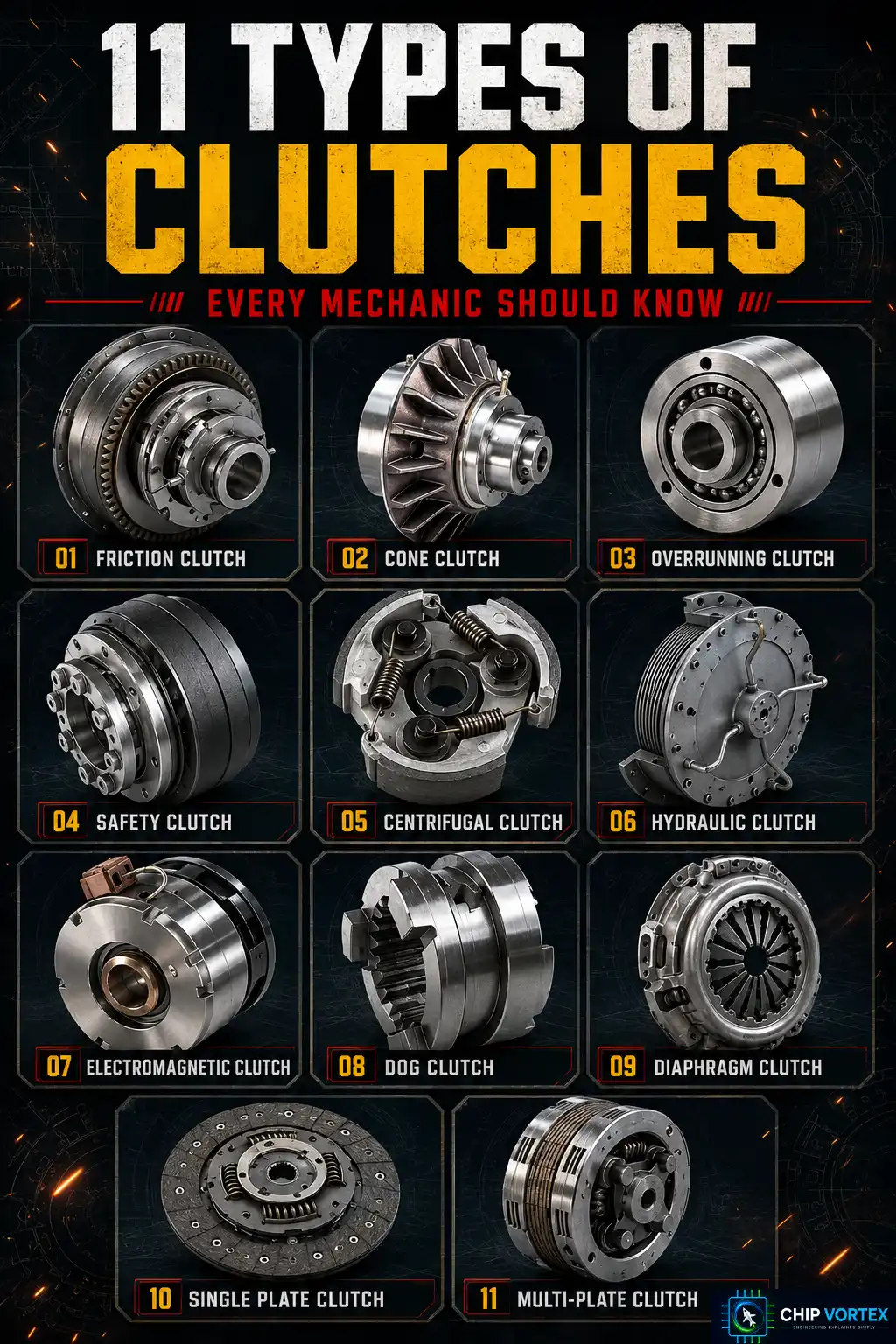
Save the chart, then let’s shake hands with each one.
First, the Two Grand Families
Every clutch answers one question — how do I connect a spinning shaft to a stationary one without breaking anything? — and there are only two honest answers. Friction clutches slip first and grip second: surfaces squeeze together, sliding briefly while speeds match, then lock. Positive clutches (the dog clutch) skip the slip entirely: teeth mesh, or they don’t. Everything else in this chart is a variation in what does the squeezing — springs, speed, oil pressure, or electricity.
1. Friction Clutch — The Family
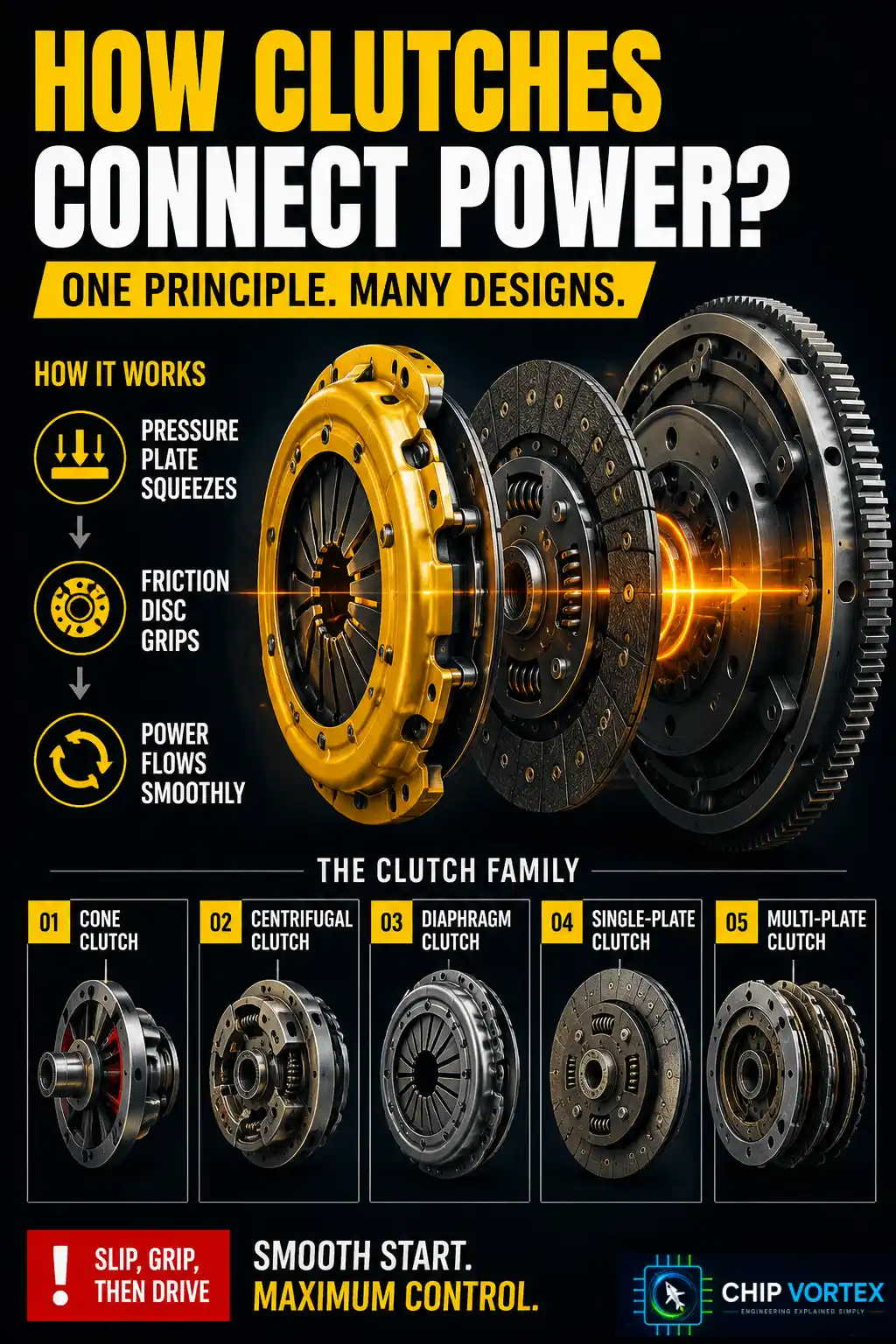
The chart’s first cell is really the family portrait: pressure plate squeezes a friction disc against the engine’s spinning flywheel, and the slip-then-grip sequence is what lets a driver feed torque in gradually. Cone, centrifugal, diaphragm, single-plate, and multi-plate — all below — are members of this clan, differing in geometry and actuation. Learn the principle once here, and five other cells come free.
2. Cone Clutch
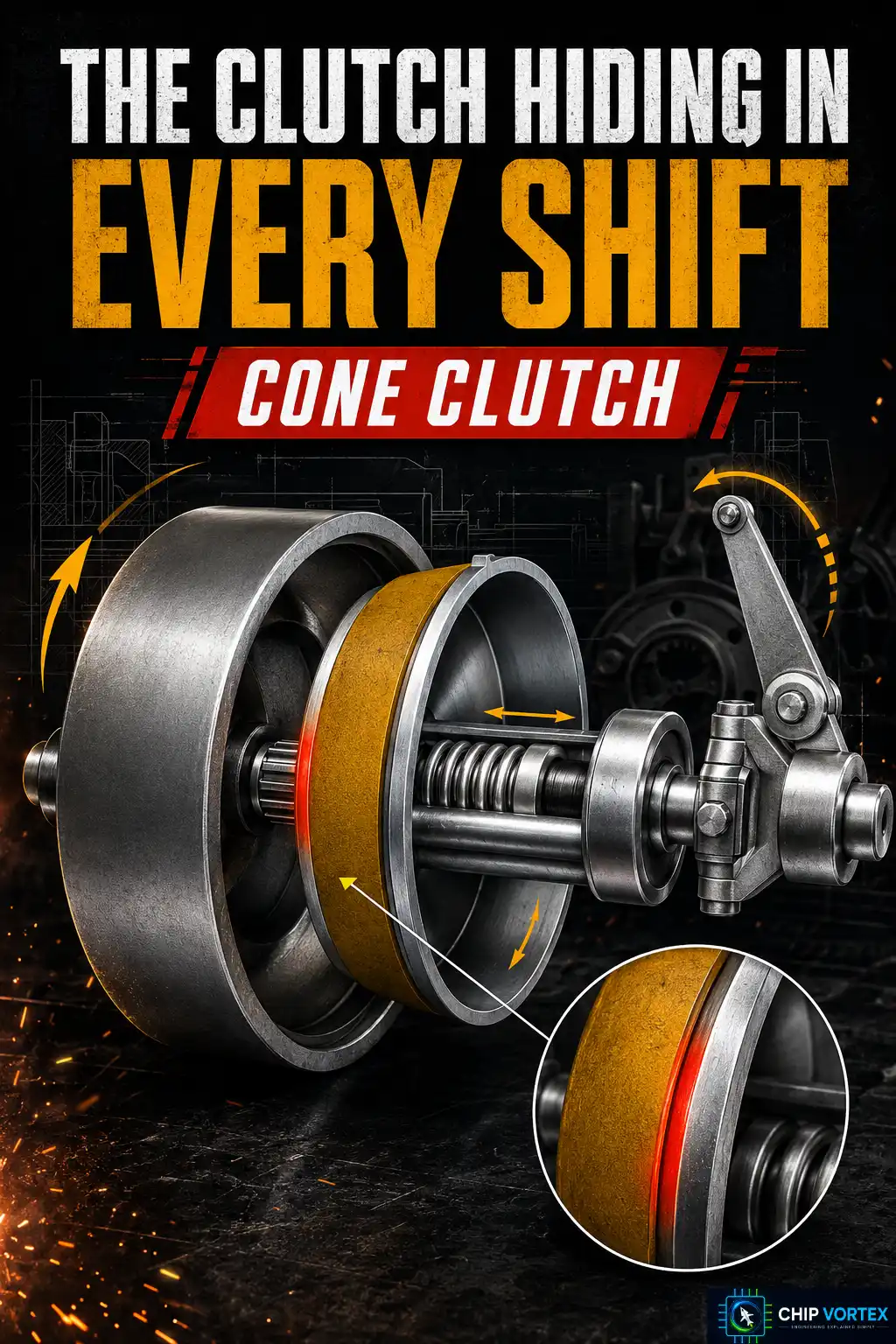
The elder statesman: mating cone surfaces instead of flat plates, so the wedge geometry multiplies clamping force — a light push produces a strong grip. Cone clutches launched the earliest automobiles, and while they’ve left the flywheel, they never left the car: every synchromesh ring in a manual gearbox is a miniature cone clutch, matching gear speeds before the teeth engage. You’ve used a cone clutch on every shift of your life.
3. Overrunning Clutch (Freewheel)
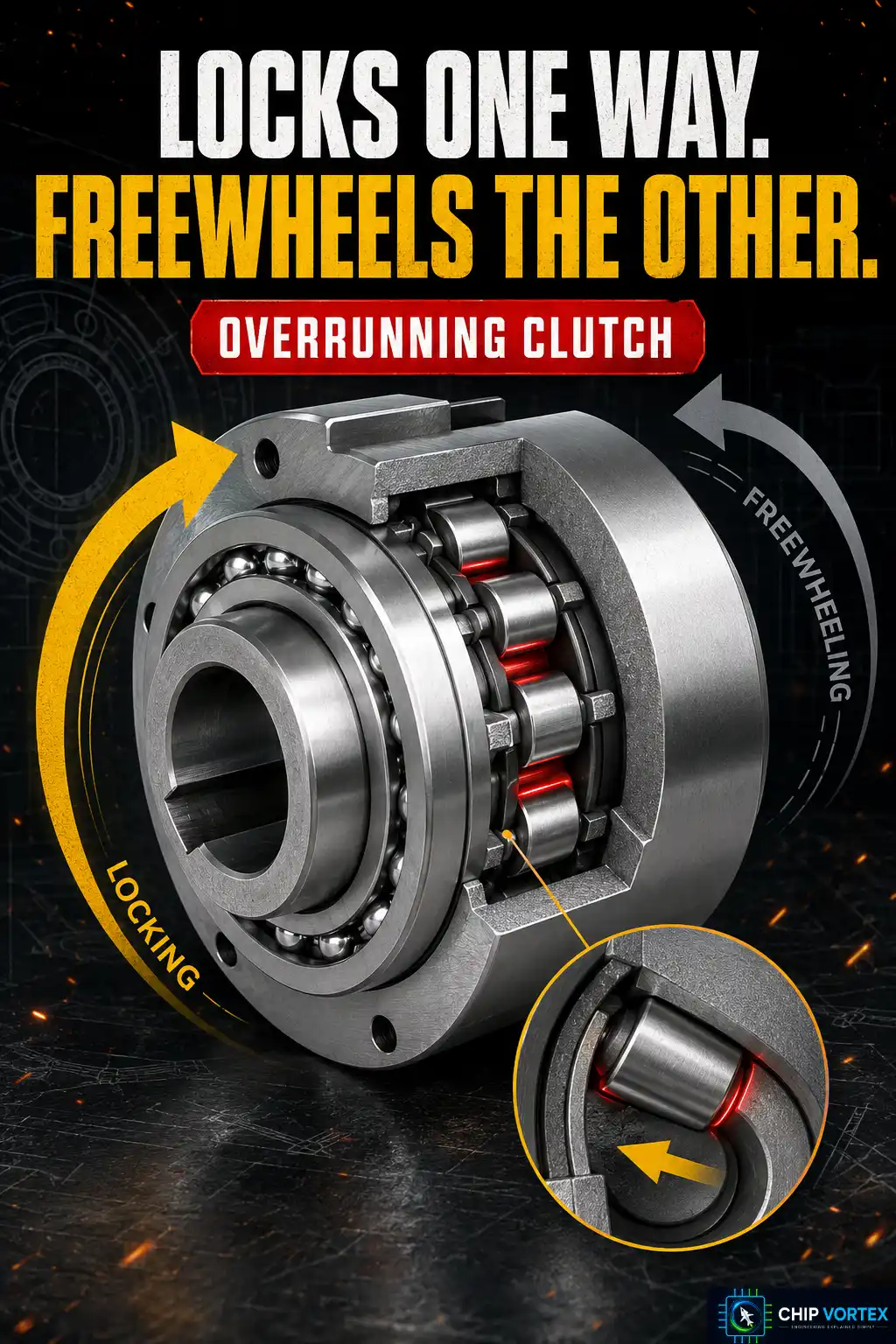
The one-way handshake: it transmits torque in one direction and freewheels in the other, automatically, with no control input at all. It’s why a bicycle coasts when you stop pedaling, why a starter motor doesn’t get dragged to destruction once the engine fires — and, most beautifully, why helicopters survive engine failures. The freewheeling unit between a helicopter’s engine and rotor disconnects the instant the engine slows, letting the rotor keep spinning freely; the pilot trades altitude for rotor energy and flies a controlled, power-off descent — autorotation. A clutch with no pedal, no lever, and thousands of lives to its name.
4. Safety Clutch (Torque Limiter)
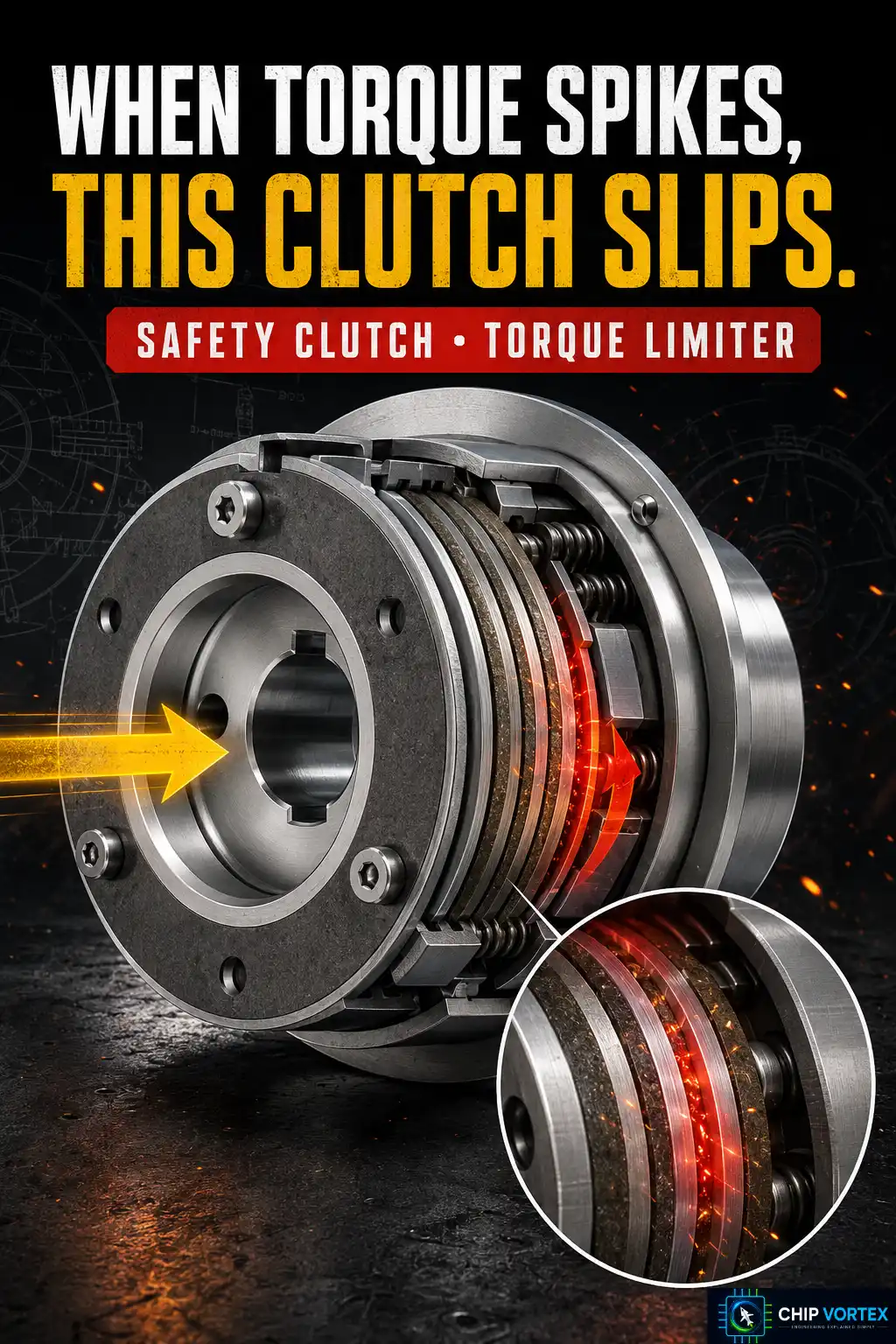
The mechanical fuse: it transmits torque faithfully up to a set threshold, then slips deliberately, sacrificing a moment of drive to save the machine. Tapping heads use it so a jammed tap slips instead of snapping; conveyor and actuator drives use it so one jam doesn’t cascade into a rebuild. A clutch designed around the humility that something, someday, will go wrong.
5. Centrifugal Clutch
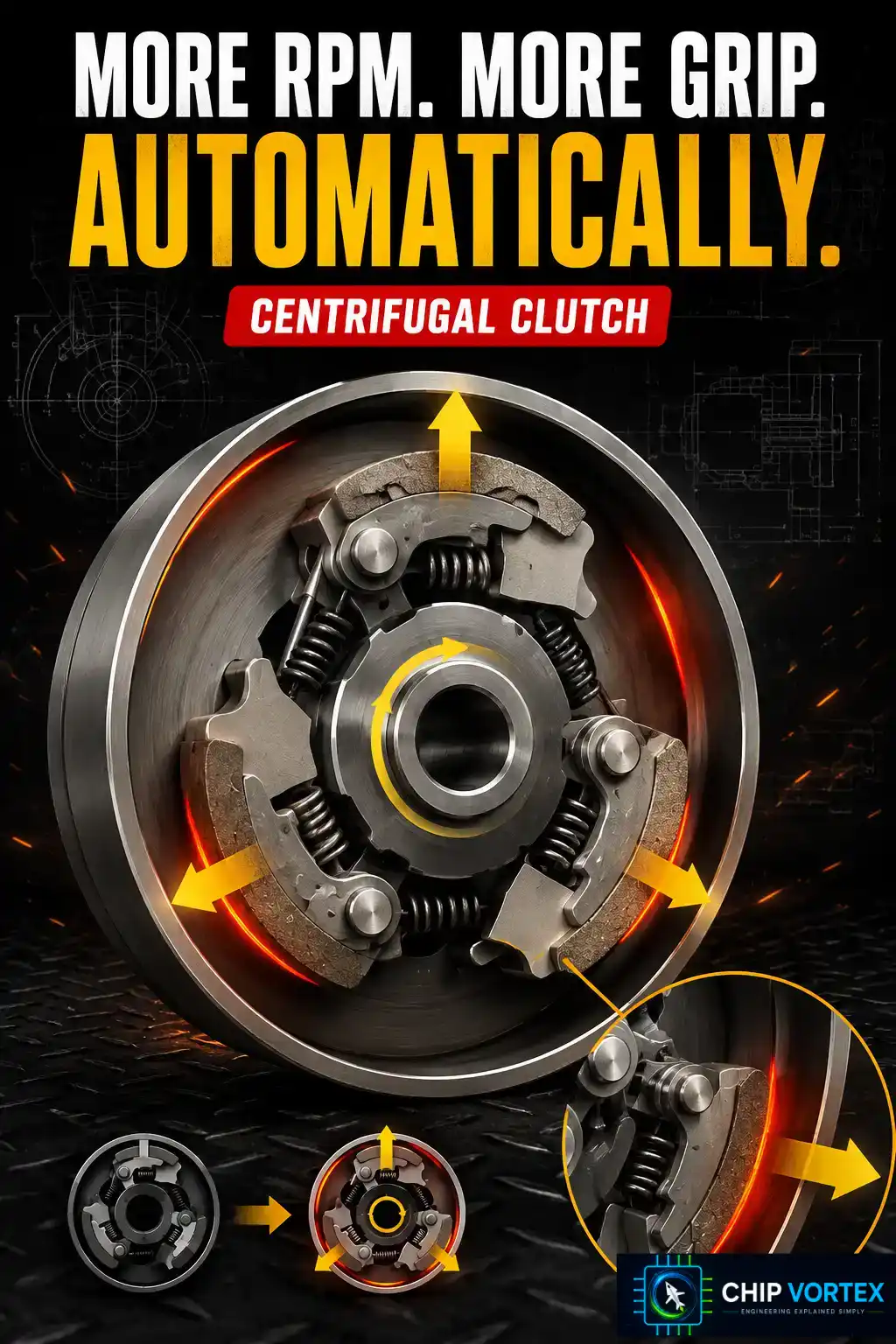
The self-deciding clutch: spring-loaded shoes fly outward as rpm rises, gripping the drum automatically at speed and releasing at idle. It’s why a chainsaw can idle safely with the chain stopped, why a scooter is twist-and-go, and why go-karts launch without a clutch lever. Engagement rpm is set by spring tension — the clutch literally makes its own decision, using the physics of the springs inside it.
6. Hydraulic Clutch
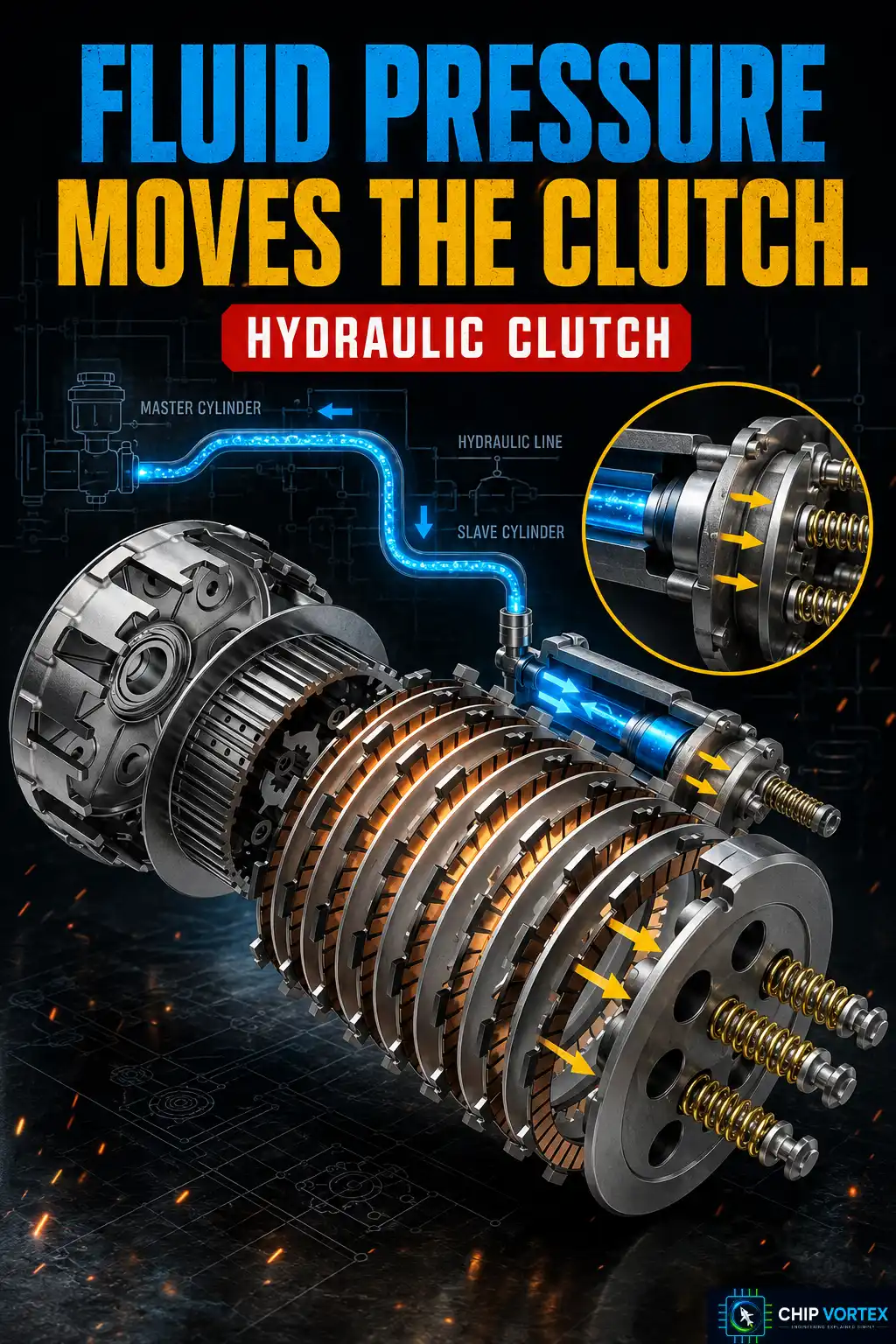
Usually this names the actuation, not the friction: a master cylinder at the pedal pushes fluid to a slave cylinder at the clutch, replacing the old stretching cable with a sealed, self-adjusting, feather-light hydraulic circuit — the standard in modern manuals. Its more exotic cousin does use fluid as the connection itself: the fluid coupling and torque converter spin oil between impeller and turbine — the “liquid clutch” at the heart of every conventional automatic.
7. Electromagnetic Clutch
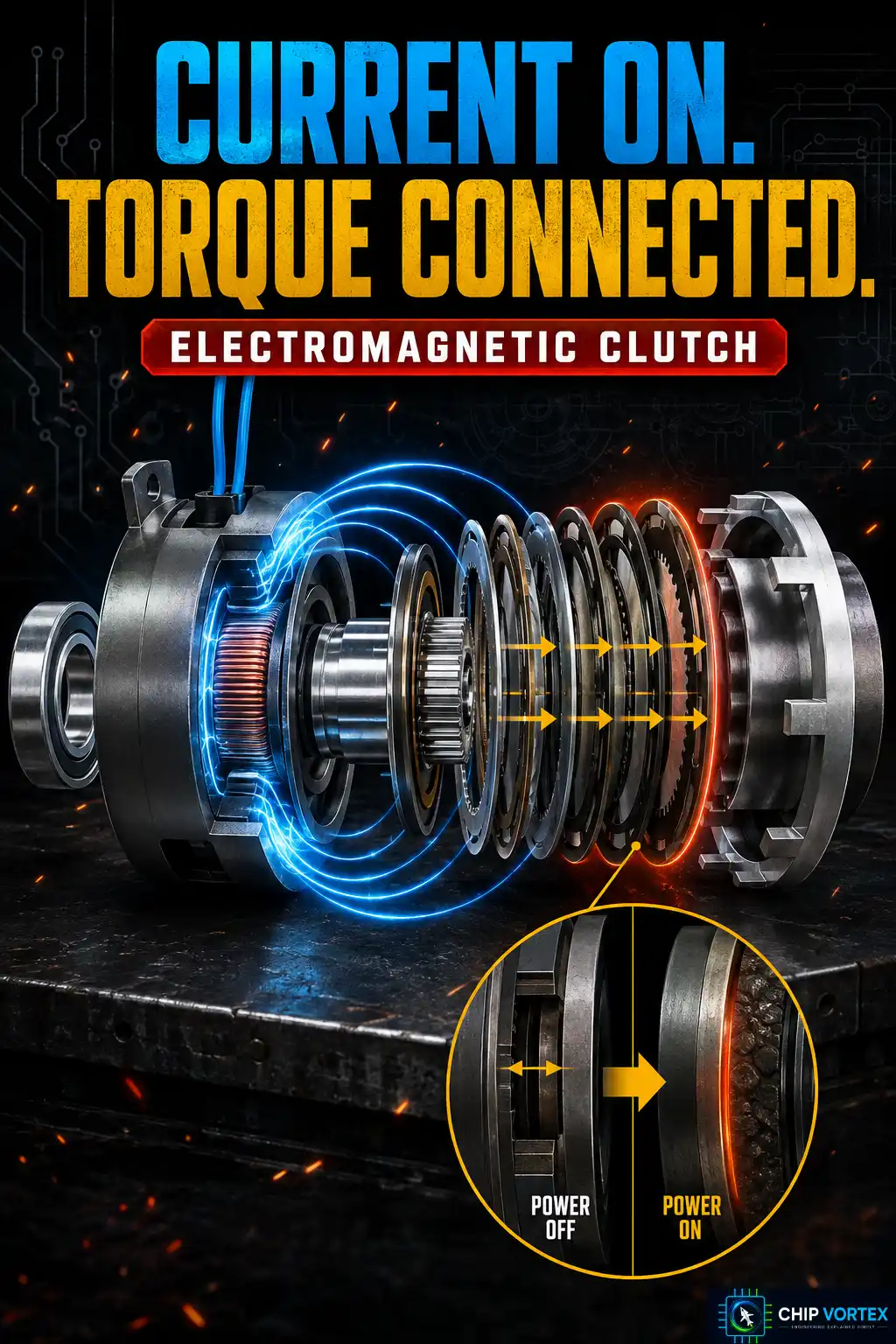
Current in, connection on: an electromagnet pulls an armature plate into engagement, so a circuit — not a pedal — decides when torque flows. You hear one several times a day: the click of your car’s AC compressor is an electromagnetic clutch engaging on command from the climate control. Copiers, robotics, and machine automation run on the same instant, wire-controlled handshake.
8. Dog Clutch
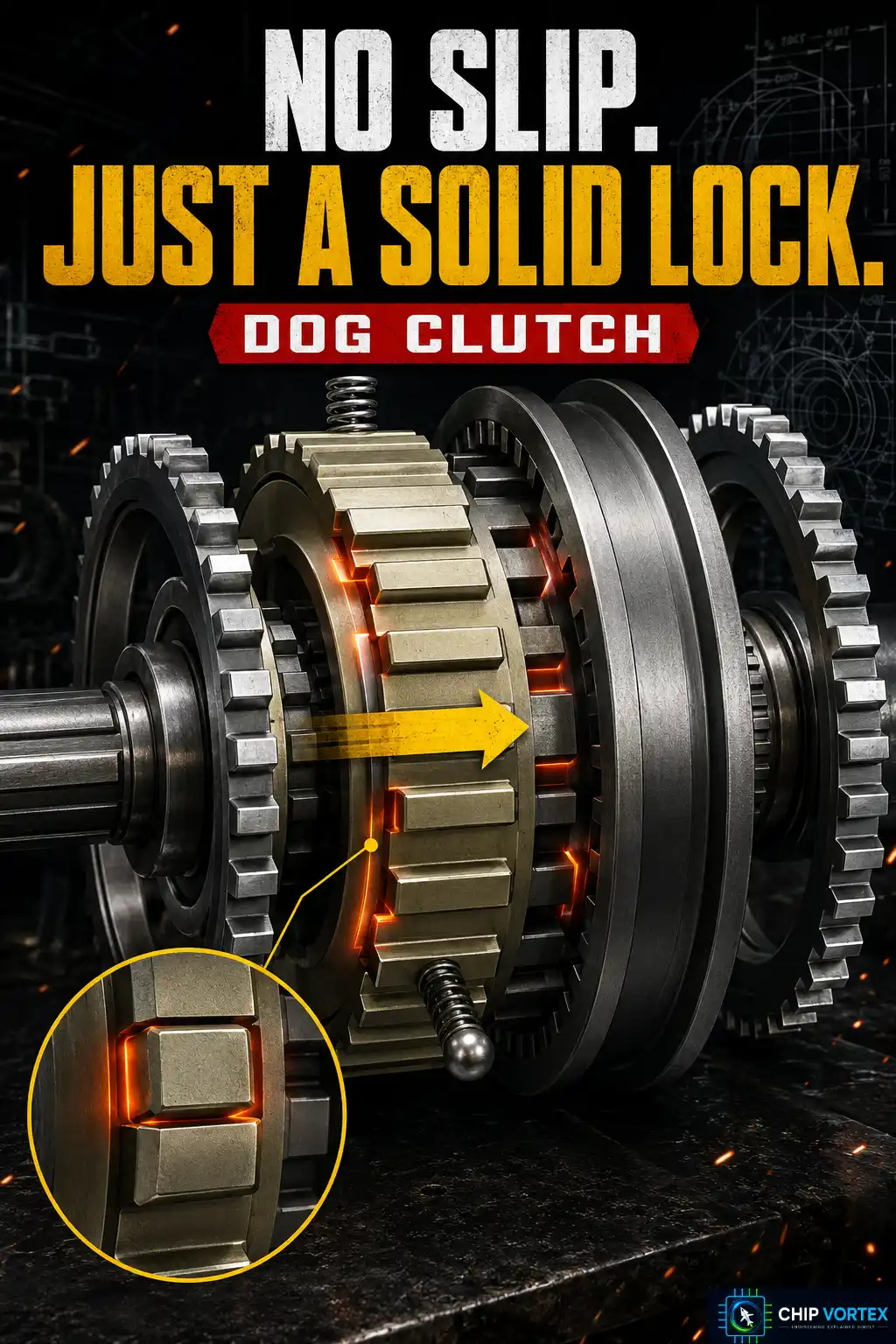
The positive family’s only member, and proudly so: square teeth (dogs) slam into matching slots — no slip, no wear surface, no torque limit worth mentioning, and no mercy if speeds aren’t matched. Sequential motorcycle and race gearboxes bang between gears on dog engagement — and here’s the secret of your own manual transmission: after the synchro’s cone clutch (see #2) matches speeds, it’s dog teeth that make the final connection in every gear you’ve ever selected. The cone negotiates; the dog commits.
9. Diaphragm Clutch
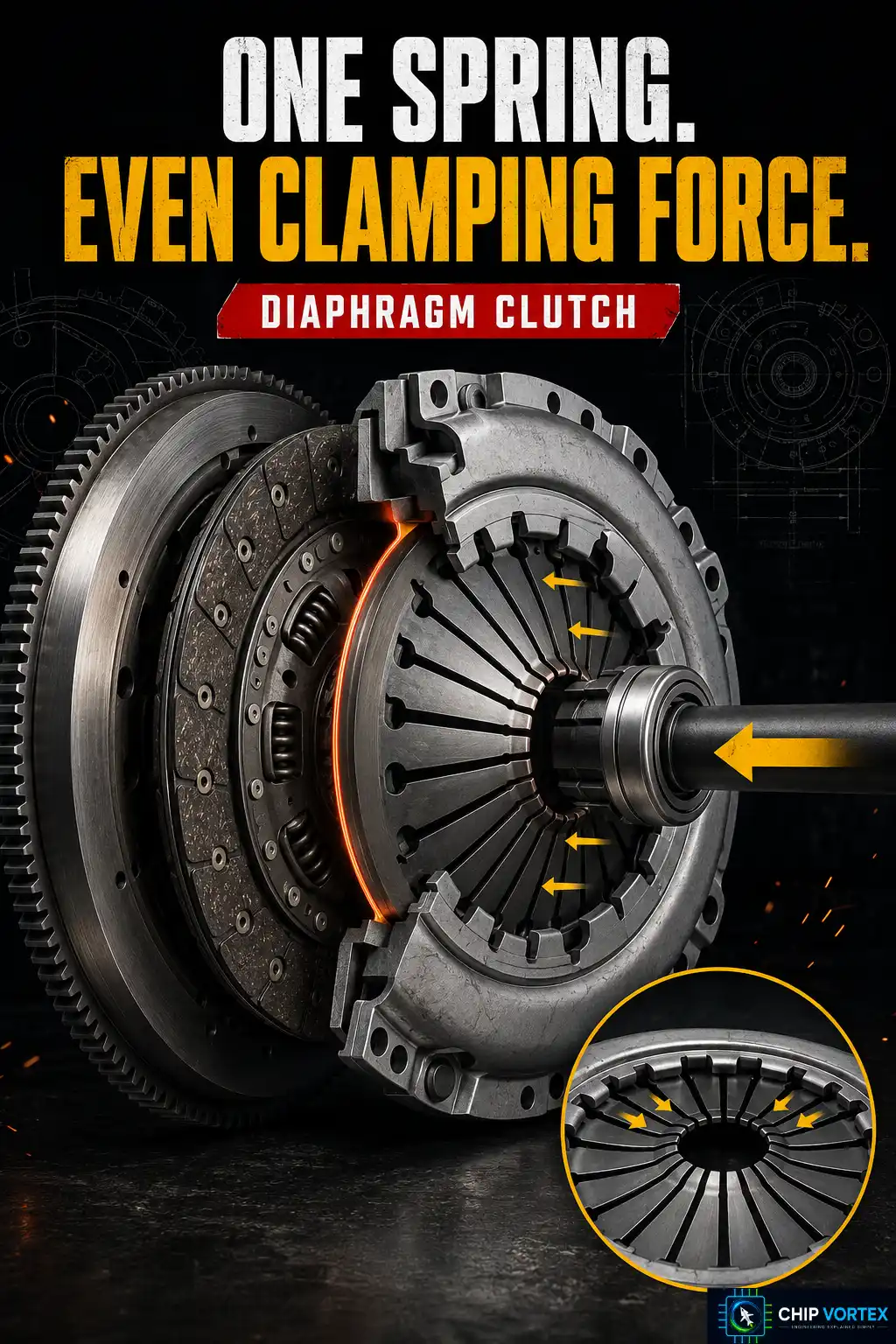
A classification by spring: instead of a ring of coil springs, one dished diaphragm spring — a close cousin of the Belleville washer from our springs guide — provides the clamping force with its fingers doubling as the release mechanism. Lighter pedal, more even clamp, better behavior at rpm, and self-compensating as the disc wears — which is why virtually every modern single-plate clutch is a diaphragm clutch. (The pin’s photo is the pressure-plate assembly itself — those radial fingers are the spring.)
10. Single Plate Clutch
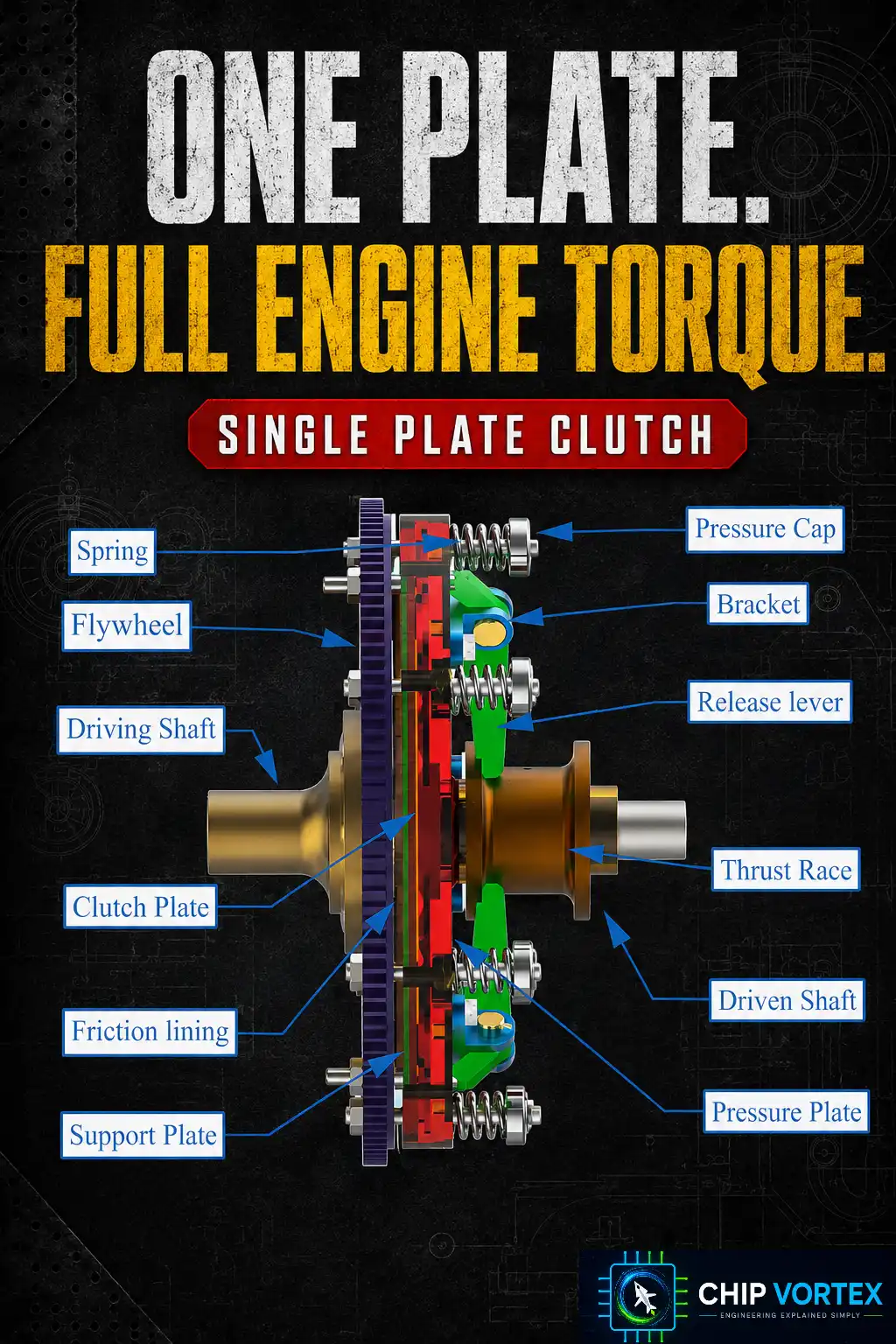
The standard car clutch, classified by plate count: one friction disc between flywheel and pressure plate, with enough diameter to carry an engine’s torque. The disc in the pin’s photo shows the anatomy: friction facings riveted to a wavy cushion, and torsion springs around the hub that soak up engine pulses before they reach the gearbox — yes, the springs guide strikes again. Simple, cheap, easy to service: the default handshake of the manual-transmission world. And when the clutch pedal is pressed, the part doing the pushing on those diaphragm fingers is the release (throwout) bearing — a small, hard-working member of the bearings family.
11. Multi-Plate Clutch
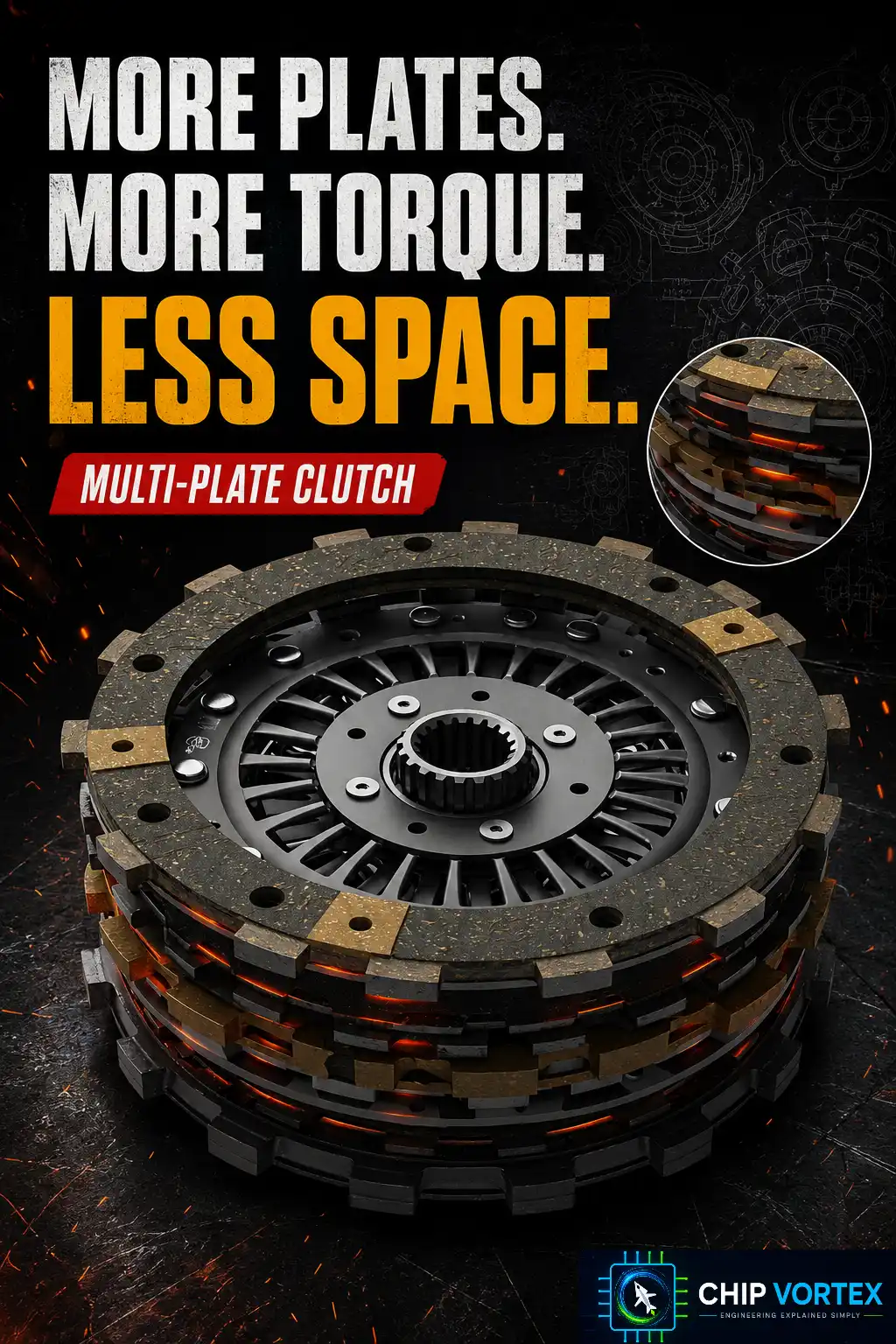
Need big torque in a small diameter? Stack the handshake: alternating friction and steel plates multiply the gripping area without growing the circle. Motorcycles run them wet — bathed in oil for smooth take-up and cooling inside a tiny case — while racing cars run brutal little dry stacks. And the modern twist: a dual-clutch (DSG) gearbox is literally two multi-plate clutches taking turns, one holding the current gear while the other pre-grips the next, swapping in milliseconds. The oldest friction idea, running the newest transmissions.
Why Airplanes Don’t Have Clutches
Here’s the contrast that makes the whole subject click. A fixed-wing aircraft’s propeller is bolted, effectively permanently, to its engine — no clutch at all, because there’s never a reason to disconnect: the prop is the load, sized for the engine, turning whenever it turns. A helicopter is the opposite: the rotor must be able to outrun a failing engine, so the freewheeling unit (#3) is flight-critical equipment. One aircraft type deleted the clutch; the other bet lives on it. Engineering is always about the question, never just the part.
FAQ: Types of Clutches
What does a clutch actually do?▾
It connects and disconnects torque between a spinning source and its load — and, in friction designs, does it gradually, slipping while speeds match so the connection is smooth instead of violent.
Why does a worn clutch slip — and what’s that burning smell?▾
The friction facings thin and glaze until the pressure plate can’t generate enough grip; under load the disc slides instead of locking, and the sliding friction cooks the facings — that hot, acrid smell is the clutch lining itself.
Wet clutch vs dry clutch — what’s the difference?▾
Wet clutches run in an oil bath: smoother engagement, better cooling, longer life, slight drag losses — the motorcycle standard. Dry clutches grip harder and waste nothing to oil shear, but run hotter and harsher — cars and racing.
Do automatic cars have clutches?▾
More than manuals do. A conventional automatic replaces the pedal with a torque converter, but inside it, hydraulic multi-plate clutch packs engage every gear of the planetary set — and dual-clutch autos are named for exactly what they are.
What is a dog clutch used for?▾
Instant, slip-free engagement where speed-matching is handled elsewhere or ignored: sequential race boxes, transfer cases — and the final locking step inside every synchromesh manual gearbox.
Eleven handshakes, one job. Now trace your own drivetrain: the engine making the torque, the clutch passing it, the gear ratios trading it, the gears carrying it, and the bearings letting it all spin. Which clutch surprised you most — the one in your AC, the one in your synchros, or the one that saves helicopters? Tell us in the comments, and save the chart for the workshop wall.