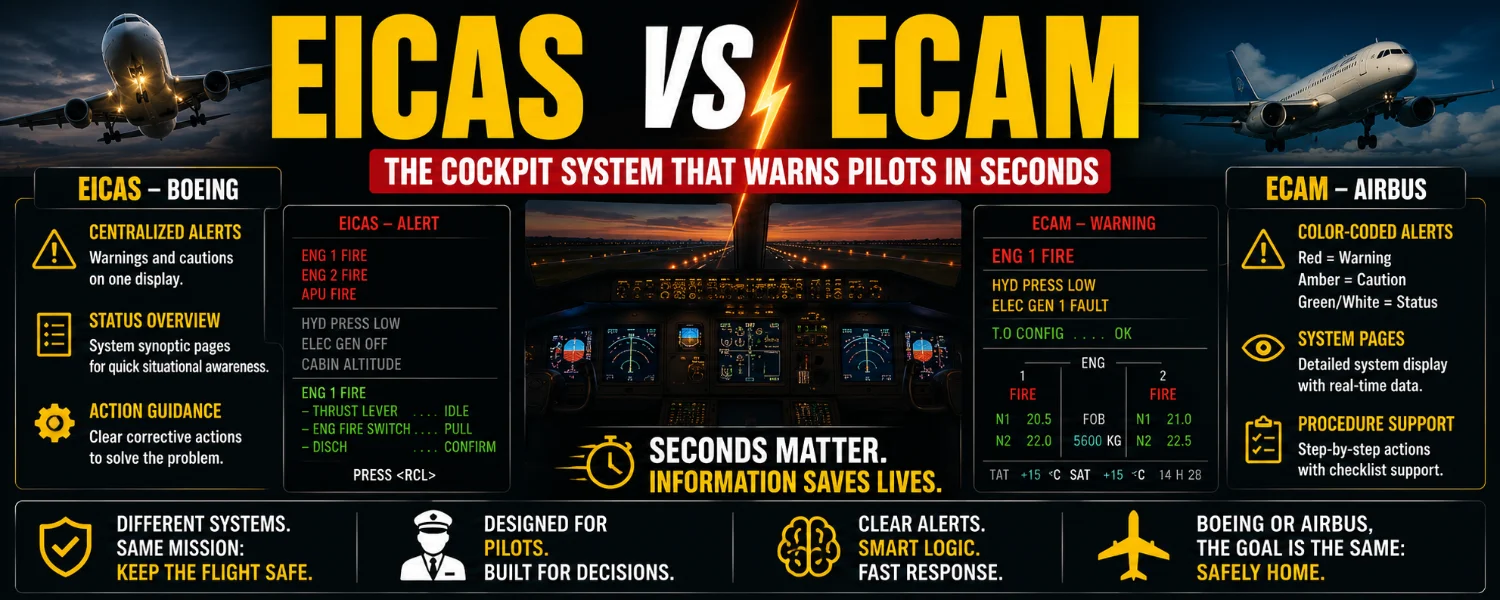
An airliner has thousands of things that could go wrong and exactly two pilots. Nobody is staring at oil pressure gauges for ten hours — because something else is, without blinking, for every one of those parameters at once.
EICAS (on Boeing and most other jets) and ECAM (on Airbus) are the aircraft’s smart monitoring and alerting systems. They continuously watch the engines, fuel, hydraulics, electrics, and dozens of other systems — and the instant anything drifts out of limits, they warn the pilots: a light, a sound, a message, and on Airbus, even the checklist of what to do about it.
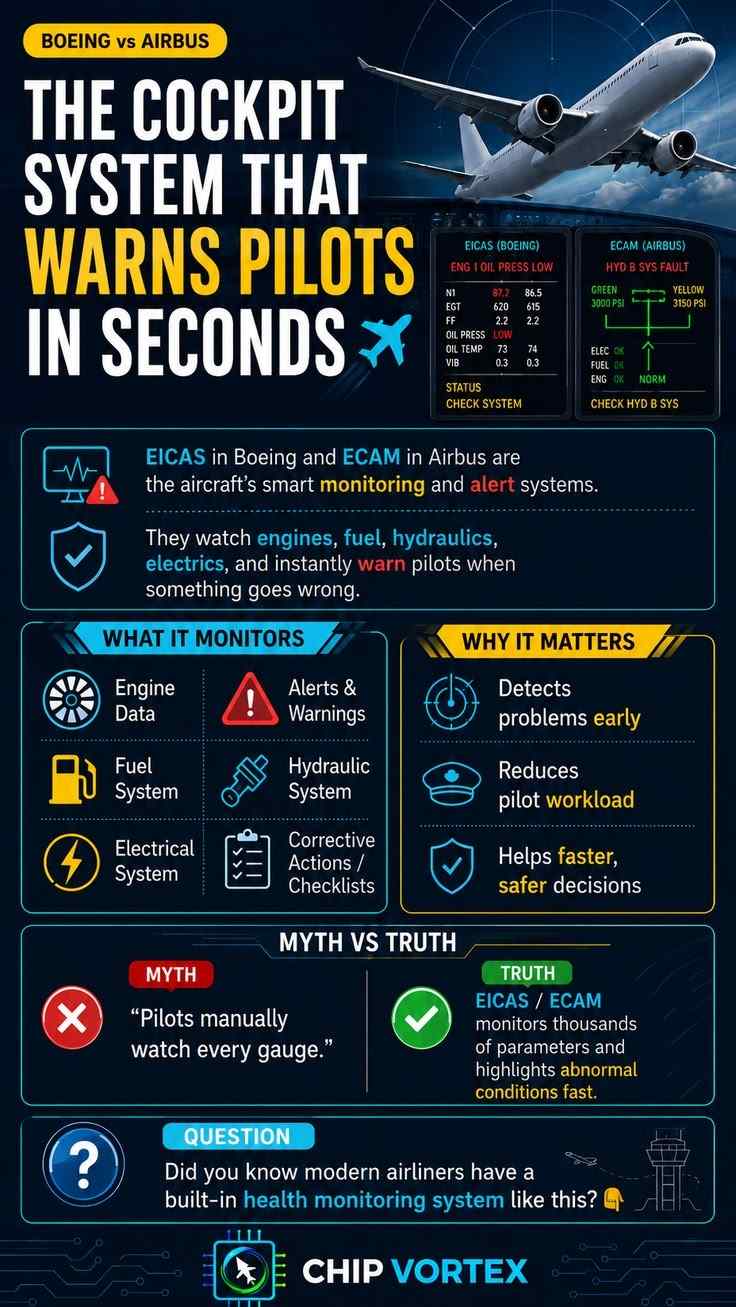
Save the chart, then let’s decode the two names, the colors, the sounds — and the philosophy war behind them.
What EICAS and ECAM Actually Are
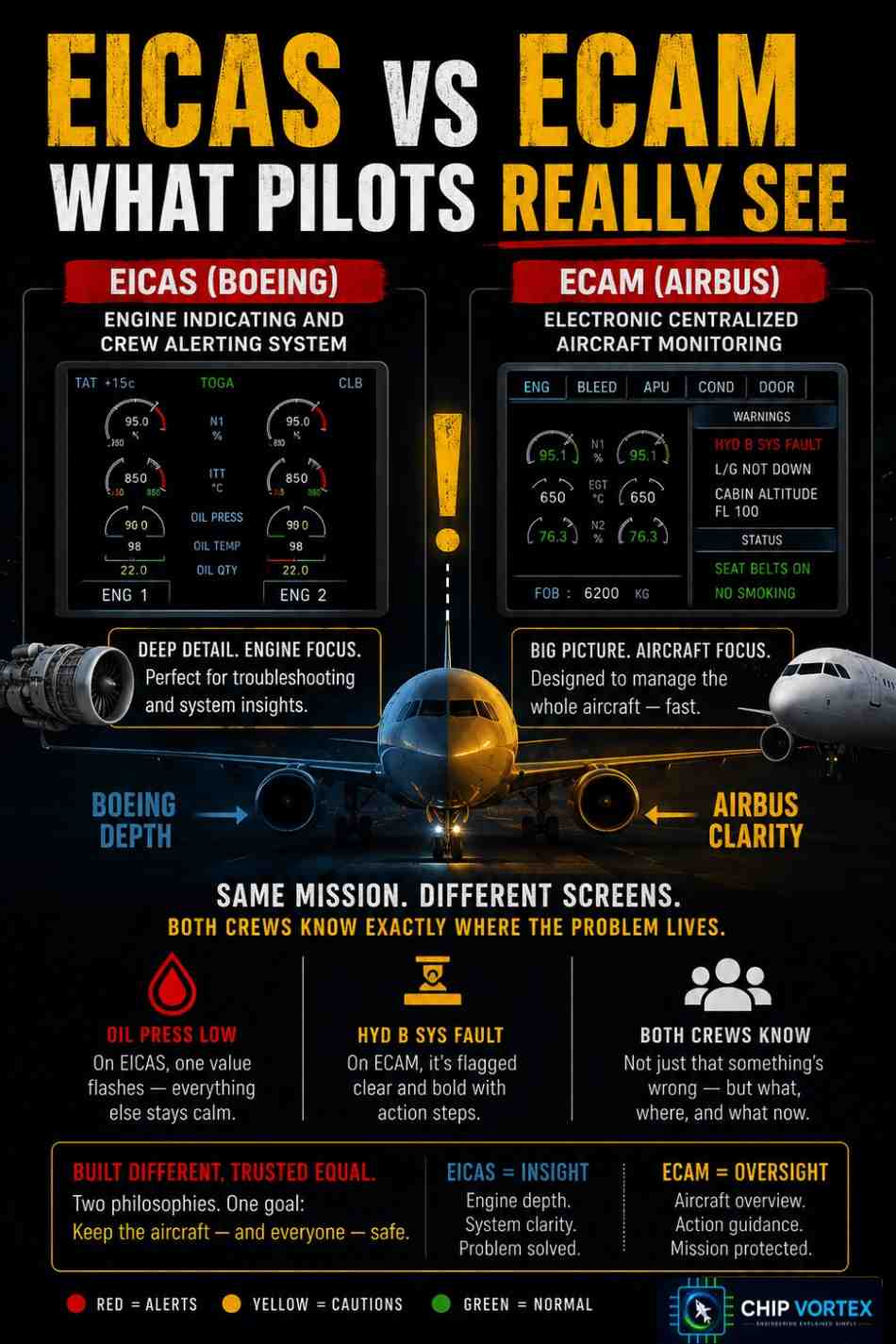
EICAS stands for Engine Indicating and Crew Alerting System — Boeing’s implementation (and the generic industry term). ECAM is Electronic Centralized Aircraft Monitor — Airbus’s version. Different names, same core mission: replace the old wall of round gauges with screens that show normal readings quietly and abnormal ones loudly.
The pin’s two example screens tell the story perfectly. On the Boeing side: engine parameters ticking along normally until ENG 1 OIL PRESS LOW appears — one value flagged, everything else calm. On the Airbus side: HYD B SYS FAULT, and ECAM has already drawn the hydraulic system diagram showing exactly where the problem lives. Same second, both crews know — and know what, not just that.
What It Monitors
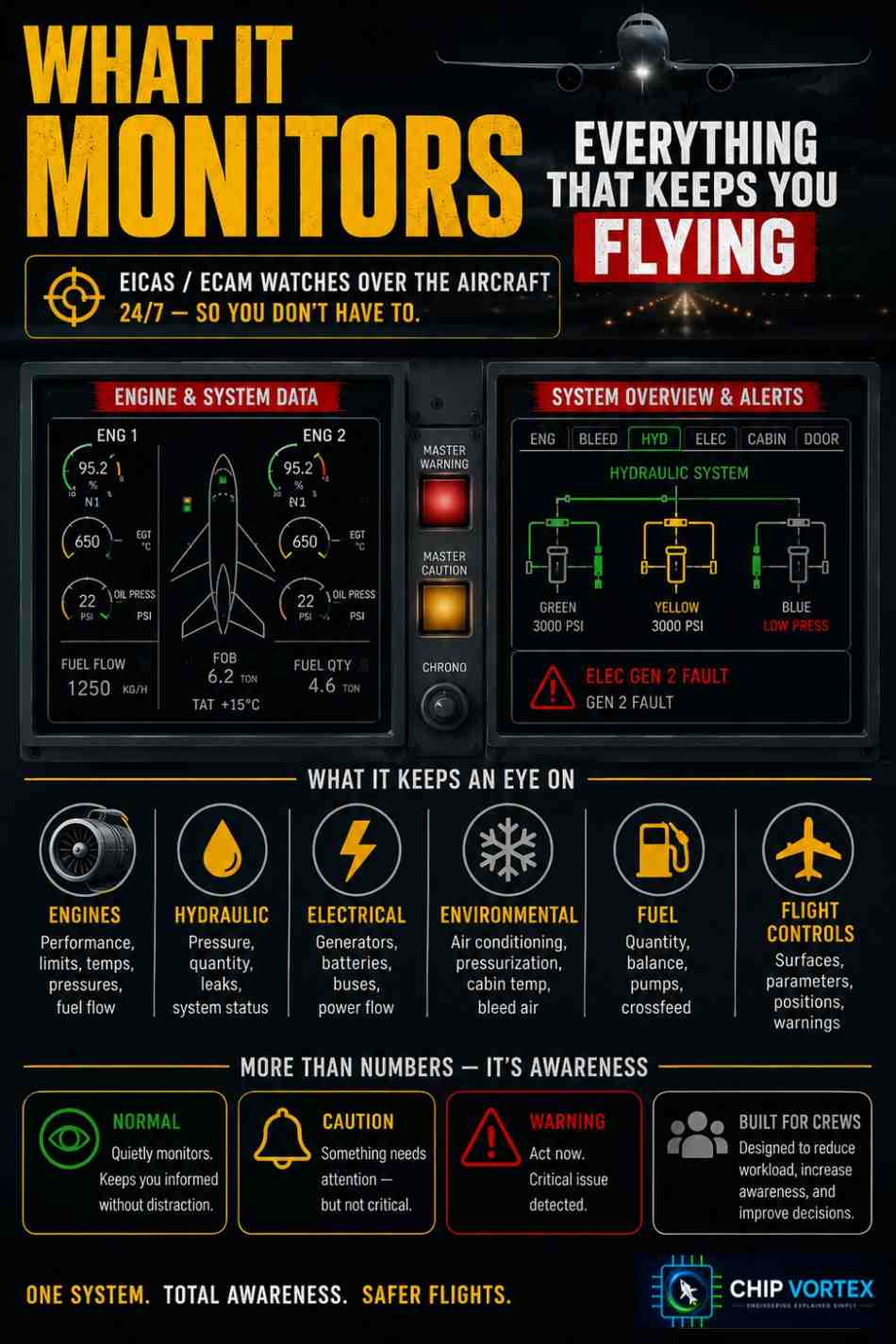
Six categories cover the territory: engine data (thrust, temperatures, fuel flow, vibration — the vital signs), the fuel system (quantity, balance, feed), the hydraulic system (the pressures behind every moving surface), the electrical system (generators, buses, batteries), alerts and warnings across every other aircraft system, and — the modern touch — corrective actions and checklists, the guidance for what to do next. In truth “six categories” undersells it: these systems track thousands of individual parameters, from the ones we’ve met across this series — air data values, pneumatic duct temperatures — down to door locks and toilet smoke detectors. Everything reports here.
The Alert Hierarchy: Red, Amber, and the Dark Cockpit
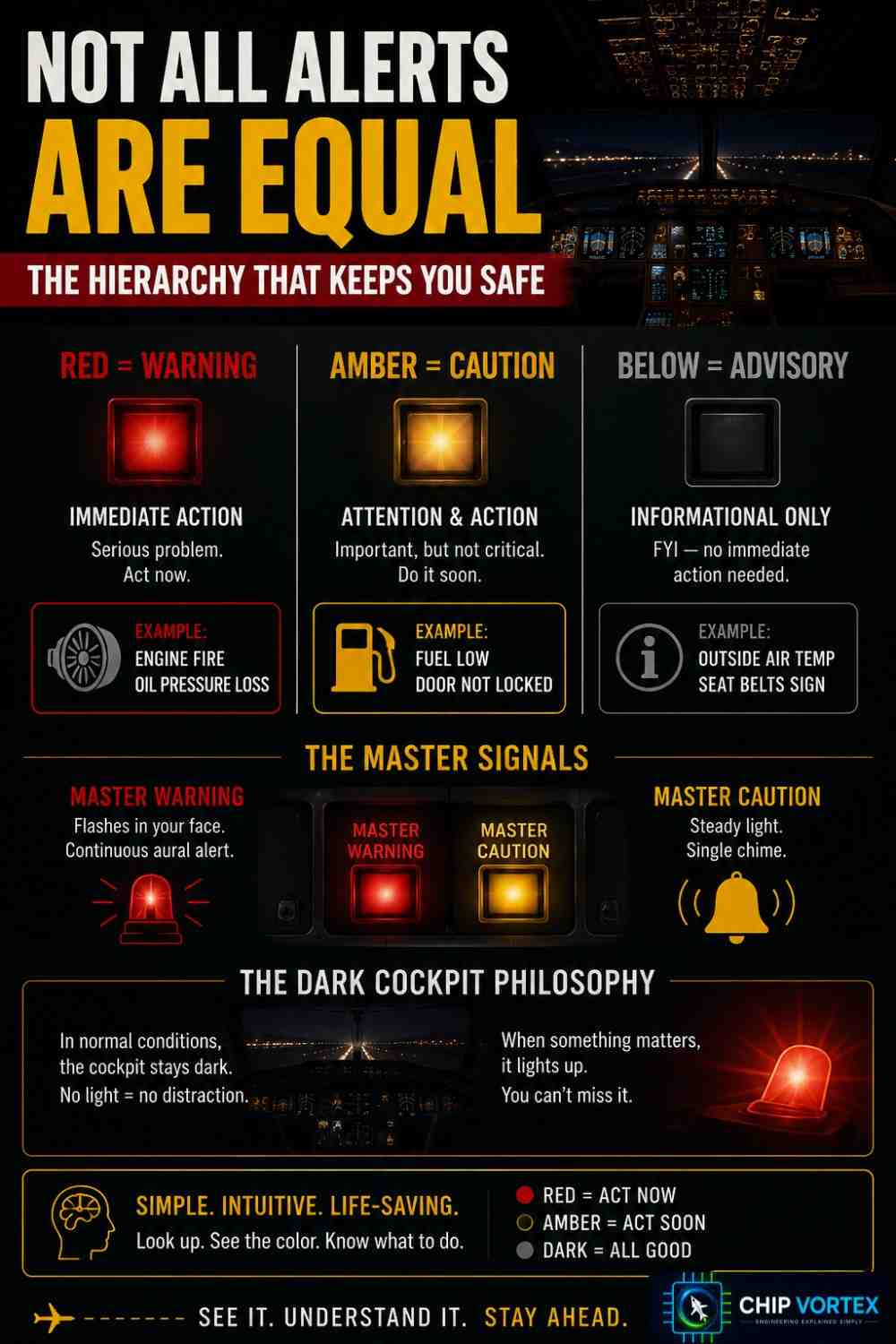
Not all problems are equal, so the alerts come in ranks. Warnings are red — immediate action required: an engine fire, cabin pressure loss. The master warning light flashes in front of both pilots and a continuous aural alert demands attention. Cautions are amber — attention and timely action, but not this second: the master caution light and a single chime. Below those sit advisories and memos — informational notes that stay quiet.
And behind the colors sits a philosophy with a beautiful name: the dark cockpit. On a modern flight deck — Airbus made it doctrine — a switch in its normal, correct state shows no light at all. Darkness means health. Any illuminated button is, by definition, something worth a look. The pilots don’t scan two hundred switches; they scan for light in the darkness — and most of the flight, there is none.
Boeing vs Airbus: The Real Difference
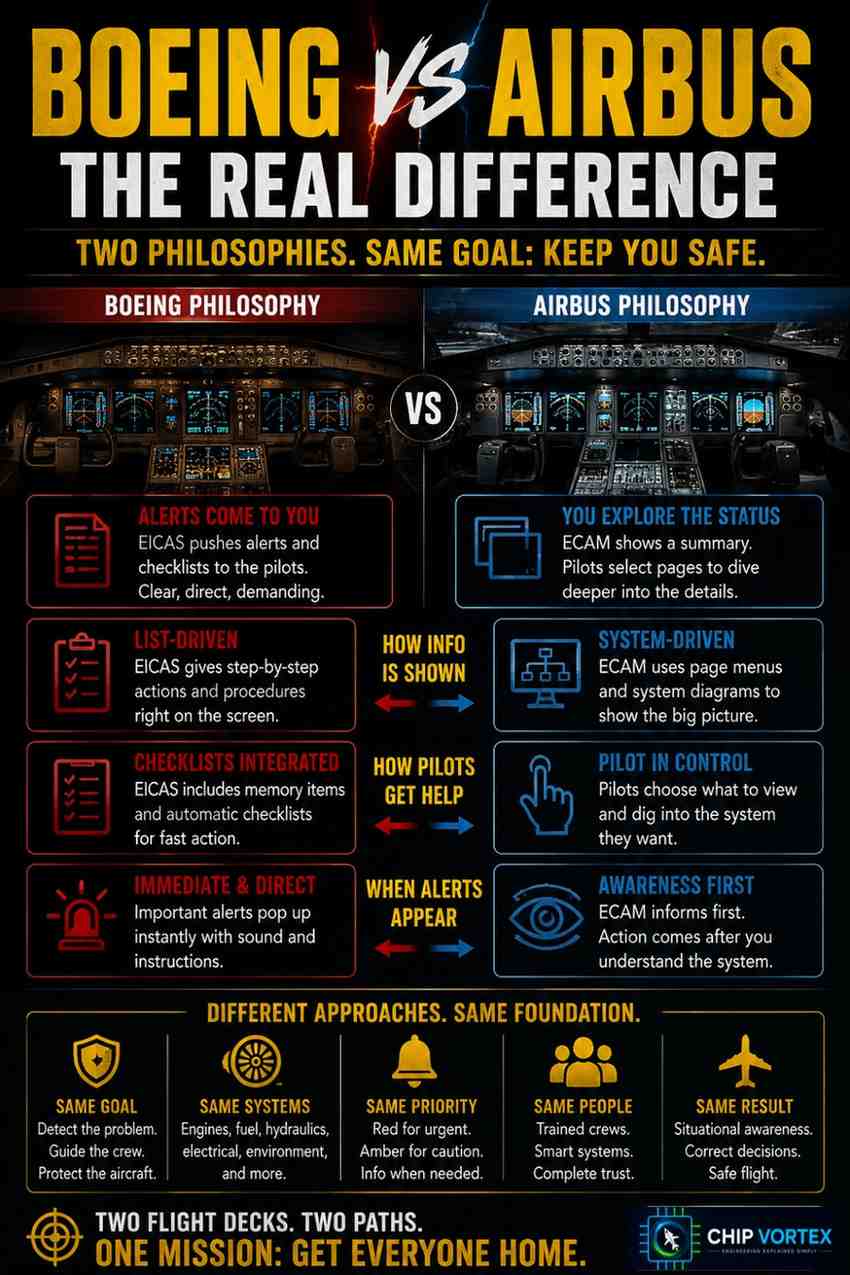
Both systems detect and warn. The philosophical split is in what happens next. When ECAM raises a fault, it doesn’t stop at the alarm — it displays the corrective actions right on the screen, step by step, and automatically calls up the affected system’s schematic page. The aircraft says: here’s the problem, here’s the picture, here’s what to do. Classic Boeing EICAS alerts and points; the crew then works the checklist — historically the paper QRH, and on modern types like the 777 and 787, an integrated electronic checklist that has largely closed the gap. Two roads to the same destination: a crew that knows, understands, and acts in seconds. Ask pilots which philosophy they prefer and you’ve started an argument that will outlast the flight.
Why the Aircraft Stays Silent at Rotation
One of the smartest things these systems do is know when not to speak. During the most critical seconds — the takeoff roll and the landing flare — most cautions are inhibited: held back deliberately, because a chime at the moment of rotation distracts more than it informs. Anything that can wait a few seconds, waits. Only the gravest warnings break through. The system doesn’t just decide what the crew needs to know — it decides when they can afford to know it. That’s not a limitation; it’s judgment, engineered.
Why It Matters
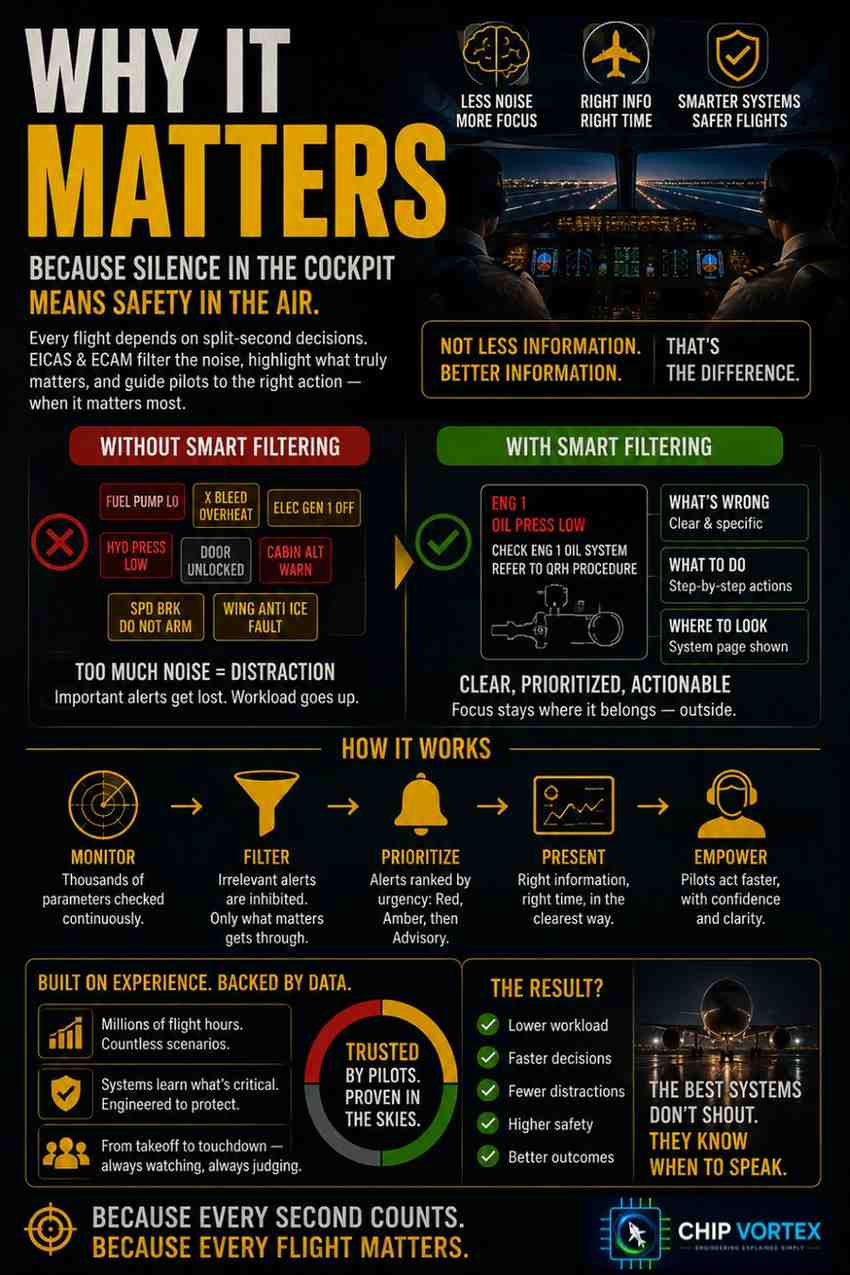
Early detection turns emergencies into non-events — a slowly dropping oil pressure is caught at “low,” long before “gone.” Workload collapses: two pilots manage an aircraft with thousands of parameters because the aircraft manages itself and reports by exception. Decisions get faster and safer, because the crew starts every problem with the diagnosis already on screen. And the story doesn’t end in the cockpit: as we saw in the communication systems post, many of these same faults transmit automatically to the airline via ACARS — the alert the pilots acknowledge over the ocean may already be in the maintenance team’s inbox, with the fix planned before the wheels touch.
Myth vs Truth
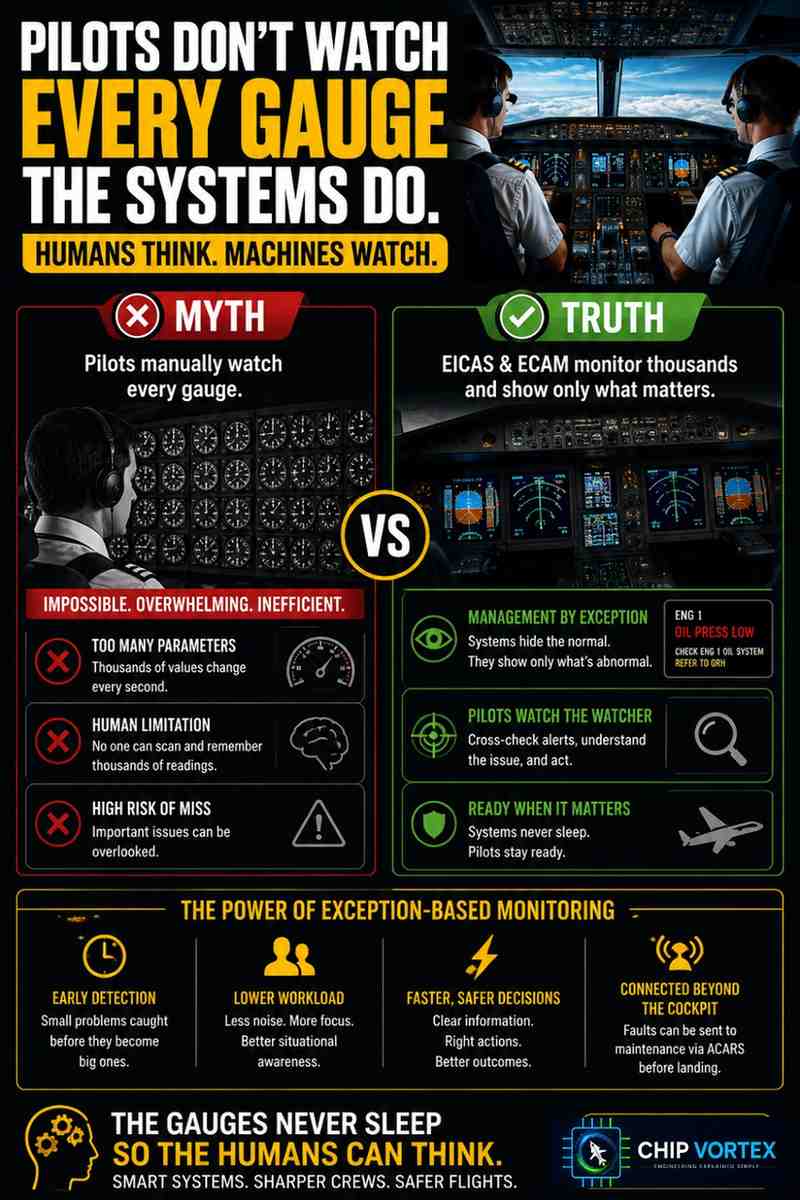
Myth: “Pilots manually watch every gauge.” Truth: nobody could, and nobody needs to. EICAS and ECAM monitor thousands of parameters continuously and surface only what’s abnormal — management by exception. The pilots’ monitoring skill hasn’t disappeared; it has moved up a level: they watch the watcher, cross-check what it flags, and stay ready for the one day it needs help. The gauges never sleep — so the humans can think.
FAQ: EICAS and ECAM
What do EICAS and ECAM stand for?▾
EICAS: Engine Indicating and Crew Alerting System (Boeing and most jets). ECAM: Electronic Centralized Aircraft Monitor (Airbus). Both are the aircraft’s monitoring-and-warning brain.
What’s the real difference between EICAS and ECAM?▾
Philosophy of guidance. ECAM displays the corrective actions on screen and auto-opens the affected system’s page; classic EICAS alerts and directs the crew to the checklist — with modern Boeing electronic checklists narrowing the difference.
What are the master warning and master caution?▾
The two attention-getters in front of each pilot. Master warning (red, continuous sound) means act now; master caution (amber, single chime) means attend soon. Color and sound rank the urgency before a single word is read.
Why are some alerts suppressed during takeoff?▾
Inhibits. During the critical seconds of takeoff and landing, non-urgent cautions are deliberately held back so nothing distracts the crew at the worst possible moment — the news waits until the aircraft can afford it.
What is the dark cockpit philosophy?▾
The design rule that a switch in its normal state shows no light. A dark panel means a healthy aircraft — so any lit button instantly stands out as the thing worth looking at.
So — did you know your flight had a built-in health monitoring system this thorough? Which detail wins: the dark cockpit, or the aircraft that holds its tongue at rotation? Tell us in the comments. Save the chart, and keep the series going: Inside the Cockpit (where these screens live), Communication Systems (how faults reach the mechanics), and Air Data Systems.